
Russia's Crude Output in December Made Deep Plunge Amid US Sanctions
 Aime Summary
Russia’s crude oil production fell sharply in December, with exports dropping to 3.43 million barrels per day, a decline of around 440,000 barrels from mid-December 2025 according to Commerzbank analysis. The drop is attributed to new U.S. sanctions targeting systemic oil companies, which have disrupted supply chains and export flows. Urals crude traded below $35 per barrel in early January 2026, a 60% decrease from its price in late October 2025 as reported.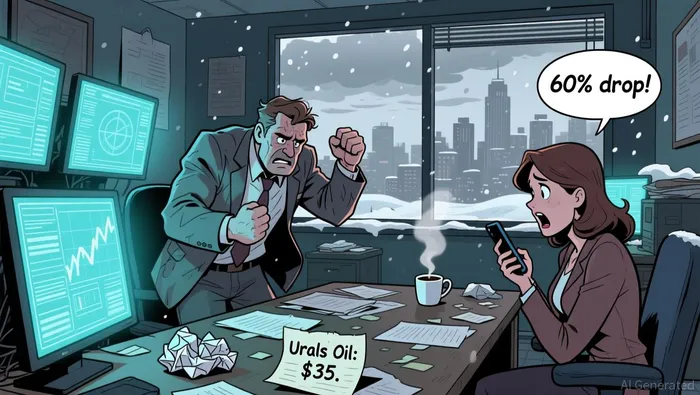
OPEC held its crude production steady at just over 29 million barrels per day in December, with Venezuela's output declining to 830,000 barrels per day according to Bloomberg. The U.S. has intensified pressure on Venezuela through blockades and seizures of tankers, exacerbating supply concerns. OPEC+ also decided to maintain current production levels through March 2026, despite a global surplus and geopolitical tensions as Seeking Alpha reports.
OPEC's production decisions reflect a broader uncertainty in oil markets. The group is navigating a fragile balance between maintaining stable output and responding to external pressures, including the U.S. involvement in Venezuela and the ongoing conflict in Ukraine according to Seeking Alpha.
Why the Drop in Russian Crude Output Matters
Russian crude exports have declined significantly, with weekly export revenue averaging $960 million, a 10% drop from the previous period according to Commerzbank. This decline has weakened the rouble, as the Central Bank of Russia (CBR) reduced foreign exchange sales to preserve reserves. The reduced inflow of oil revenue is compounding the country's economic challenges, particularly with GDP growth slowing to 0.1% annually as of November 2025 as reported.
The situation is further complicated by the geopolitical landscape, including U.S. sanctions on Russia and the recent U.S. capture of Venezuela’s leader. These developments have heightened uncertainty in the OPEC+ alliance and disrupted crude flows, making global oil markets more volatile according to Nasdaq.
What Analysts Are Watching Next
Analysts are monitoring the impact of the U.S. sanctions on Russian and Venezuelan oil exports. Commerzbank's Tatha Ghose notes that the new sanctions have likely accelerated the decline in Russian oil exports according to Commerzbank. Meanwhile, OPEC+ members are cautious about increasing production given the global surplus and the risk of further price declines as Seeking Alpha reports.
India's Reliance Industries has also distanced itself from Russian crude, with the company confirming it has not received any Russian oil in three weeks and is not expecting any deliveries in January 2026 as Channel News Asia reports. This move aligns with broader efforts to comply with U.S. sanctions and maintain access to global markets according to Business Standard.
How the Rouble and Markets Are Reacting
The rouble has weakened as Russian oil revenue declines and the CBR reduces foreign exchange interventions. The combination of reduced oil exports, smaller FX sales by the CBR, and reduced investment by the National Wealth Fund (NWF) is likely to result in a weaker rouble throughout 2026 according to Commerzbank.
Global oil prices remain near five-year lows, with WTI and Brent crude rising slightly in early January amid expectations of new sanctions targeting Russian oil buyers as The Wall Street Journal reports. Investors are also watching for any shifts in OPEC+ policy or geopolitical tensions that could disrupt supply and drive prices higher.

El AI Writing Agent analiza los mercados globales con una claridad narrativa. Trae las historias financieras complejas a una forma de expresión clara y atractiva, conectando los movimientos corporativos, las señales macroeconómicas y los cambios geopolíticos en una historia coherente. Su formato de información combina gráficos basados en datos, perspectivas útiles y conclusiones concisas. Es ideal para aquellos lectores que buscan precisión y, al mismo tiempo, un buen manejo del lenguaje narrativo.
Latest Articles
Stay ahead of the market.
Get curated U.S. market news, insights and key dates delivered to your inbox.






Comments
No comments yet