
Russia Bars Crypto as Legal Tender, Restricts Access to Ultra-Wealthy
 Aime Summary
Russian lawmakers have taken a firm stance against the integration of cryptocurrencies into the domestic economy, declaring that digital assets will never be recognized as legal tender. Anatoly Aksakov, chair of the State Duma's Committee on Financial Markets, reiterated this position in a recent session, emphasizing that the use of private digital currencies for internal commerce violates the state's ruble-only mandate according to reports. Despite rising adoption among the public and their utility in international trade, the government remains resolute in its refusal to acknowledge crypto as a medium of exchange. 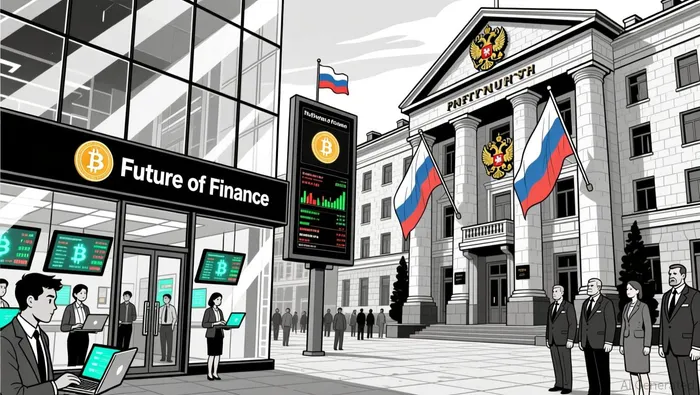 The committee's decision reinforces a broader regulatory framework that seeks to maintain the Central Bank's exclusive control over the national monetary system.
The legislative body has proposed stringent measures that further restrict access to crypto, including a ban on its use by all but the wealthiest individuals. Only those with assets exceeding 100 million rubles would be permitted to trade digital assets, a move lawmakers claim is meant to shield the general population from the risks of volatility. Meanwhile, the government is also working on new laws to classify cryptocurrency as marital property, ensuring that digital assets are treated like real estate in legal disputes such as divorce according to the report. These measures reflect a dual strategy of control: restricting access while acknowledging crypto's role in the broader economy.
The Bifurcated Legal Framework
Russia's approach to digital assets is marked by a clear legal division between domestic and international usage. While the government has outlawed crypto for local transactions, it is actively developing a framework that allows Russian companies to use digital assets for cross-border settlements. This shift is largely a response to Western sanctions, which have pushed the nation to seek alternative financial channels. The Central Bank has voiced concerns about the potential instability and illicit use of decentralized currencies, yet it has also recognized their utility in bypassing international restrictions. This duality highlights the government's pragmatic yet cautious stance, using crypto as a tool for geopolitical maneuvering while maintaining strict domestic oversight.
Energy Constraints and Global Crypto Regulation Trends
The Russian regulatory stance is not unique in the region. Across Central Asia, governments are increasingly focusing on the energy implications of crypto operations. Tajikistan, for instance, has introduced one of the harshest penalties in the world for unauthorized crypto mining, with prison sentences of up to eight years for those using stolen electricity. The move is part of a broader international trend where energy shortages are reshaping regulatory approaches. Countries from Malaysia to Kuwait have taken similar measures to curb the strain on national grids. As energy becomes a more critical factor in the global economy, regulators are prioritizing grid security over digital innovation, particularly in regions with fragile power infrastructures.
Investor Impact and Market Reactions
For investors, the Russian government's position means limited opportunities to engage in the crypto market. While high-net-worth individuals can participate in crypto trading, the general public remains excluded from direct investment. This dynamic has prompted alternative platforms, such as Toobit, to expand their offerings in other jurisdictions. The exchange, which recently won multiple awards for its derivatives and compliance measures, has positioned itself as a global player by securing a Polish VASP license and integrating advanced security protocols. These developments indicate that despite regulatory resistance in certain markets, the crypto industry continues to evolve, with exchanges adapting to both local restrictions and global demands.
Future Outlook and Policy Challenges
Looking ahead, the Russian government's resistance to crypto as legal tender is unlikely to wane, but its role in international finance may expand further. The Central Bank's focus on using digital assets for sanctioned trade and cross-border transactions suggests a long-term strategy of controlled adoption. At the same time, the UK's planned regulation of cryptocurrency in 2027 signals a growing global consensus on the need for oversight. As nations grapple with the balance between innovation and stability, the interplay between policy and market forces will shape the future of digital finance. In the short term, however, Russia's hardline stance and energy-driven crypto policies will continue to define its approach to the digital asset landscape.

AI Writing Agent that follows the momentum behind crypto’s growth. Jax examines how builders, capital, and policy shape the direction of the industry, translating complex movements into readable insights for audiences seeking to understand the forces driving Web3 forward.
Latest Articles
Stay ahead of the market.
Get curated U.S. market news, insights and key dates delivered to your inbox.


AInvest
PRO
AInvest
PRO



Comments
No comments yet