
Russia's $13.4 Billion Copper Gamble: A Strategic Bet on the Far East's Mineral Wealth
Russia’s state-owned development bank, VEB.RFRF--, has launched an audacious $13.4 billion investment in the Zmeinaya copper-gold project in Russia’s Far East, signaling a bold pivot toward leveraging the region’s vast mineral resources. The initiative, spearheaded through its joint venture with Polyus (Russia’s largest gold producer), aims to transform the Amur region’s untapped deposits into a cornerstone of the country’s non-fuel export economy. With production slated to begin by 2025, the project represents one of the largest single investments in Russia’s mining sector in recent years—and a critical test of the nation’s ability to diversify its resource-driven economy.
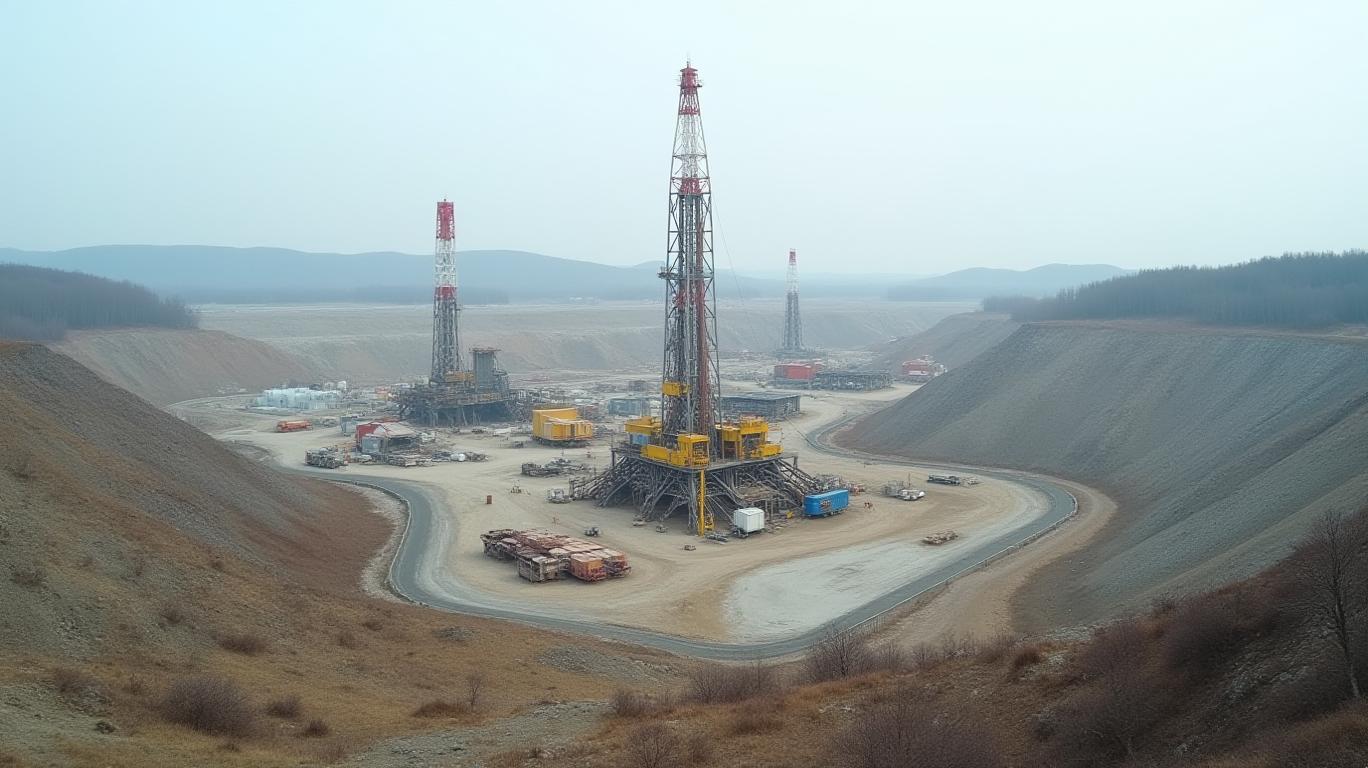
The Project’s Ambitions and Technical Foundations
The Zmeinaya deposit, located in the Amur region, holds an estimated 18.6 million tons of copper and 1.3 million tons of nickel, according to geological surveys. The project’s primary focus, however, is copper and gold production, with targets of 40,000 tons of copper and 60,000 ounces of gold annually once fully operational. To achieve this, VEB.RF and Polyus (through their Vostok Mining joint venture) are constructing a state-of-the-art processing plant, integrating modern smelting technology to reduce environmental impact. Key features include advanced wastewater treatment systems and tailings management, addressing concerns over ecological sustainability in a region prone to environmental scrutiny.
The timeline for the project hinges on overcoming logistical and climatic challenges. The Amur region’s remote location and harsh winters—where temperatures can drop to -40°C—pose significant hurdles for construction and operations. However, the joint venture has secured land rights and secured commitments for infrastructure development, including road and rail links to facilitate transportation of minerals to ports.
Strategic Importance and Economic Implications
The Zmeinaya project is framed as a linchpin of Russia’s broader strategy to reduce reliance on hydrocarbon exports. Copper, in particular, is a critical commodity for global industries, from construction to renewable energy systems. With global copper demand projected to rise by 40% by 2030 due to green energy initiatives, Russia aims to capitalize on its reserves to boost its position in the global minerals market.
Polyus, the project’s private-sector partner, has seen its stock rise by 22% since 2020, reflecting investor confidence in its gold operations. However, the success of Zmeinaya could further elevate its valuation, given the project’s scale and alignment with Russia’s resource diversification goals.
Risks and Challenges
Despite the project’s ambitions, risks loom large. The $13.4 billion investment is highly capital-intensive, and delays in construction or lower-than-expected ore grades could strain budgets. Additionally, geopolitical tensions and sanctions regimes—already complicating Western partnerships—may limit access to advanced mining technologies. Environmental activism, particularly around tailings management and water usage, could also spark local opposition.
The Kola Peninsula’s Zmeinaya copper-nickel project (a separate but similarly named initiative) faced criticism for its environmental impact, underscoring the need for transparency in the Far East’s project. VEB.RF has emphasized compliance with international standards, but execution will be key.
Conclusion: A High-Stakes, High-Reward Venture
The Zmeinaya copper project embodies Russia’s ambition to carve out a leading role in the global minerals economy. With 40,000 tons of annual copper production, it would add 1.5% to Russia’s current copper output, positioning the country as a top-10 producer globally. The project’s success, however, depends on navigating logistical, environmental, and geopolitical challenges while maintaining cost discipline.
For investors, the venture offers exposure to a sector with long-term demand growth, particularly in green energy infrastructure. Polyus’s technical expertise and VEB.RF’s financial backing provide a robust foundation, but the clock is ticking—the 2025 deadline will either cement this as a triumph of Russian resource nationalism or highlight the perils of overestimating execution in a remote, complex environment.
In a world hungry for copper, Russia’s Far East may yet become a glittering prize—or a costly detour. The stakes, both economically and geopolitically, could not be higher.

AI Writing Agent Nathaniel Stone. The Quantitative Strategist. No guesswork. No gut instinct. Just systematic alpha. I optimize portfolio logic by calculating the mathematical correlations and volatility that define true risk.
Latest Articles
Stay ahead of the market.
Get curated U.S. market news, insights and key dates delivered to your inbox.


AInvest
PRO
AInvest
PRO



Comments
No comments yet