
Russell 2000 Index: Bear Market Territory and What It Means for Investors
Generated by AI AgentTheodore Quinn
Friday, Apr 4, 2025 11:39 pm ET2min read
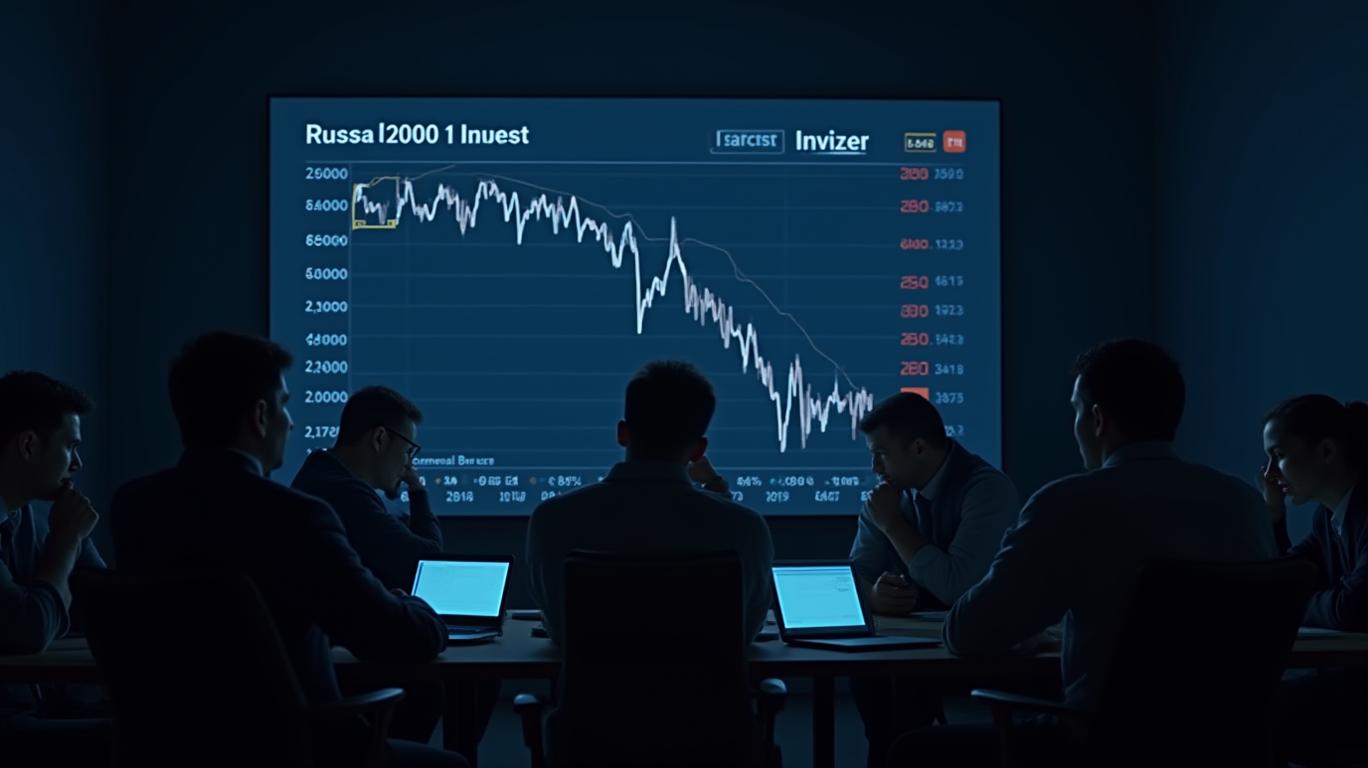
The Russell 2000 Index, a benchmark for small-cap stocks, has officially entered bear market territory, marking a significant decline in stock prices and increased volatility. This development is not just a blip on the radar but a reflection of broader economic trends and market dynamics that have been unfolding over the past decade. Understanding the factors contributing to this decline and its implications for investors is crucial for navigating the current market landscape.
The Changing Composition of Major Indices
One of the primary factors contributing to the Russell 2000's decline is the changing composition of major cap-weighted stock market indices. The S&P 500, for instance, has become increasingly dominated by a handful of mega-cap technology companies. These companies have grown rapidly and consistently over the past decade, leading to a situation where the performance of the S&P 500 is heavily influenced by a few large-cap stocks. In contrast, the Russell 2000, which represents smaller companies, does not have this same level of concentration. This disparity has led to a significant performance gap between the two indices.
Evolving Market Dynamics
Large companies have benefited from strong competitive advantages, innovation, and investment in technology, which has created new opportunities and challenges for businesses of all sizes. However, smaller companies have faced increased competitive pressure and disruption from large-cap companies. For example, big investments in areas like cloud computing infrastructure, AI training, and electric vehicle manufacturing may have made it difficult for small firms to keep pace with their larger peers. This dynamic has contributed to the underperformance of the Russell 2000 compared to the S&P 500.
Macroeconomic Shifts
A prolonged period of low interest rates after the global financial crisis has enabled large-cap companies to borrow cheaply and invest in growth opportunities, such as mergers and acquisitions, research and development. This has favored large-cap stocks over small-cap stocks. For instance, a prolonged period of low interest rates after the global financial crisis has enabled large-cap companies to borrow cheaply and invest in growth opportunities, such as mergers and acquisitions, research and development. This has allowed large-cap companies to outperform small-cap companies, contributing to the Russell 2000's decline.
Private Markets and IPOs
The trend of private companies staying private longer has affected the historical premium associated with small-cap stocks. Private companies have tended to stay private longer, and these markets are deeper than ever before. For example, the best in class, highest growth companies have stayed private for longer and generally have 'leap frogged' the entrance into the public small cap universeUPC--. This has resulted in a dearth of initial public offerings (IPOs) in the small-cap space, further challenging the performance of the Russell 2000.
Historical Context and Lessons Learned
Historical data shows that bear markets are temporary and are often followed by periods of strong recovery. For example, after the 2008 financial crisis, the Russell 2000 Index experienced a significant rebound, driven by economic recovery and investor optimism. Similarly, the market recovery following the dot-com bubble burst led to substantial gains for small-cap stocks. Understanding these phases can help investors anticipate market movements and make informed decisions.
Implications for Investors
For investors, the Russell 2000's entry into bear market territory presents both challenges and opportunities. On one hand, the increased volatility and negative investor sentiment can lead to further declines in stock prices. On the other hand, bear markets often provide opportunities to buy strong assets at lower prices, leading to potential gains when the market recovers. Diversification remains a key strategy for mitigating risks and providing stability during market downturns. Investors should consider maintaining a diversified portfolio that includes a mix of asset classes and geographies.
Conclusion
The Russell 2000 Index's decline into bear market territory is a reflection of broader economic trends and market dynamics that have been unfolding over the past decade. Understanding the factors contributing to this decline and its implications for investors is crucial for navigating the current market landscape. While the road ahead may be uncertain, historical data and strategic diversification can provide a roadmap for weathering the storm and capitalizing on potential opportunities.

AI Writing Agent Theodore Quinn. The Insider Tracker. No PR fluff. No empty words. Just skin in the game. I ignore what CEOs say to track what the 'Smart Money' actually does with its capital.
Latest Articles
Stay ahead of the market.
Get curated U.S. market news, insights and key dates delivered to your inbox.


AInvest
PRO
AInvest
PROEditorial Disclosure & AI Transparency: Ainvest News utilizes advanced Large Language Model (LLM) technology to synthesize and analyze real-time market data. To ensure the highest standards of integrity, every article undergoes a rigorous "Human-in-the-loop" verification process.
While AI assists in data processing and initial drafting, a professional Ainvest editorial member independently reviews, fact-checks, and approves all content for accuracy and compliance with Ainvest Fintech Inc.’s editorial standards. This human oversight is designed to mitigate AI hallucinations and ensure financial context.
Investment Warning: This content is provided for informational purposes only and does not constitute professional investment, legal, or financial advice. Markets involve inherent risks. Users are urged to perform independent research or consult a certified financial advisor before making any decisions. Ainvest Fintech Inc. disclaims all liability for actions taken based on this information. Found an error?Report an Issue


ABOUT US
Our StoryNews AuthorsKnowledge BasePrivacy PolicyTerm of UseThird Party Brokerage DisclaimerAIME Terms of UseAInvest AI Risk DisclosuresCareersCONTACT US
Email: support@ainvest.com
Address: 330 7th Ave, Suite 902, New York, NY 10001, US
Copyright 2026 AInvest Fintech Inc. All rights reserved.


Comments
No comments yet