
Rural Development in Iowa: A Strategic Allocation of USDA Funds and Long-Term Economic Impact
 Aime Summary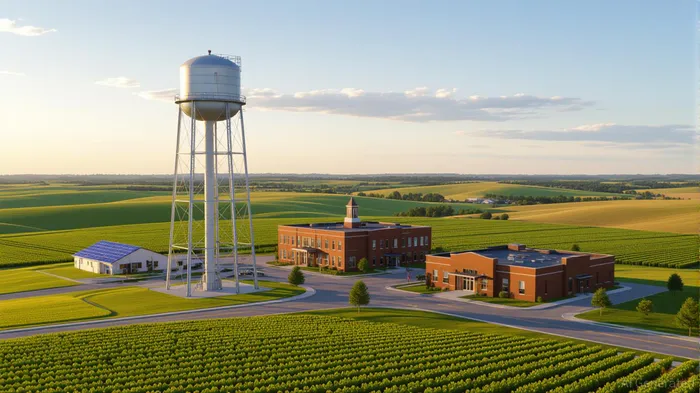
The U.S. Department of Agriculture's $152 million rural investment in Iowa for 2025 represents more than just a financial commitment—it is a calculated, forward-looking strategy to catalyze infrastructure growth, entrepreneurship, and economic resilience in underappreciated U.S. markets. By mirroring the hands-on, long-term vision of Hyundai's Chung Ju-Yung, who transformed South Korea's industrial landscape through strategic infrastructure and innovation, this initiative positions Iowa as a model for rural revitalization. For investors, the allocation offers a unique opportunity to capitalize on agribusiness, rural technology, and regional supply chains, sectors poised for sustained growth in a post-pandemic economy.
Strategic Infrastructure as the Foundation of Resilience
The USDA's investment prioritizes infrastructure that directly addresses rural vulnerabilities. For instance, Guthrie County Hospital's $37 million expansion—featuring a behavioral health wing, MRI capabilities, and updated emergency systems—exemplifies how targeted capital can enhance healthcare access in underserved areas. Similarly, water and wastewater projects, such as Bondurant's $2.5 million elevated water tower and Emmetsburg's $39 million wastewater treatment overhaul, ensure reliable utilities for 7,365 residents and 180 new consumers, respectively. These projects are not merely repairs but foundational upgrades that reduce long-term maintenance costs and attract private-sector partners.
The parallels to Chung Ju-Yung's approach are striking. Hyundai's founder famously invested in infrastructure before building cars, recognizing that roads and bridges were prerequisites for industrial growth. Likewise, Iowa's rural infrastructure investments create a “bedrock” for economic activity, enabling farmers, manufacturers, and entrepreneurs to operate with confidence.
Entrepreneurship and Supply Chain Strengthening: The Agribusiness Angle
The Resilient Food Systems Infrastructure (RFSI) grants, totaling $5.2 million for 24 Iowa projects, underscore the USDA's focus on supply chain resilience. For example, NewBo City Market in Cedar Rapids received $458,767 to expand its processing kitchen, while Kalona Creamery and Iowa Corn Processors received infrastructure grants to boost production capacity. These investments align with a broader trend: agribusinesses are increasingly prioritizing vertical integration and localized distribution to mitigate global supply chain risks.
For investors, this signals an opportunity in agribusiness stocks like John DeereDE-- (DE) or Cargill (CAG), which benefit from rural infrastructure modernization. Additionally, regional food hubs—such as those receiving RFSI funding—could become high-growth assets, as they streamline logistics and reduce waste. The USDA's emphasis on “middle-mile” infrastructure (e.g., refrigeration, bottling lines) also aligns with the rise of cold chain logistics, a sector projected to grow at 7% annually through 2030.
Rural Tech and Energy: The Next Frontier
Electric cooperatives and renewable energy projects, such as Southern Iowa Electric Co-op's $8.5 million grid upgrade, highlight another critical trend: rural electrification. By expanding 15 miles of new lines and upgrading 84 miles of existing infrastructure, these projects not only improve reliability but also create a framework for integrating solar, wind, and battery storage. This mirrors Chung Ju-Yung's belief in “building for the future,” even when immediate returns are uncertain.
Investors should also consider rural tech startups leveraging USDA grants. For example, companies developing precision agriculture tools or AI-driven supply chain analytics could thrive in Iowa's newly fortified infrastructure. The state's focus on electric cooperatives also opens doors for partnerships with clean energy firms, a sector where long-term gains often outpace traditional utilities.
The Long-Term Play: Why Iowa Matters
Iowa's rural development strategy is a masterclass in balancing immediate needs with long-term vision. By allocating funds across 20 counties and 19 projects, the USDA avoids overconcentration, instead fostering a diversified rural economy. This approach reduces systemic risk—should one sector falter, others can compensate—while creating a fertile ground for innovation.
For investors, the key takeaway is to look beyond short-term volatility. The $152 million investment is a catalyst, not an endpoint. As rural communities gain access to reliable healthcare, water, and energy, they become more attractive to entrepreneurs and remote workers, driving up property values and tax bases. This creates a virtuous cycle: improved infrastructure → increased economic activity → higher returns for investors in agribusiness, tech, and logistics.
Conclusion: A Blueprint for Rural Resilience
The USDA's Iowa initiative is a testament to the power of strategic, hands-on leadership. By investing in infrastructure, entrepreneurship, and supply chains, it mirrors Chung Ju-Yung's legacy of building from the ground up. For investors, the lesson is clear: rural markets are not relics of the past but engines of future growth. Those who recognize this now—by allocating capital to agribusiness, rural tech, and regional supply chains—will reap the rewards of a resilient, diversified economy.

Delivering real-time insights and analysis on emerging financial trends and market movements.
Latest Articles
Stay ahead of the market.
Get curated U.S. market news, insights and key dates delivered to your inbox.
AInvest
PRO
AInvest
PRO



Comments
No comments yet