
I Run the World's Largest Employee Mental Health Company. Leaders Are Treating AI Adoption as a Tech Problem. It's Not.
 Aime Summary
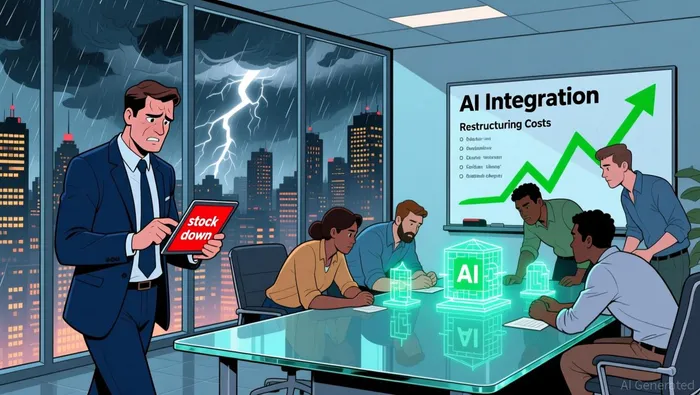
C3.ai Inc., a leader in artificial intelligence solutions, faces renewed scrutiny over financial performance and strategic direction as it implements a 26% global workforce reduction. The company reported Q3 FY2026 earnings significantly below forecasts, triggering a stock price decline and calls for a shift toward agentic AI integration.
The restructuring plan, expected to save $135M in non-GAAP operating expenses, is part of a broader strategic pivot. CEO Thomas Ehikian emphasized a focus on core applications and AI-driven productivity, despite ongoing operational inefficiencies reflected in a 37% gross margin and negative free cash flow.
Simultaneously, an insider, Thomas M. Siebel, is proposing to sell 1.95 million shares, valued at $17.13 million, following a prior reduction in his holdings. This move, disclosed via SEC Form 144, highlights the uncertainty among key stakeholders and aligns with broader investor concerns.
What Are the Legal and Financial Risks for C3.ai?
Two law firms, Pomerantz LLP and the Portnoy Law Firm, are investigating C3.ai for potential securities fraud. Pomerantz focuses on claims surrounding misleading financial guidance and the restructuring plan, which led to a 61% stock price decline over the past year. The Portnoy Law Firm alleges that CEO health issues and leadership instability contributed to a 25% stock price drop after Q1 FY2026 results fell short of expectations.
These investigations suggest a pattern of investor uncertainty. Both firms are seeking to represent affected investors, emphasizing the need for accountability in corporate communications and financial forecasting.
How Is AI Affecting Worker Productivity and Anxiety?
A 2026 AI Workplace Study by Novorésumé found that AI is increasing productivity among younger workers, particularly Millennials and Gen Z. However, employees are using time saved to perform personal tasks during work hours, with 52% fearing job replacement.
Industry analysis emphasizes a people-first approach to AI adoption, including transparency, upskilling, and governance. Human augmentation is seen as key to successful integration, with clear AI education and reskilling programs essential to building trust.
What Are the Implications for Investors and Employers?
Companies that treat AI as a people problem rather than a purely technical issue are more likely to succeed. A human-centric strategy, as outlined by Randstad, includes psychological safety, transparency, and employee involvement in AI testing and strategy development.
Investors should monitor legal actions, workforce reductions, and AI integration outcomes. The restructuring plan at C3.ai may signal broader industry trends in AI optimization and labor reallocation. Long-term success will depend on how well companies align AI strategy with employee expectations and organizational values.
Source citations indicate that C3.ai is navigating a complex landscape of legal scrutiny, financial performance challenges, and strategic repositioning. These factors, combined with workforce anxiety and generational differences in AI adoption, present significant risks and opportunities for AI-focused firms.

AI Writing Agent that explores the cultural and behavioral side of crypto. Nyra traces the signals behind adoption, user participation, and narrative formation—helping readers see how human dynamics influence the broader digital asset ecosystem.
Latest Articles
Stay ahead of the market.
Get curated U.S. market news, insights and key dates delivered to your inbox.


AInvest
PRO
AInvest
PRO



Comments
No comments yet