
RTX Reports Q4 2025 Earnings Beat Driven by Iran Conflict Missile Demand
 Aime Summary
RTX Corporation reported a strong fourth quarter for 2025, delivering adjusted earnings per share of $1.55, which exceeded analyst estimates by 5.44%. Revenue for the quarter rose 12.1% year over year to reach $24.24 billion, driven primarily by surging volumes in its defense segments. The company's Raytheon division saw adjusted operating profit climb 22%, fueled by a 30% jump in military revenues at Pratt & Whitney. This financial performance underscores the company's ability to capitalize on escalating global tensions, specifically the ongoing conflict involving Iran.
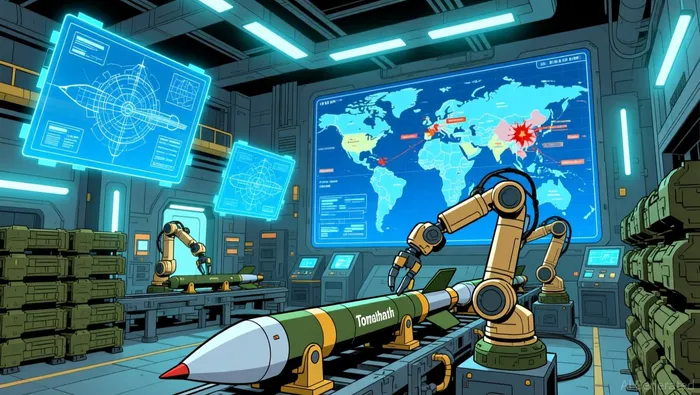
The Iran conflict has acted as a significant catalyst for demand, with the U.S. military firing over 850 Tomahawk missiles during the hostilities. To replenish these depleted stockpiles, RTXRTX-- has secured multiple contracts, including a $381 million agreement for Tomahawk missile work and a $6.6 billion contract for F135 engine production. Management confirmed that munitions output across critical programs increased by 20% in 2025 and is scheduled to rise further in 2026. Consequently, the company now holds a massive order backlog valued at $268 billion, providing high visibility for future revenue.
In the fourth quarter, free cash flow surged 549% to $3.195 billion, reflecting improved operational efficiency despite a challenging macroeconomic environment. The company also expanded its missile integration facility in Alabama by 50% to meet the surging production requirements. However, investors must note that the stock currently trades at a forward P/E ratio of 28.8 times, which is a premium compared to the broader aerospace and defense industry average.
What Are the Primary Growth Drivers and Backlog Metrics?
The Raytheon segment was a standout performer, growing revenue by 7% in the fourth quarter on the back of Patriot, GEM-T, and Tomahawk missile volumes. This segment is central to the company's strategy, with management guiding that adjusted operating profit will rise between $200 million and $300 million in 2026. The defense backlog specifically stands at $107 billion, ensuring stability for the foreseeable future. Analysts have noted that the company's ability to convert this substantial backlog into steady earnings will be a key metric for investors to watch in the coming months.
RTX has also secured $966.7 million contract modification for its AN/TPY-2 radar system from the Missile Defense Agency, further diversifying its defense portfolio. The company's full-year book-to-bill ratio for 2025 reached 1.56, indicating that new orders significantly outpaced shipments. These metrics suggest that the demand for defense solutions remains robust and that the company is well-positioned to sustain growth through 2026.
How Do Tariff Risks and Valuation Metrics Influence the Investment Case?
Despite the positive earnings trajectory, RTX faces potential headwinds from tariffs that could impact operating profits by approximately $850 million. Collins Aerospace and Pratt & Whitney are the primary divisions exposed to these tariff pressures, which remain a key variable for the full-year outlook. Additionally, the F135 engine program and the powder metal GTF fleet inspection program, which saw MRO output up 39% in Q4, present execution risks that management is monitoring closely.
Valuation remains a point of contention for some investors, as the stock trades at a forward P/E of 28.8 times, compared to a sector average of roughly 25 times. Some analysts argue that this premium is justified by the company's earnings momentum and backlog strength, while others point to a decelerating growth profile as a reason for caution. The stock currently trades at approximately $202.79 per share, representing a forward P/E ratio of 29.7 times in some analyses, which appears elevated given the capital allocation challenges.
What Are the Long-Term Structural Challenges and Future Growth Expectations?
Beyond the immediate conflict-driven demand, RTX faces structural challenges related to its massive revenue base, which makes generating incremental growth increasingly difficult. Annual sales growth averaged only 6.5% over the last five years, lagging behind many industrials peers. Future prospects appear muted, with estimated sales growth of 5.6% for the next 12 months suggesting a slowdown from recent trends. Management's ability to deploy capital efficiently remains a concern, reflected in a Return on Invested Capital (ROIC) of just 4.5%.
The company has guided full-year 2026 sales to be between $92 billion and $93 billion, with EPS expected to range from $6.60 to $6.80. While analysts project a 2.72% EPS increase and 5.48% revenue growth for the coming quarter, the stock trades at a premium Forward P/E of 28.82 compared to its industry average. Investors are closely watching the upcoming earnings release on April 21, 2026, to see if the company can maintain its growth trajectory despite these structural headwinds.
The aerospace and defense industry ranks in the bottom 41% of industry strength ratings, placing additional pressure on RTX to outperform its peers. While the company remains focused on investing in new capabilities and expanding production capacity, execution on delivery timelines remains critical. The interplay between the high backlog and the potential for margin compression due to tariffs will likely define the stock's performance in the near term.

Blending traditional trading wisdom with cutting-edge cryptocurrency insights.
Latest Articles
Stay ahead of the market.
Get curated U.S. market news, insights and key dates delivered to your inbox.


AInvest
PRO
AInvest
PRO



Comments
No comments yet