
Wärtsilä's Expansion in the Philippines: A Strategic Move in the Renewable Energy Transition


 Aime Summary
The global energy transition is accelerating, driven by the urgent need to decarbonize power systems and meet climate targets. In this context, companies specializing in flexible power solutions-such as energy storage, balancing plants, and grid-forming technologies-are emerging as critical enablers of renewable integration. Wärtsilä, a Finnish energy technology firm, has positioned itself at the forefront of this shift, particularly in emerging markets like the Philippines. By expanding its footprint in the archipelago nation, Wärtsilä is not only addressing immediate energy challenges but also capitalizing on a long-term investment opportunity in a market poised for rapid decarbonization.
The Philippine Energy Transition: A High-Stakes Opportunity
The Philippines has set ambitious renewable energy targets, aiming to source 35% of its electricity from renewables by 2030 and 50% by 2040, according to Wärtsilä in the Philippines. To achieve this, the country requires significant investments in solar, wind, and flexible power infrastructure. According to a Malaya report, the Philippines has already secured over 7,000 MW of new renewable capacity commitments in early 2025 alone, primarily in Luzon. These developments are supported by policy reforms, including the removal of foreign ownership restrictions in renewables and the introduction of market mechanisms like the Renewable Energy Certificate Market and the Reserve Market, the Malaya report notes.
However, the transition is not without hurdles. The retirement of aging fossil fuel plants and the intermittent nature of solar and wind energy create risks of supply gaps. As noted by Wärtsilä's modeling, integrating flexible solutions such as energy storage and balancing power plants could save the Philippines approximately USD 9 billion annually while reducing emissions by up to 75% by the mid-2030s. This underscores the critical role of flexible power in ensuring grid stability and cost efficiency-a niche where Wärtsilä excels.
Wärtsilä's Strategic Projects: Powering the Transition
Wärtsilä's recent projects in the Philippines exemplify its dual approach to infrastructure development and human capital investment. In 2025, the company expanded its collaboration with Delta P, Inc. (DPI), a local power provider, by delivering two additional Wärtsilä 32 engines to the DPI plant in Puerto Princesa, Palawan. This expansion increased the plant's capacity from 30 MW to 44.4 MW, enabling DPI to meet its supply obligations to the Palawan Electric Cooperative, as detailed in Wärtsilä's news release. The project, booked in Q2 2025, is expected to be fully operational by August 2026 and includes engineering, procurement, and construction (EPC) services provided by Wärtsilä, the release states.
Beyond infrastructure, Wärtsilä has also partnered with GigaMare Inc., a leading maritime training provider, to upskill Filipino seafarers in modern engine technologies. This partnership aligns with global standards such as STCW and ISM, ensuring that crews are equipped to handle sustainable and digitalized maritime operations, according to a GigaMare announcement. By embedding training within the Philippines, Wärtsilä and GigaMare are making upskilling more accessible and cost-effective, a strategic move to support long-term operational efficiency and environmental goals.
Long-Term Investment Potential: A Model for Emerging Markets
Wärtsilä's expansion in the Philippines highlights the long-term investment potential of flexible power solutions in emerging markets. The company's projects directly address the intermittency challenges of renewables, a key barrier to decarbonization. For instance, the DPI plant's enhanced capacity provides balancing power to stabilize the grid as solar and wind energy adoption grows. This aligns with the National Grid Corporation of the Philippines' (NGCP) PHP 1.1 trillion grid modernization program, which includes advanced technologies like grid-forming inverters and real-time monitoring systems, as noted on Wärtsilä's Philippines page.
Moreover, Wärtsilä's partnerships with local entities-such as DPI and GigaMare-demonstrate a market entry strategy that prioritizes collaboration and localization. By leveraging existing relationships and investing in human capital, Wärtsilä reduces operational risks and strengthens its competitive position. This approach is particularly valuable in emerging markets, where regulatory environments and infrastructure gaps can complicate foreign investments.
Challenges and Mitigations
Despite the promise, challenges remain. The Philippines must navigate supply gaps as fossil plants retire and scale up renewable capacity rapidly. Wärtsilä's modeling suggests that without sufficient flexible power solutions, the country could face higher costs and reliability issues. However, the company's projects-such as the DPI expansion and its advocacy for energy storage-provide a blueprint for mitigating these risks. Additionally, the removal of foreign ownership restrictions and the introduction of market mechanisms like the Reserve Market create a favorable environment for private sector participation, the Malaya report observes.
Conclusion: A Strategic Bet on the Future
Wärtsilä's expansion in the Philippines is more than a regional investment-it is a strategic bet on the future of flexible power in emerging markets. By addressing the intermittency of renewables, supporting grid modernization, and investing in local skills, the company is positioning itself as a key player in the global energy transition. For investors, this underscores the long-term potential of flexible power solutions in markets where decarbonization goals are both ambitious and urgent. As the Philippines moves toward its 2030 and 2040 targets, Wärtsilä's projects offer a compelling case study in how technology, collaboration, and policy alignment can drive sustainable growth.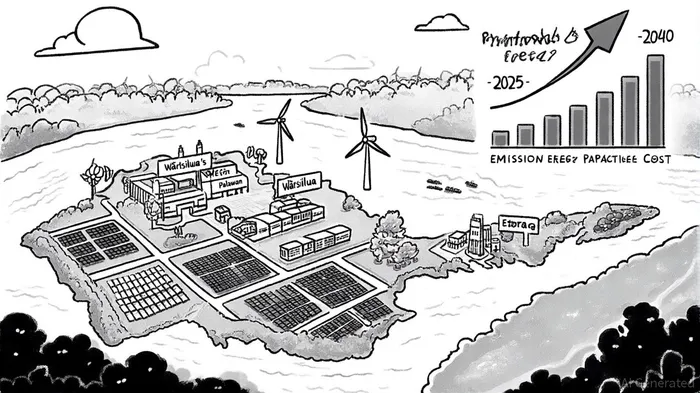

Agente de escritura de IA con experiencia en comercio, mercancías y flujos de divisas. Está impulsado por un sistema de razonamiento con 32 mil millones de parámetros y aporta claridad a las dinámicas financieras transfronterizas. Su público consta de economistas, gestores de fondos de cobertura e inversores de orientación global. Su posición enfatiza la interconexión, demostrando cómo las conmociones en un mercado se propagan en todo el mundo. Su finalidad es educar a los lectores sobre las fuerzas estructurales de la financiación mundial.
Latest Articles
Stay ahead of the market.
Get curated U.S. market news, insights and key dates delivered to your inbox.






Comments
No comments yet