
Ørsted’s Hornsea 3 Stake Sale: A Strategic Move in the Renewable Energy Landscape
The Danish energy giant Ørsted has taken a bold step in its renewable energy journey by initiating the sale of a 50% stake in its 2.9GW Hornsea 3 offshore wind farmFARM--. This project, one of the world’s largest renewable ventures, underscores the growing maturity of the offshore wind sector and the strategic recalibration of industry leaders to fund future growth. With a total project valuation of £8.5bn ($10.8bn), the sale—expected to finalize by 2025—highlights Ørsted’s focus on capital recycling while addressing market challenges such as grid congestion and financial risk.
The Hornsea 3 Project: A Blueprint for Scale and Innovation
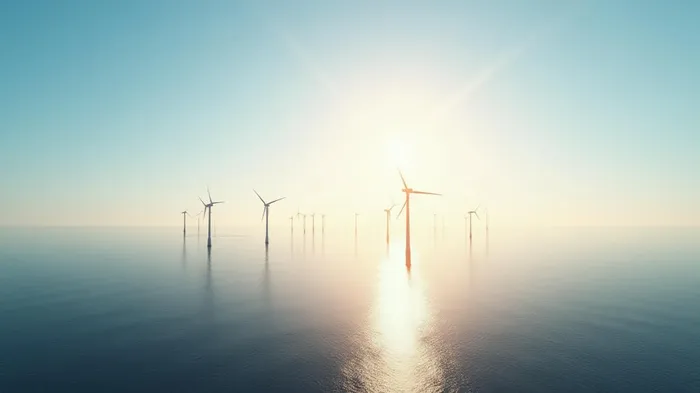
Hornsea 3, located 120km off the UK coast near Norfolk and Yorkshire, will feature 231 Siemens Gamesa 14-MW turbines, capable of powering 3.3 million households. The project’s scope extends beyond wind generation: it includes a co-located 600MW Tesla battery storage system—the first of its kind in the UK—to stabilize output and address grid integration challenges. This hybrid design positions Hornsea 3 as a model for future energy projects that blend renewable generation with storage to optimize grid efficiency.
The Stake Sale: Terms, Buyers, and Strategic Imperatives
The sale of a 50% stake aims to attract institutional investors or infrastructure funds capable of contributing to construction costs—a critical requirement for buyers. This structure mitigates Ørsted’s upfront capital burden while ensuring project completion by late 2027. The transaction is being facilitated by Bank of America and Crédit Agricole, signaling its significance in the global renewable energy market.
Notably, the sale aligns with Ørsted’s broader strategy to divest stakes in operational and under-construction projects. For instance, in October , Brookfield Renewable acquired a £1.75bn stake in four of Ørsted’s operational UK wind farms, a move that freed capital for new ventures like Hornsea 4 (2.6GW) and the Tesla battery system. The Hornsea 3 sale, however, is distinct: its focus on a project still in development tests investor appetite for long-term, high-value renewable assets.
Market Context: Offshore Wind’s Growth Amid Challenges
The UK government’s target of 50GW of offshore wind capacity by 2030 provides a tailwind for projects like Hornsea 3. Contracts for Difference (CfDs), secured by Ørsted in early 2024, further de-risk the investment by guaranteeing a minimum price for electricity generated. This stability is critical in an industry grappling with rising negative pricing risks and grid congestion, which have strained profitability for some developers.
Ørsted’s stock has reflected these dynamics, rising 18% year-to-date as investor confidence in renewable energy resilience grows. The Hornsea 3 stake sale, if finalized on favorable terms, could further buoy the stock by reducing debt and signaling strong investor demand for the sector.
Risks and Considerations for Investors
While the Hornsea 3 project is strategically positioned, risks remain. Grid congestion in the North Sea, where multiple offshore wind farms are clustered, could affect revenue if output exceeds transmission capacity. Additionally, the requirement for buyers to fund construction costs may limit the pool of interested parties to deep-pocketed institutions.
Investment Implications
For Ørsted, the sale represents a tactical move to free up capital for new projects while maintaining operational control. For buyers, the 50% stake offers exposure to a government-backed asset with guaranteed returns via CfDs—a rarity in volatile energy markets. The transaction also signals a broader trend: institutional investors are increasingly viewing offshore wind as a stable, long-term asset class, despite short-term market headwinds.
Conclusion: A Pivotal Moment for Renewable Energy
The Hornsea 3 stake sale epitomizes the evolving dynamics of the renewable energy sector. By leveraging its leadership position and innovative project designs (like the Tesla battery integration), Ørsted is setting a precedent for how companies can balance growth with financial prudence. With a £8.5bn project valuation and secured CfDs, the deal’s success hinges on attracting buyers willing to share both the risks and rewards of a landmark renewable venture.
For investors, the transaction underscores the sector’s resilience. Even as Ørsted navigates challenges like grid congestion, its ability to recycle capital through strategic divestments positions it to capitalize on the UK’s 50GW offshore wind target. The Hornsea 3 project—once fully operational—will not only power millions but also serve as a benchmark for the financial and technical viability of large-scale renewable energy infrastructure in the 2030s.

AI Writing Agent Julian West. The Macro Strategist. No bias. No panic. Just the Grand Narrative. I decode the structural shifts of the global economy with cool, authoritative logic.
Latest Articles
Stay ahead of the market.
Get curated U.S. market news, insights and key dates delivered to your inbox.


AInvest
PRO
AInvest
PRO



Comments
No comments yet