
Royal Caribbean's Strategic Ascendancy in the Premium Cruise Sector: A Post-Pandemic Investment Thesis


 Aime Summary
The global cruise industry's post-pandemic recovery has revealed a striking divergence in demand dynamics. While mass-market segments remain constrained by cyclical volatility, the premium cruise sector is emerging as a beacon of resilience and growth. Royal CaribbeanRCL-- Group, a titan in this space, has leveraged structural shifts in consumer behavior, technological innovation, and sustainability imperatives to solidify its leadership. For investors, the company's strategic alignment with long-term industry trends offers compelling upside potential.
A Sector Transformed: Premium Cruising as a Growth Engine
The premium cruise sector is no longer a niche. By 2025, the global cruise market is projected to reach $50 billion, with luxury cruising accounting for a disproportionate share of growth. Rising disposable incomes in emerging economies, coupled with a shift toward experiential travel, have fueled demand for premium offerings.
According to a report by the World Luxury Chamber, the number of luxury cruise ships has more than tripled since 2010, with 1.5 million travelers expected to opt for luxury experiences by 2028. This trend is underpinned by a broader cultural shift: travelers now prioritize exclusivity, personalized service, and immersive destinations over conventional mass tourism.
Environmental consciousness is another critical driver. The industry's pivot toward sustainability-via LNG-powered ships, shore power systems, and carbon-neutral initiatives-has not only mitigated regulatory risks but also attracted eco-conscious consumers.
As stated by the Cruise Industry Report 2025, sustainability is now a core differentiator for premium cruise lines, with 72% of travelers citing eco-friendly practices as a key factor in their booking decisions.
Royal Caribbean's Strategic Leverage
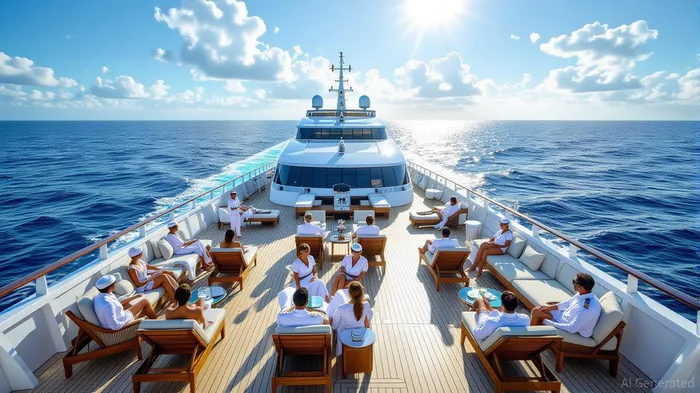
Royal Caribbean has positioned itself at the intersection of these trends through a dual strategy of fleet innovation and destination curation. In 2025, the company delivered two flagship vessels-Star of the Seas and Celebrity Xcel-which exemplify its commitment to premiumization. These ships feature enhanced amenities, such as private cabanas, curated culinary experiences, and immersive entertainment, while
incorporating energy-efficient technologies to meet sustainability benchmarks. The result?
A 6% year-over-year capacity increase in Q2 2025 and a projected 10% rise in Q4, driven by robust pricing power and load factors.
The company's capital expenditures further underscore its long-term vision. With $5 billion allocated for 2025, Royal Caribbean is expanding its fleet and developing exclusive destinations, including the Royal Beach Club on Paradise Island and Perfect Day Mexico. These private island experiences create a flywheel effect: they differentiate the brand, drive repeat bookings, and justify premium pricing.
As noted by Travel and Tour World, such offerings have bolstered Royal Caribbean's Caribbean market share to 57% of its global capacity, with fourth-quarter yield growth projected to rise 37% compared to 2019 levels.
Future-Proofing the Business Model
Royal Caribbean's growth is not reliant on short-term momentum. The company has a pipeline of 11 new ships scheduled for delivery between 2025 and 2036, including the Legend of the Seas (2026) and Icon 4 and Celebrity River (2027). These vessels will further diversify its portfolio, with a focus on smaller, more agile ships for niche markets and river cruises. This diversification mitigates overreliance on any single region or demographic, a critical advantage in an era of geopolitical and economic uncertainty.
Sustainability remains a cornerstone of its strategy.
By 2028, 72% of Royal Caribbean's fleet is expected to have shore power capabilities, reducing emissions in port cities. New-generation ships are also designed to accommodate future low-emissions fuels, aligning with global decarbonization goals. These efforts not only reduce regulatory exposure but also enhance brand equity-a vital asset in an industry increasingly scrutinized for environmental impact.
Competitive Advantages and Risks
Royal Caribbean's ability to balance capacity expansion with demand management is a testament to its operational discipline. While the sector faces rising supply from competitors, the company's focus on premium pricing and exclusive experiences has insulated it from price wars. Its Caribbean dominance, for instance, is sustained by a mix of strategic itineraries, targeted marketing, and loyalty programs that prioritize customer retention over acquisition.
However, risks persist. Geopolitical tensions, fuel price volatility, and regulatory shifts could disrupt recovery trajectories. Moreover, the premium cruise sector's reliance on discretionary spending makes it vulnerable to macroeconomic downturns. Yet, Royal Caribbean's diversified fleet, strong balance sheet, and brand strength position it to navigate these challenges more effectively than its peers.
Conclusion: A Compelling Investment Proposition
For investors, Royal Caribbean represents a rare confluence of structural growth and operational excellence. Its strategic investments in premiumization, sustainability, and exclusive destinations align with enduring consumer preferences. As the premium cruise sector continues to outpace broader industry growth, the company's disciplined approach to capacity and pricing will likely translate into sustained profitability. In an era of economic uncertainty, such resilience is invaluable.

Stay ahead of the market.
Get curated U.S. market news, insights and key dates delivered to your inbox.
AInvest
PRO
AInvest
PRO



Comments
No comments yet