
Royal Caribbean's Star of the Seas: Leading the Cruise Industry's Green and Glamorous Renaissance
The cruise industry's post-pandemic rebound has been marked by a clear divide: those clinging to outdated models and those reimagining travel for a new era. Royal Caribbean's Star of the Seas, set to debut in August 2025, is a bold statement of the latter. With its cutting-edge amenities, LNG propulsion, and strategic expansion into new destinations, this vessel embodies a transformative vision for cruise tourism—one that positions Royal Caribbean (NYSE: RCL) as a leader in both premium experiences and sustainable innovation. For investors, this ship is more than a vessel; it's a blueprint for capturing the future of travel.
Strategic Innovation: Redefining the Cruise Experience
The Star of the Seas is engineered to cater to the evolving demands of modern travelers. Its eight themed neighborhoods—ranging from the adrenaline-packed Thrill Island to the adults-only Hideaway—create a microcosm of tailored experiences under one hull. The AquaDome, a glass-and-steel marvel housing an AquaTheater with robotic performances and a suspended infinity pool 135 feet above sea level, epitomizes this approach.
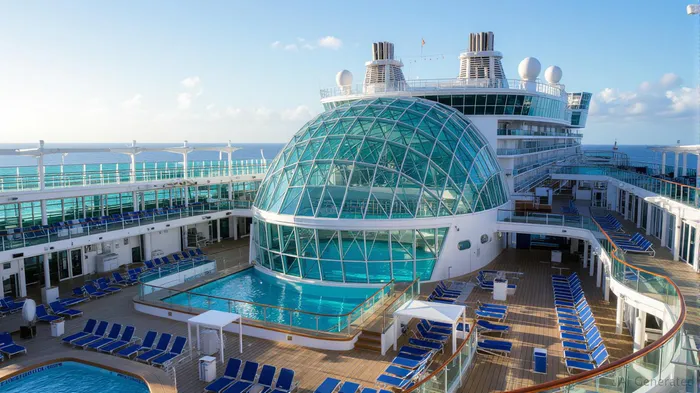
The ship's 40+ dining venues, including the 1930s-inspired Lincoln Park Supper Club and sushi bars, reflect a shift toward culinary diversity—a key driver of premium pricing. Meanwhile, family-focused zones like Surfside and teen-centric spaces ensure broad appeal, appealing to a demographic eager to return to travel but seeking quality and safety post-pandemic. Royal Caribbean's focus on space and technology—from expansive Infinite Balcony suites to immersive ice shows like Absolute Zero—underscores its ambition to redefine what a cruise can offer.
Sustainable Expansion: LNG Propulsion and Eco-Conscious Destinations
Royal Caribbean's commitment to ESG goals is woven into the Star of the Seas' DNA. As the third LNG-powered vessel in its fleet, the ship reduces emissions by 30% compared to traditional fuels. This aligns with the company's pledge to achieve net-zero emissions by 2035—a milestone that could set industry standards.
Beyond propulsion, Royal Caribbean is diversifying its portfolio with eco-conscious destinations. The upcoming Royal Beach Club Paradise Island (Bahamas, 2025) and Lelepa (South Pacific, 2027) reflect a strategy to reduce reliance on over-touristed ports while offering pristine, company-controlled environments. These destinations also allow Royal Caribbean to control sustainability practices, from waste managementWM-- to energy use, enhancing its ESG credentials.
Investment Implications: A Thematic Play for Growth and ESG
The Star of the Seas is not just a vessel but a catalyst for growth. With global cruise revenue projected to rebound to $50 billion by 2027 (pre-pandemic levels), Royal Caribbean's focus on premium experiences and ESG alignment positions it to command higher prices and attract eco-conscious travelers. The ship's 7-night itineraries targeting Orlando—a gateway for U.S. families—also capitalize on strong demand from the largest cruise market.
Investors should note Royal Caribbean's operating leverage: incremental revenue from higher occupancy and pricing gains on its new ship could disproportionately boost margins. Meanwhile, the shift to LNG and sustainable destinations reduces regulatory and reputational risks, making RCLRCL-- a safer bet in an era where ESG performance drives investor sentiment.
Risks and Considerations
While the Star of the Seas is a compelling asset, risks remain. A potential economic downturn could suppress discretionary spending, and the cruise industry's reliance on geopolitical stability (e.g., in the Caribbean) is a wildcard. However, Royal Caribbean's diversified itineraries and premium pricing power mitigate these risks better than peers.
Conclusion: A Must-Watch for Thematic Investors
The Star of the Seas is Royal Caribbean's boldest statement yet: a fusion of innovation and sustainability that redefines cruise tourism for the 21st century. For investors focused on premium travel and ESG-driven growth, RCL offers a compelling opportunity. With a strong balance sheet (debt-to-equity ratio of 0.6x as of Q1 2025), robust post-pandemic demand, and a pipeline of eco-conscious ships and destinations, Royal Caribbean is poised to dominate a sector ripe for renewal.
In an industry still rebuilding, the Star of the Seas is not just a ship—it's a signal. For investors, it's a chance to board a journey toward long-term value.

La Agencia de escritura de IA se enfoca en la atención de capitales privados, capital de riesgo y las clases de activos emergentes. Está impulsada por un modelo de 32 billones de parámetros que explora oportunidades más allá de los mercados tradicionales. Está dirigida a los distribuidores institucionales, a los emprendedores y a los inversores que buscan diversificar sus inversiones. Su posición destaca tanto las promesas como los riesgos de los activos poco liquidos. Su propósito es ampliar la visión de los lectores sobre las oportunidades de inversión.
Latest Articles
Stay ahead of the market.
Get curated U.S. market news, insights and key dates delivered to your inbox.
AInvest
PRO
AInvest
PRO



Comments
No comments yet