
Royal Air Maroc's Strategic Expansion into the U.S. Market: Assessing the Impact on African and U.S. Air Cargo and Tourism Sectors


 Aime Summary
U.S. Market Expansion and Route Development
Royal Air Maroc's U.S. expansion is anchored by the launch of two new routes in 2026: Casablanca to Los Angeles and the resumption of flights to Boston, with three weekly frequencies planned to align with peak travel seasons. These routes, alongside existing services to Washington Dulles, Miami, and JFK, aim to enhance connectivity between North America and Africa. The airline's summer 2025 schedule already includes record-breaking capacity, offering over 6.6 million seats across 95 destinations, including long-haul routes to São Paulo, Beijing, and Toronto. This expansion is part of a broader vision to grow its fleet to 200 aircraft by 2037, supporting 200 million annual passengers and 143 destinations.
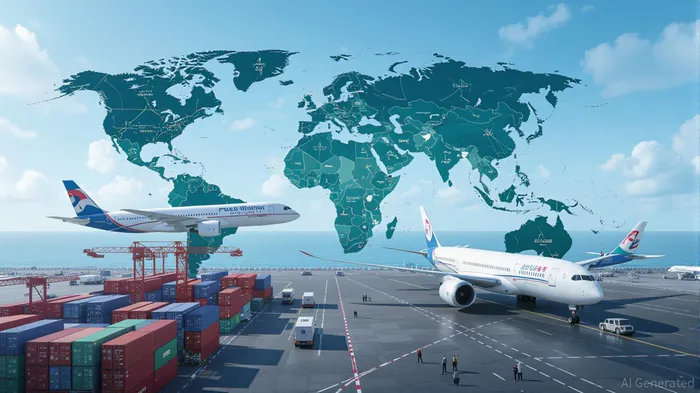
The airline's strategic focus on U.S. hubs like Atlanta and New York further underscores its ambition to position Morocco as a gateway to Africa. For instance, the newly launched Atlanta–Marrakech route is expected to attract U.S. tourists and facilitate trade, particularly in high-value sectors such as agriculture and automotive components according to industry analysis. By 2025, Morocco is projected to welcome nearly 20 million tourists, surpassing its 2026 target, with tourism receipts exceeding 120 billion dirhams.
Cargo Operations and Trade Connectivity
Royal Air Maroc Cargo's expansion into the Americas, Asia, and Africa is equally transformative. The airline's Casablanca hub, equipped with a state-of-the-art cargo terminal capable of handling 200,000 tons annually, serves as a critical node for transcontinental trade. New routes to São Paulo and Toronto, operating three times weekly, are designed to strengthen Morocco's role as a logistics hub, particularly for perishable goods, pharmaceuticals, and automotive parts.
The airline's fleet modernization strategy, including the introduction of widebody aircraft and an all-cargo narrowbody by late 2026, aims to quadruple its cargo capacity by 2037. These efforts align with Morocco's broader economic goals, such as reducing reliance on traditional trade partners and expanding into high-potential markets like Brazil, where outbound travel expenses reached $16 billion in 2024.
Economic Impact on Africa and the U.S.
The U.S.-Morocco Free Trade Agreement (FTA) has historically facilitated trade growth, though challenges persist. Bilateral trade in goods has grown eightfold since the FTA's inception, yet a $3.4 billion U.S. trade surplus with Morocco in 2024 highlights asymmetries in the agreement. Royal Air Maroc's expansion, however, is expected to mitigate these imbalances by enhancing trade connectivity. For example, the São Paulo route is projected to boost Morocco's exports of agricultural products and specialty fertilizers to Latin America, while the Toronto route could strengthen ties with Canada's aerospace and technology sectors according to logistics analysis.
On the tourism front, Royal Air Maroc's increased services to Marrakech and Casablanca are making Morocco more accessible to U.S. travelers. This aligns with a broader trend of airlines expanding routes to Africa, driven by rising demand for cultural and luxury travel experiences. While U.S. inbound international travel is projected to decline in 2025, the post-2026 period is expected to rebound, fueled by events like the FIFA World Cup.
Challenges and Strategic Considerations
Despite its ambitions, Royal Air Maroc faces headwinds, including global air cargo capacity constraints and political uncertainties. The recent 10% U.S. tariff on Moroccan imports, imposed in April 2025, could strain trade dynamics. Additionally, competition from established carriers and the grounding of its MD-11 fleet pose operational risks according to industry reports. To address these challenges, the airline is prioritizing sustainability and digital innovation, such as adopting electric vehicles and partnering with platforms like cargo.one to enhance efficiency according to company statements.
Conclusion
Royal Air Maroc's U.S. expansion is a strategic masterstroke with the potential to redefine trade and tourism flows between Africa and the Americas. By investing in infrastructure, modernizing its fleet, and forging partnerships, the airline is not only enhancing Morocco's global connectivity but also contributing to broader regional economic growth. However, success will depend on navigating trade imbalances, geopolitical risks, and competitive pressures. For investors, the airline's trajectory offers a compelling case study in leveraging aviation as a catalyst for cross-continental development.

Delivering real-time insights and analysis on emerging financial trends and market movements.
Latest Articles
Stay ahead of the market.
Get curated U.S. market news, insights and key dates delivered to your inbox.


AInvest
PRO
AInvest
PRO



Comments
No comments yet