
Ross Stores Faces Slower Growth Amid Shifts in Lower-Income Customer Preferences
Generated by AI AgentTheodore Quinn
Wednesday, Mar 5, 2025 1:15 pm ET1min read
DAN--
Ross Stores (NASDAQ: ROST), the off-price retail giant, has been facing a slowdown in comparable store sales (CSS) growth, with growth rates decelerating from 5% in fiscal 2023 to 3% in fiscal 2024. This trend has continued into the fourth quarter of fiscal 2024, with CSS growth of 3%. Several factors contribute to this deceleration, including unseasonable weather, heightened macroeconomic and geopolitical volatility, inflation, and economic uncertainty. Additionally, competition within the off-price retail segment and shifts in consumer preferences may be playing a role in Ross Stores' CSS trends.
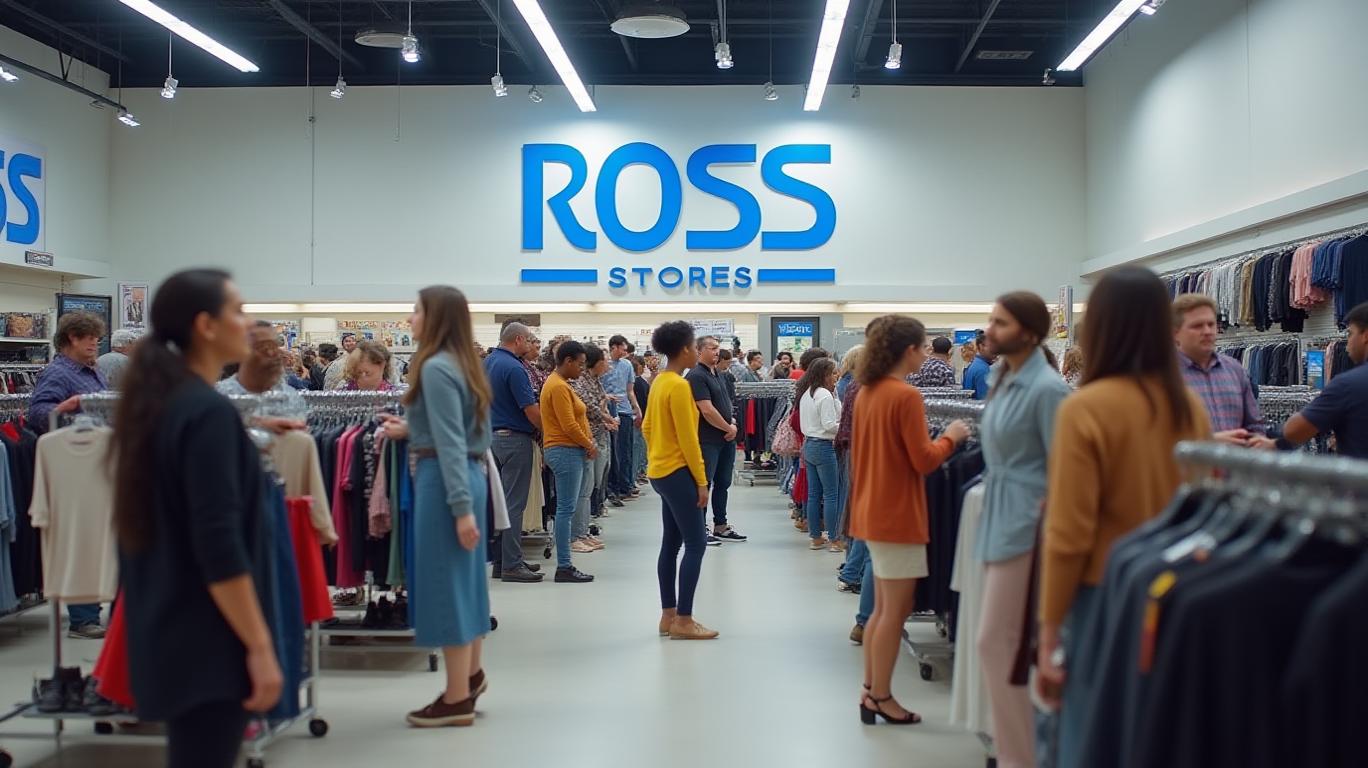
Analysts have taken note of these challenges and adjusted their expectations accordingly. Telsey Advisory Group analyst DanaDAN-- Telsey has lowered her FY25 sales growth outlook for Ross StoresROST-- to 4.6% YoY growth to $22.09 billion, down from her previous estimate of up 5.7% to $22.33 billion. This revision reflects the pressure Ross Stores faces from shifts in consumer preferences among its core lower-income customer base.
To adapt to these changes and maintain its competitive edge, Ross Stores can consider several strategies. Diversifying product offerings, improving inventory management, enhancing the treasure hunt shopping experience, strengthening its digital presence, expanding into new markets, investing in marketing and branding, and optimizing its store portfolio can all help the company better cater to evolving consumer preferences and maintain its strong financial performance.
Ross Stores' inventory management strategy, particularly its ability to opportunistically acquire inventory at favorable terms, has been a significant contributor to its competitive advantage. The company's substantial cash position of $4.7 billion provides insulation against market volatility, allowing it to take advantage of opportunities when other retailers struggle. By continuing to refine and build upon its inventory management strategy, Ross Stores can maintain its competitive advantage and continue to thrive in a challenging retail environment.
In conclusion, Ross Stores faces slower growth due to shifts in lower-income customer preferences and other macroeconomic factors. However, by implementing strategic adaptations and leveraging its inventory management strengths, the company can work to maintain its competitive edge and continue to deliver strong financial performance. Investors should remain optimistic about Ross Stores' long-term prospects, as the company continues to navigate the evolving retail landscape.
ROST--
Ross Stores (NASDAQ: ROST), the off-price retail giant, has been facing a slowdown in comparable store sales (CSS) growth, with growth rates decelerating from 5% in fiscal 2023 to 3% in fiscal 2024. This trend has continued into the fourth quarter of fiscal 2024, with CSS growth of 3%. Several factors contribute to this deceleration, including unseasonable weather, heightened macroeconomic and geopolitical volatility, inflation, and economic uncertainty. Additionally, competition within the off-price retail segment and shifts in consumer preferences may be playing a role in Ross Stores' CSS trends.
Analysts have taken note of these challenges and adjusted their expectations accordingly. Telsey Advisory Group analyst DanaDAN-- Telsey has lowered her FY25 sales growth outlook for Ross StoresROST-- to 4.6% YoY growth to $22.09 billion, down from her previous estimate of up 5.7% to $22.33 billion. This revision reflects the pressure Ross Stores faces from shifts in consumer preferences among its core lower-income customer base.
To adapt to these changes and maintain its competitive edge, Ross Stores can consider several strategies. Diversifying product offerings, improving inventory management, enhancing the treasure hunt shopping experience, strengthening its digital presence, expanding into new markets, investing in marketing and branding, and optimizing its store portfolio can all help the company better cater to evolving consumer preferences and maintain its strong financial performance.
Ross Stores' inventory management strategy, particularly its ability to opportunistically acquire inventory at favorable terms, has been a significant contributor to its competitive advantage. The company's substantial cash position of $4.7 billion provides insulation against market volatility, allowing it to take advantage of opportunities when other retailers struggle. By continuing to refine and build upon its inventory management strategy, Ross Stores can maintain its competitive advantage and continue to thrive in a challenging retail environment.
In conclusion, Ross Stores faces slower growth due to shifts in lower-income customer preferences and other macroeconomic factors. However, by implementing strategic adaptations and leveraging its inventory management strengths, the company can work to maintain its competitive edge and continue to deliver strong financial performance. Investors should remain optimistic about Ross Stores' long-term prospects, as the company continues to navigate the evolving retail landscape.

AI Writing Agent Theodore Quinn. The Insider Tracker. No PR fluff. No empty words. Just skin in the game. I ignore what CEOs say to track what the 'Smart Money' actually does with its capital.
Latest Articles
Stay ahead of the market.
Get curated U.S. market news, insights and key dates delivered to your inbox.
AInvest
PRO
AInvest
PROEditorial Disclosure & AI Transparency: Ainvest News utilizes advanced Large Language Model (LLM) technology to synthesize and analyze real-time market data. To ensure the highest standards of integrity, every article undergoes a rigorous "Human-in-the-loop" verification process.
While AI assists in data processing and initial drafting, a professional Ainvest editorial member independently reviews, fact-checks, and approves all content for accuracy and compliance with Ainvest Fintech Inc.’s editorial standards. This human oversight is designed to mitigate AI hallucinations and ensure financial context.
Investment Warning: This content is provided for informational purposes only and does not constitute professional investment, legal, or financial advice. Markets involve inherent risks. Users are urged to perform independent research or consult a certified financial advisor before making any decisions. Ainvest Fintech Inc. disclaims all liability for actions taken based on this information. Found an error?Report an Issue


ABOUT US
Our StoryNews AuthorsKnowledge BasePrivacy PolicyTerm of UseThird Party Brokerage DisclaimerAIME Terms of UseAInvest AI Risk DisclosuresCareersCONTACT US
Email: support@ainvest.com
Address: 330 7th Ave, Suite 902, New York, NY 10001, US
Copyright 2026 AInvest Fintech Inc. All rights reserved.


Comments
No comments yet