
Roomba Maker Files for Bankruptcy: What This Means for Investors and the Robot Market


 Aime Summary
In a dramatic turn for the home robotics sector, iRobotIRBT-- — the company behind the iconic Roomba — filed for Chapter 11 bankruptcy on December 14, 2025. The move, part of a pre-packaged restructuring plan, sees its primary supplier and lender, Picea, acquire 100% of the company. The reorganization is meant to stabilize the business and allow it to continue developing its robot vacuum line. For retail investors and fans of the brand, the filing raises big questions: What happens to the stock? Will the Roomba still be around in a year? And how might this reshape the broader robotics market?
The Chapter 11 Filing and Restructuring Deal
iRobot's Chapter 11 filing is the culmination of months of financial pressure. After a failed attempt to sell the company for $1.7 billion in early 2025 — when the final potential buyer offered a significantly lower price — the firm's shares plummeted by 33% in one day. With limited cash reserves and rising debt, iRobot turned to its long-time partner, Picea, for a lifeline. The two companies signed a Restructuring Support Agreement under which Picea will take full control in a court-supervised process. The transaction is expected to close by February 2026, after which iRobot will operate as a private entity under Picea's ownership. Crucially, the company's common stock will be wiped out, and existing shareholders will receive nothing in the reorganized company.
This pre-packaged bankruptcy approach is designed to streamline the process and reduce uncertainty. Unlike traditional Chapter 11 cases, which can drag on for years, iRobot is expected to emerge from the process relatively unscathed — with no disruption to its customer service or product development. In a statement, the company emphasized its commitment to innovation and long-term growth, noting that 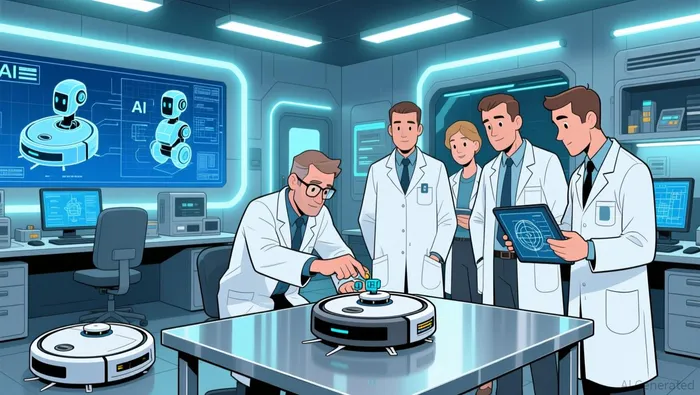 the restructuring would allow it to continue improving its Roomba and other robotic products.
Recent Stock Volatility and Market Reactions
Despite the bleak financial outlook, iRobot's stock has seen some surprising short-term action. In early December 2025, shares surged more than 72% over four days — a rally driven by speculation about a potential short squeeze and optimism around AI-driven robotics. The stock also spiked 43.65% in a single day after market chatter about AI integration and cost-cutting measures according to market analysis. These sharp moves highlight the emotional and speculative nature of the stock, especially among retail traders. As of December 14, iRobot had a market cap of about $167 million, down 34% year to date.
The company has also faced broader industry challenges. With a Q4 2025 revenue decline of 25% to $145.8 million and a net loss of $21.5 million, the financial pressure is real. For now, the restructuring with Picea offers the best hope of a sustainable future.
What This Means for Investors
For existing iRobot shareholders, the news is devastating. Current stockholders will lose all equity in the restructured company, and the stock will be delisted from Nasdaq. That means any investment in iRobot's common shares is effectively at a total loss. However, for the broader market, the restructuring could be a case study in how a struggling company can pivot under pressure without collapsing entirely. If iRobot emerges stronger under Picea's leadership, it could serve as a model for other consumer tech firms facing similar financial hurdles.
For traders and speculators, the short-term volatility is a reminder of how fragile iRobot's position has become. High short interest and retail enthusiasm have led to wild swings in the stock price, but those gains are unlikely to last if the fundamentals don't improve. Retail investors should approach the stock with caution, especially given the high risk of a complete wipeout.
The Future of iRobot and the Robotics Market
Even as iRobot faces a major restructuring, the broader robotics market continues to grow. Analysts project that the consumer robotics sector could exceed $100 billion by 2034, driven by advances in AI, smart home integration, and new product categories like the Chefee and Tesla Bot. While iRobot's future is now more uncertain, its core technology remains valuable. If the restructuring is successful, it could help keep the Roomba brand alive and competitive in an increasingly crowded market.
At the end of the day, the key question is whether the partnership with Picea can give iRobot the stability it needs to innovate and adapt. For investors, the lesson is clear: when a company is in financial freefall, even the best products can't guarantee long-term value. But for the robotics industry, the Roomba's survival — no matter who owns it — could still play a role in shaping the future of home automation.

Delivering real-time insights and analysis on emerging financial trends and market movements.
Latest Articles
Stay ahead of the market.
Get curated U.S. market news, insights and key dates delivered to your inbox.
AInvest
PRO
AInvest
PRO



Comments
No comments yet