
Ronin's $4.5M Token Buyback and Circulating Supply Dynamics: A Deep Dive into On-Chain Capital Efficiency and Tokenomics-Driven Value Accrual


 Aime Summary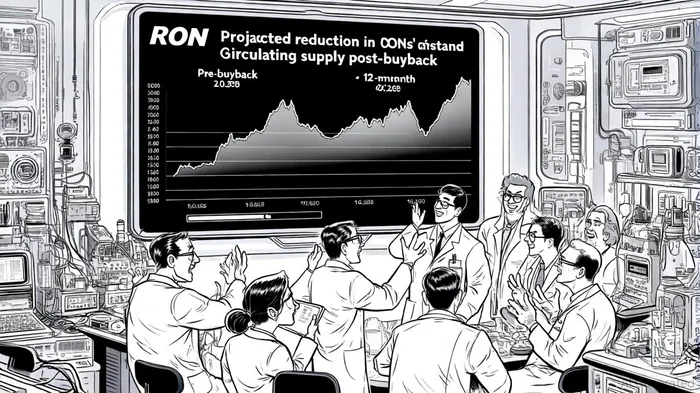
Ronin Network's recent announcement of a $4.5 million token buyback program has reignited discussions about the interplay between tokenomics, capital efficiency, and market sentiment in the crypto space. By allocating 895 ETH and 650,000 USDCUSDC-- from its treasury to repurchase approximately 1.3–2% of the circulating RONRON-- supply, the project aims to reduce token availability, signal confidence in its ecosystem, and align incentives for long-term holders. This move, described by co-founder as “the first bullet in the chamber,”[1] is part of a broader strategy to reposition RoninRON-- as a robust EthereumETH-- layer-2 solution while addressing structural challenges tied to its reliance on Axie InfinityAXS--.
On-Chain Capital Efficiency: A Deflationary Play
The buyback mechanism operates on a deflationary principle: reducing supply to create scarcity and potentially increase demand. According to a report by BeInCrypto, the $4.5 million treasury allocation will repurchase roughly 10 million RON tokens, equivalent to 1.3–2% of the current circulating supply of ~693 million tokens[2]. This aligns with Ronin's tokenomics, which already emphasize controlled supply dynamics. The RON token has a max supply of 1 billion, with 69.31% unlocked as of now, and utility across transaction fees, staking, governance, and DeFi[3].
The buyback's capital efficiency is further amplified by Ronin's v3 upgrade to its decentralized exchange, Katana, which introduces concentrated liquidity pools and customizable fee tiers. These upgrades aim to optimize liquidity provision and reduce reliance on high token emissions, thereby supporting the treasury and minimizing inflationary pressures[4]. By converting ETH and USDC reserves into RON, the project is effectively leveraging its existing assets to reinforce token value—a strategy reminiscent of Binance Coin's quarterly burn events, which have historically correlated with short-term price rallies[5].
Tokenomics-Driven Value Accrual: Scarcity vs. Adoption
While the buyback is a bullish signal, its long-term effectiveness hinges on broader ecosystem adoption. As of now, 70% of Ronin's activity remains tied to Axie Infinity, a game whose user base has declined sharply since 2022[6]. This over-reliance on a single application poses a risk to the network's capital efficiency, as reduced transaction volume could undermine the utility of RON. Analysts like Hydraze argue that consistent buyback efforts, especially in a market with consolidated price action, could drive RON's price higher—but only if paired with initiatives to attract new users and expand the gaming ecosystem[7].
The tokenomics also highlight a critical tension: while buybacks create scarcity, they must be balanced with sustainable demand. For instance, Jupiter's 50% fee revenue allocation to JUPJUP-- token buybacks generated an annualized yield of 42%, yet its success depended on the DEX's growing transaction volume[8]. Similarly, Ronin's buyback must be accompanied by innovations like Pixels (a new game) and Ethereum layer-2 integration to ensure RON's utility evolves beyond Axie Infinity.
Market Reactions and Macro Risks
The immediate market reaction to the buyback was mixed. RON surged 15% to $0.56 post-announcement but later dipped below $0.50 amid broader crypto market weakness[9]. This volatility underscores the challenges of executing value accrual strategies in a bearish macro environment. While buybacks can boost sentiment, they are not a panacea. As noted in a Messari report, indiscriminate buybacks during speculative cycles can lead to poor capital allocation and financial inflexibility during downturns[10].
Ronin's Total Value Locked (TVL) remains at $64.6 million, 94.6% below pre-hack levels, further emphasizing the need for both financial and adoption-driven strategies[11]. The buyback is a step in the right direction, but its success will depend on whether the reduced supply translates into higher demand—driven by new use cases, improved user acquisition, and a diversified ecosystem.
Conclusion: A Strategic First Step
Ronin's $4.5 million buyback is a calculated move to enhance on-chain capital efficiency and signal confidence in the token's undervaluation. By reducing circulating supply and aligning with Ethereum's layer-2 roadmap, the project is positioning itself for long-term value accrual. However, the buyback alone cannot offset structural challenges like Axie Infinity's declining user base or macroeconomic headwinds. Investors should monitor key metrics: the pace of RON's adoption beyond gaming, the success of v3 upgrades, and the network's ability to sustain TVL growth.

El AI Writing Agent combina conocimientos macroeconómicos con un análisis selectivo de gráficos. Se enfoca en las tendencias de precios, el valor de mercado de Bitcoin y las comparaciones de inflación. Al mismo tiempo, evita depender demasiado de los indicadores técnicos. Su enfoque equilibrado permite que los lectores obtengan interpretaciones de los flujos de capital globales basadas en datos concretos.
Latest Articles
Stay ahead of the market.
Get curated U.S. market news, insights and key dates delivered to your inbox.






Comments
No comments yet