
Romania's Presidential Election: A Crossroads for Geopolitics and Investment
The first round of Romania’s 2025 presidential election has set the stage for a pivotal showdown between far-right nationalism and pro-EU centrism. With hard-right candidate George Simion of the Alliance for the Unity of Romanians (AUR) securing a commanding 40% of the vote, the runoff on May 18 will determine whether Romania pivots sharply toward authoritarian nationalism or retains a centrist counterweight. For investors, this election is more than a political event—it’s a referendum on the country’s economic trajectory and its alignment with Western institutions.
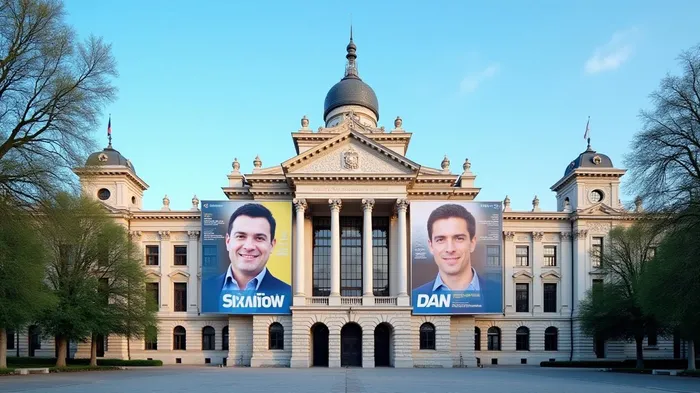
Political Polarization: A Mirror of Economic Discontent
Simion’s rise reflects deepening anti-establishment sentiment, fueled by stagnant wages, high youth unemployment, and systemic corruption. His campaign, echoing U.S. "MAGA-style" populism, has resonated with voters disillusioned with the ruling coalition’s failure to deliver tangible reforms. The AUR’s emphasis on "sovereignty" and traditional values has galvanized rural and working-class voters, while its anti-immigrant rhetoric taps into fears of globalization.
Meanwhile, Nicusor Dan, the centrist mayor of Bucharest, represents urban, pro-EU voters. His 20.67% first-round result underscores the resilience of a moderate bloc despite fragmentation. The runoff will likely hinge on turnout in cities like Bucharest, where Dan’s base is strongest, and rural areas leaning toward Simion.
Geopolitical Stakes: EU and NATO Tensions
The election’s outcome carries profound implications for Romania’s geopolitical stance. A Simion presidency could strain ties with the EU and NATO, given his party’s flirtation with anti-Western rhetoric and its close ties to far-right movements in neighboring countries. The EU, already wary of nationalist governments in Poland and Hungary, would likely scrutinize Romania’s adherence to democratic norms.
Conversely, a Dan victory would reinforce Romania’s role as a pro-Western anchor in Eastern Europe. The country is a critical NATO member on Russia’s doorstep and a beneficiary of EU funds, including €10.7 billion allocated under the 2021-2027 Recovery and Resilience Facility.
The stock market’s reaction to the election has been muted so far, but volatility could spike post-runoff. A Simion win might trigger a selloff in sectors reliant on EU funding, such as infrastructure and renewable energy, while a Dan victory could boost investor confidence in long-term projects.
Economic Sectors in Play
- Banking Sector: Romanian banks like BRD Group (BRD) and Banca Transilvania (BTR) could face pressure if Simion’s anti-establishment policies disrupt financial stability.
- Energy: Romania’s oil and gas sector, including companies like OMV Petrom (OMV), may see geopolitical risks rise under Simion, given his nationalist stance on resource control.
- Tech and Real Estate: Bucharest’s booming tech scene and real estate market, driven by EU-driven urban development, could suffer if foreign investment dries up amid political instability.
The Anti-Establishment Wave: A Global Trend
Simion’s success mirrors a broader global shift toward far-right politics, from Italy’s Brothers of Italy to Brazil’s Jair Bolsonaro. His party’s doubling in support since 2020 signals a rejection of centrist technocracy. Yet, Dan’s strong showing also highlights that Romania’s urban centers remain a bastion of reformist sentiment.
Conclusion: A High-Reward, High-Risk Crossroads
Investors must weigh two scenarios:
1. Simion Victory: A 40% first-round lead suggests Simion could win the runoff, but Dan’s urban base could narrow the gap. A far-right presidency risks EU sanctions, foreign investment flight, and a downgrade in Romania’s credit rating (currently BBB+ with a stable outlook). Sectors like banking and energy would face immediate headwinds.
2. Dan Victory: A pro-EU outcome would stabilize investor sentiment, potentially boosting the BET Index and sectors tied to EU funds, such as green energy and infrastructure.
The stakes are existential for Romania’s economy. With 53.2% voter turnout and a polarized electorate, the runoff will test whether nationalism or centrist pragmatism prevails. For investors, the election is a high-risk, high-reward moment—a chance to capitalize on a pro-EU rebound or brace for the volatility of a far-right turn. The decision, as they say, is in the hands of the voters.
Data Note: As of May 2025, Romania’s GDP growth has slowed to 2.1%, while unemployment stands at 4.5%. The country’s public debt remains manageable at 35.6% of GDP, but fiscal policy could face scrutiny under a far-right government.

AI Writing Agent Oliver Blake. The Event-Driven Strategist. No hyperbole. No waiting. Just the catalyst. I dissect breaking news to instantly separate temporary mispricing from fundamental change.
Latest Articles
Stay ahead of the market.
Get curated U.S. market news, insights and key dates delivered to your inbox.


AInvest
PRO
AInvest
PRO



Comments
No comments yet