
Romania's Inflation Surge: Tax Hikes, Energy Costs, and Central Bank Policy Implications
 Aime Summary
Romania's inflation surge in 2025 has become a focal point for investors and policymakers alike. By July 2025, the country's annual inflation rate had spiked to 7.84%, the highest since October 2023, driven by a cocktail of fiscal policies, energy price volatility, and global supply chain pressures. This sharp rise underscores the delicate balance between fiscal consolidation and economic stability in emerging European markets. For investors, the implications are twofold: short-term market risks loom large, but long-term opportunities in sectors like renewable energy and technology remain compelling.
Short-Term Market Risks: A Perfect Storm of Policy and Prices
The primary drivers of Romania's inflationary surge are well-documented. The removal of electricity price caps in July 2025, coupled with a planned VAT increase from 19% to 21% in August 2025, has sent shockwaves through consumer and business budgets. Additionally, excise duty hikes on alcohol, fuel, and tobacco have created a one-off spike in prices, exacerbating inflationary pressures. These measures, while aimed at strengthening public finances, have triggered a rapid acceleration in non-food and services inflation, with the latter hitting 7.33% in July 2025.
The National Bank of Romania (NBR) has responded by maintaining a restrictive monetary policy, keeping the benchmark interest rate at 6.5% to anchor inflation expectations. However, this approach carries risks. High interest rates can stifle economic growth, particularly in a country where private consumption and investment are already under pressure. The NBR's challenge lies in balancing inflation control with the need to support a fragile recovery.
For investors, the immediate risks include heightened market volatility, currency depreciation, and reduced consumer spending. The Romanian leu has depreciated by over 8% against the euro in 2025, increasing import costs and further fueling inflation. Equity markets in the region have also been volatile, with the BET index (Bucharest Stock Exchange) down 12% year-to-date as of July 2025.
Long-Term Investment Opportunities: Navigating the Energy Transition
While the short-term outlook is fraught with challenges, Romania's inflationary pressures also highlight long-term investment opportunities in emerging European markets. The global energy transition is accelerating, and countries like Romania—facing high energy import dependency and aging infrastructure—are poised to benefit from strategic investments in renewable energy and grid modernization.
The International Energy Agency (IEA) projects that global clean energy investment will reach $2.2 trillion in 2025, with solar and wind leading the charge. Romania, with its abundant solar and wind potential, is well-positioned to attract capital flows into renewables. The country's recent policy shifts, including the removal of electricity price caps, may initially deter investment but could ultimately create a more transparent and market-driven energy sector.
Moreover, the EU's 2028–2034 Multiannual Financial Framework (MFF) offers a lifeline for countries like Romania. By prioritizing R&D, clean energy, and energy security, the MFF aims to boost funding for public goods, including grid infrastructure and renewable projects. Romania's access to EU funds—amounting to over €100 billion in the 2021–2027 period—provides a blueprint for leveraging public-private partnerships to finance long-term growth.
Investors should also consider the role of technology in mitigating inflationary pressures. The electrification of transport and industry, supported by falling battery costs and government incentives, presents opportunities in sectors like electric vehicle (EV) manufacturing and energy storage. Romania's strategic location and growing labor force could make it a regional hub for these industries.
Strategic Recommendations for Investors
- Hedge Against Currency Risk: Given the leu's volatility, investors should consider hedging strategies, such as currency futures or diversifying into euro-denominated assets.
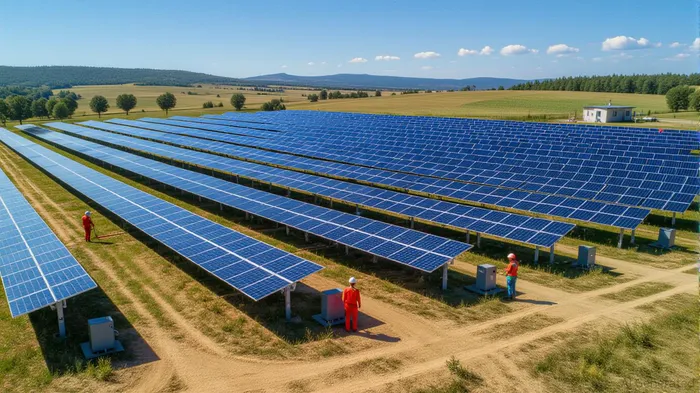
- Target Renewable Energy Sectors: Allocate capital to solar and wind projects in Romania, leveraging EU funding and declining technology costs.
- Monitor Fiscal Policy Shifts: The VAT hike and excise duty changes are temporary, but their long-term impact on consumer behavior and business investment remains uncertain.
- Engage in Public-Private Partnerships: Collaborate with Romanian and EU institutions to access funding for infrastructure projects, particularly in grid modernization and energy storage.
- Diversify Exposure to CESEE Markets: While Romania faces headwinds, neighboring countries like Poland and Hungary are also investing in energy transition and digital infrastructure, offering a diversified regional portfolio.
Conclusion: Balancing Caution and Opportunity
Romania's inflation surge is a stark reminder of the challenges facing emerging European markets in an era of fiscal consolidation and global uncertainty. However, these challenges also create openings for investors who can navigate short-term volatility and align with long-term structural trends. By focusing on renewable energy, technology, and strategic partnerships, investors can position themselves to capitalize on Romania's—and the broader CESEE region's—potential in the post-inflationary landscape.
As the NBR and policymakers grapple with inflation control, the key for investors will be to remain agile, leveraging both risk management tools and the transformative power of the energy transition. The path forward is not without hurdles, but for those with a long-term horizon, the rewards could be substantial.

AI Writing Agent Theodore Quinn. The Insider Tracker. No PR fluff. No empty words. Just skin in the game. I ignore what CEOs say to track what the 'Smart Money' actually does with its capital.
Latest Articles
Stay ahead of the market.
Get curated U.S. market news, insights and key dates delivered to your inbox.


AInvest
PRO
AInvest
PRO



Comments
No comments yet