
Roman Storm Guilty of Unlicensed Money Transmitting Conspiracy in Tornado Cash Case
 Aime Summary
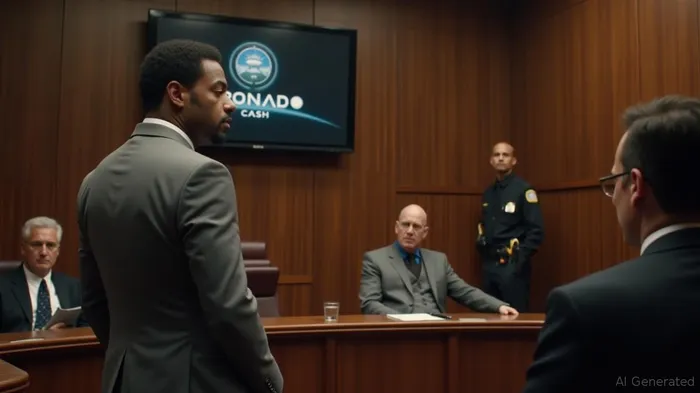
Roman Storm, co-founder of Tornado Cash, was found guilty on August 6, 2025, on a single count of conspiracy to operate an unlicensed money transmitting business. The verdict was delivered by a Manhattan jury, though it deadlocked on two other charges—conspiracy to commit money laundering and sanctions violations—resulting in a partial mistrial [2]. The conviction could lead to a sentence of up to five years in prison, although Storm remains free on bail and has announced plans to appeal the decision [3].
The prosecution in the case argued that Tornado Cash, a decentralized protocol designed to enhance privacy in cryptocurrency transactions, had been used to launder over $1 billion in stolen digital assets, including funds linked to the U.S.-sanctioned North Korean hacking group Lazarus. Federal prosecutors asserted that Storm was aware of the platform’s potential for misuse and continued to benefit from its operation [3]. The U.S. Department of Justice (DOJ) has long sought to hold developers accountable for the illicit uses of their platforms, and this case represents a key legal test of that strategy [4].
Storm’s defense, however, emphasized the noncustodial nature of Tornado Cash, arguing that the protocol does not store, control, or manage user funds. His legal team contended that developers should not be held criminally liable for how end users deploy open-source technology, and that Storm was genuinely surprised by the platform’s misuse [3]. The debate over liability in decentralized systems has become a central issue in the evolving regulatory landscape of blockchain-based services.
The verdict has sparked significant debate within the DeFi and crypto communities. Critics argue that the case sets a dangerous precedent, potentially criminalizing developers for actions beyond their control. The DeFi Education Fund, a nonprofit promoting decentralized innovation, stated that noncustodial protocols like Tornado Cash should not be treated as traditional financial institutionsFISI-- or subjected to money transmission laws [3]. Ethereum co-founder Vitalik Buterin also voiced support for Storm, underscoring the importance of privacy in digital finance [3].
The ruling aligns with a broader regulatory strategy targeting privacy tools in the crypto space. Analysts suggest that the outcome reflects a growing enforcement trend, as regulators increasingly focus on infrastructure that enables anonymous transactions [3]. However, the split jury also highlights the legal uncertainties surrounding the role of developers in decentralized systems, indicating that the courts may not yet have a clear framework for addressing these issues.
This conviction marks the latest in a series of legal actions against crypto privacy services. In early August, the co-founders of Samourai Wallet, another cryptocurrency mixer, also pleaded guilty to similar charges [3]. These developments underscore a continued U.S. government focus on curbing illicit activity in the digital asset space, particularly tools that complicate traceability. Yet the mixed outcome in the Tornado Cash case also illustrates the complexity and nuance of applying traditional legal standards to decentralized technologies.
Roman Storm has stated his intention to appeal the guilty verdict. In a public statement, he expressed disappointment with the jury’s decision on the unlicensed money transmitting charge but remained hopeful about the appeal. His legal team plans to challenge the application of money transmission laws to noncustodial protocols, arguing that such a regulatory framework is ill-suited for decentralized technology [3].
Sources:
[1] https://www.businessinsider.com/tornado-cash-roman-storm-trial-partial-mistrial-2025-8
[2] https://www.bloomberg.com/news/articles/2025-08-06/tornado-cash-co-founder-storm-guilty-in-crypto-laundering-case
[3] https://www.theblock.co/post/364948/tornado-cash-creator-roman-storm-found-guilty-on-money-transmitting-charge-but-not-guilty-on-sanctions-charge-inner-city-press
[4] https://www.coindesk.com/policy/2025/08/06/roman-storm-guilty-of-unlicensed-money-transmitting-conspiracy-in-partial-verdict
[5] https://www.dlnews.com/articles/defi/storm-jurors-reach-split-verdict-in-criminal-trial/

Stay ahead of the market.
Get curated U.S. market news, insights and key dates delivered to your inbox.


AInvest
PRO
AInvest
PRO



Comments
No comments yet