
Roman Storm Convicted in Tornado Cash Case as Jury Deadlocks on Major Charges
 Aime Summary
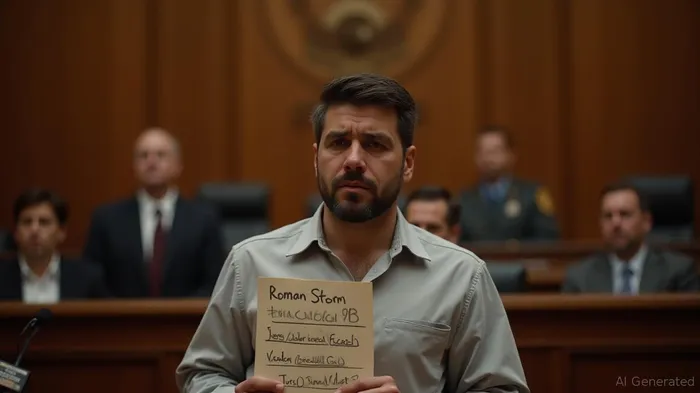
Roman Storm, the founder of the Tornado Cash privacy tool, was convicted of conspiracy to operate an unlicensed money transmitting business, a charge carrying a maximum sentence of five years in prison. However, the jury could not reach a unanimous verdict on more serious counts, including money laundering and sanctions violations related to North Korea. Prosecutors had sought immediate revocation of Storm’s bail, citing concerns over his Russian background, access to millions in crypto assets, and prior discussions about immigration strategies. Assistant U.S. Attorney Arad argued that Storm posed a flight risk and had advised others on evading immigration systems [1]. Storm’s defense, however, highlighted his compliance with bail terms, family ties in the U.S., and voluntary cooperation with investigators prior to his arrest [1]. U.S. District Judge Katherine Polk Failla ultimately denied the prosecution’s request for detention, stating that Storm had strong incentives to remain and appeal the conviction [1].
The trial has sparked a broader debate over the legal status of decentralized protocols and the balance between privacy and regulation in the crypto space. Storm’s defense argued that he should not be held responsible for how users interacted with his software, a stance reflecting the core principles of decentralization. The mixed verdict has been seen as a limited but significant win for the crypto community, as Storm was acquitted of more serious charges. Yet unresolved issues remain, and prosecutors have not ruled out the possibility of retrials on the deadlocked counts [1].
Legal analysts have noted that the outcome sets a critical precedent for how the U.S. legal system may treat open-source developers and privacy tools in the future. The case raises complex questions about liability, innovation, and user autonomy in a decentralized financial ecosystem. The unresolved charges also highlight the difficulty of applying traditional legal frameworks to rapidly evolving digital technologies [1].
As the crypto industry continues to expand, this trial underscores the ongoing tension between regulatory oversight and technological freedom. Stakeholders must closely monitor future developments, including any retrials and potential sentencing, which could shape the trajectory of crypto regulation and the rights of developers and users alike [1].
Source: [1] Roman Storm’s Conviction Sparks Debate on Crypto Regulation and Privacy Rights Amid Unresolved Charges (https://en.coinotag.com/roman-storms-conviction-sparks-debate-on-crypto-regulation-and-privacy-rights-amid-unresolved-charges/)

Stay ahead of the market.
Get curated U.S. market news, insights and key dates delivered to your inbox.


AInvest
PRO
AInvest
PRO



Comments
No comments yet