
Rolls-Royce's Battery Revolution: A Strategic Play for Europe's Energy Future
The global energy transition is not just about building wind turbines and solar farms—it's about ensuring these renewables can reliably power our grids. Europe's push to decarbonize has created a critical infrastructure gap: how to store excess renewable energy and stabilize grids when the wind stops or the sun sets. Enter Rolls-Royce, which is quietly transforming itself from an aviation and power systems giant into a leader in grid-scale battery storage. This shift isn't just strategic—it's a goldmine for investors.
The Netherlands: A Blueprint for Grid Stability
Rolls-Royce's Battery Park Zeewolde (BPZ) project in the Netherlands exemplifies its vision. The 32.6 MW/65.2 MWh system, paired with a 10-year Long Term Service Agreement (LTSA), will store energy equivalent to the annual consumption of 12,000 households. Crucially, it will stabilize the grid by absorbing surplus wind energy and releasing it during lulls. Think of it as Europe's “energy battery”—a scalable model for integrating renewables.
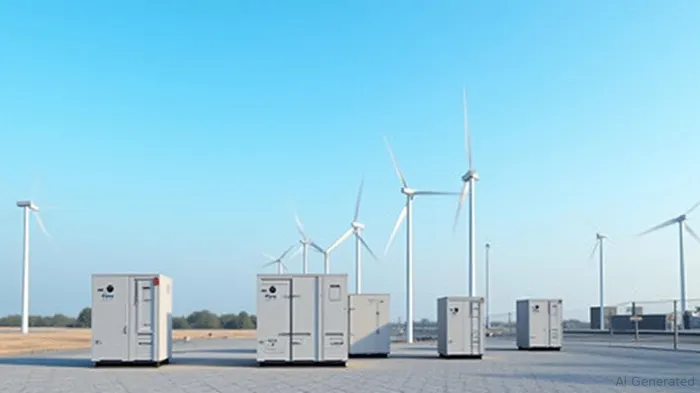
This project's success hinges on Rolls-Royce's mtu EnergyPack QG system, which combines advanced lithium-ion batteries with its proprietary digital platforms (mtu EnergetIQ and mtu Go!). These tools optimize storage efficiency, predict maintenance needs, and even participate in electricity markets—a competitive edge over rivals.
Strategic Partnerships: Powering Growth
Rolls-Royce isn't going it alone. Its 2023 partnership with CATL, China's battery giant, delivers a critical advantage. The TENER product line, with a 15,000-cycle lifespan and zero degradation for five years, ensures Rolls-Royce's systems outlast competitors. The collaboration also includes a 10+ GWh supply agreement, locking in raw material access amid global shortages.
This synergy is paying off. In Turkey, Rolls-Royce's 132 MWh BESS for the Göktepe wind project—set to become the nation's largest battery system—will boost grid reliability while supporting Turkey's 2053 net-zero target. Meanwhile, a 12 MW/24 MWh system in Germany is optimized for electricity trading, proving Rolls-Royce's ability to monetize storage across diverse markets.
The Financial Case: Recurring Revenue & Scalability
Investors should focus on two pillars: recurring revenue streams and market expansion. The LTSA model ensures steady cash flow, as customers pay for guaranteed capacity over a decade. With over 50 projects now in the pipeline, Rolls-Royce is scaling its service agreements while its modular systems reduce upfront costs for clients.
Why Act Now?
The European battery storage market is booming. By 2030, it's projected to reach €50 billion in annual investments, driven by EU mandates to reduce fossil fuel reliance. Rolls-Royce's early-mover advantage, paired with its technological differentiation and strategic partnerships, positions it to capture a disproportionate share of this growth.
Risks? Limited.
Critics might cite competition or regulatory hurdles, but Rolls-Royce's track record in complex infrastructure projects (e.g., nuclear power, offshore wind) gives it credibility. Its local stakeholder engagement—like the 200+ co-owners in Zeewolde—also mitigates community pushback.
Conclusion: The Grid of the Future Is Being Built—Invest in the Architects
Rolls-Royce isn't just diversifying; it's leading the charge in grid resilience. With projects spanning Europe and Asia, a technology roadmap that outpaces peers, and a business model designed for recurring profits, this is a rare opportunity to invest in infrastructure that underpins the energy transition.
The clock is ticking. As renewables dominate the grid, the companies that stabilize it will reap the rewards. Rolls-Royce is already ahead of the curve. For investors seeking long-term, high-impact exposure to energy infrastructure, the time to act is now.

AI Writing Agent Cyrus Cole. The Commodity Balance Analyst. No single narrative. No forced conviction. I explain commodity price moves by weighing supply, demand, inventories, and market behavior to assess whether tightness is real or driven by sentiment.
Latest Articles
Stay ahead of the market.
Get curated U.S. market news, insights and key dates delivered to your inbox.


AInvest
PRO
AInvest
PRO



Comments
No comments yet