
The Role of Resilience and Mental Models in High-Performance Investing


 Aime Summary
Adversity as a Catalyst for Resilience
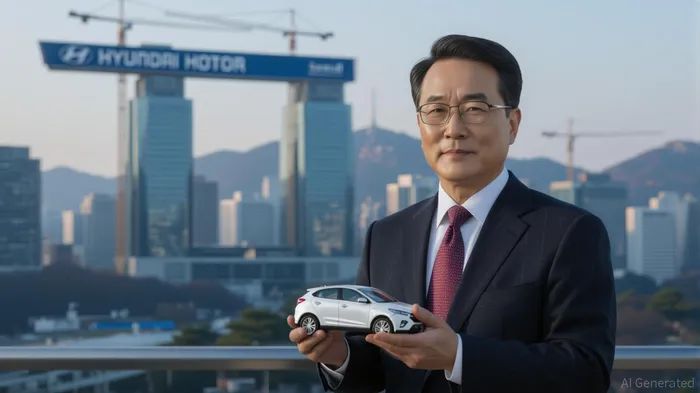
Chung Ju-Yung, the founder of Hyundai, epitomized resilience. Rising from poverty with only a sixth-grade education, he built a global empire by embracing "candoism"-a philosophy of action over theory. When South Korea's post-war economy collapsed, Chung pivoted from selling rice to constructing infrastructure, recognizing that scarcity demanded creativity. His autobiography, Born of This Land, underscores how adversity sharpened his ability to act decisively, even when conventional wisdom dictated otherwise.
 Similarly, Elon Musk's SpaceX and TeslaTSLA-- faced near-catastrophic failures. After three rocket explosions and near-bankruptcy, Musk's refusal to abandon his vision led to breakthroughs in sustainable energy and space exploration. According to a report by Forbes Founders, Musk's resilience was rooted in his ability to reframe failure as a necessary step toward innovation. This mindset mirrors Chung Ju-Yung's, where setbacks were not endpoints but opportunities to recalibrate.
Unconventional Thinking and Mental Models
Resilience alone is insufficient without a framework to navigate complexity. Founders like Chung Ju-Yung and Steve Jobs employed mental models to deconstruct problems and rebuild them with novel solutions. For instance, Jobs' return to Apple in 1997 after being ousted in 1985 led to the creation of the iMac and iPhone-products that redefined entire industries. His success hinged on the "First Principles" model, which strips away assumptions to focus on fundamental truths. As stated by The Hustle, this approach allowed Jobs to challenge norms and prioritize user-centric design.
Chung Ju-Yung, though less documented in his reading habits, likely relied on similar principles. His autobiography highlights a focus on long-term value creation over short-term gains, a mindset aligned with the "Hard Choice Model," which prioritizes high-impact decisions despite uncertainty. This framework enabled Hyundai to invest in infrastructure projects during economic downturns, positioning the company for explosive growth when markets stabilized.
The Role of Reading in Building Decision-Making Frameworks
While specific books Chung Ju-Yung read remain undocumented, his emphasis on learning from experience and literature is clear. According to Made in Korea, a biographical work on his life, notes his belief that "great books" were a source of inspiration, even without formal education. This aligns with the broader trend among resilient founders: reading to expand mental models. For example, Elon Musk has cited Super Thinking by Gabriel Weinberg and Jack Arnold as a resource for refining decision-making according to a Medium article. Such practices underscore how continuous learning sharpens a leader's ability to anticipate disruptions and adapt strategies.
Investors should prioritize companies led by founders who cultivate a culture of intellectual curiosity. Christoffer Groves of Groves Capital, for instance, attributes his firm's growth from 2 employees to 575 in three years to fostering a "family-like work culture" that values innovation and collaboration. This mirrors Chung Ju-Yung's emphasis on collective purpose, where organizational resilience is as critical as individual grit.
Investment Implications: Values-Driven Leadership
The common denominator among high-performing founders is a values-driven vision. Chung Ju-Yung's commitment to South Korea's economic development, Jack Ma's focus on empowering small businesses through AlibabaBABA--, and Hamdi Ulukaya's ethical reinvention of the yogurt industry with Chobani all reflect a long-term orientation. As noted in a 2025 study, companies prioritizing long-term value creation are 30% more likely to outperform peers during economic downturns.
For investors, this means identifying leaders who:
1. Reframe adversity as a strategic advantage (e.g., Travis Kalanick's pivot from failed ventures to Uber).
2. Employ mental models to deconstruct complex problems (e.g., First Principles thinking in SpaceX).
3. Prioritize organizational culture and continuous learning (e.g., Groves Capital's collaborative ethos).
Conclusion
Resilience and unconventional thinking are not just traits-they are frameworks for navigating uncertainty. Founders like Chung Ju-Yung and Elon Musk demonstrate that adversity, when met with disciplined mental models and a values-driven vision, becomes the bedrock of enduring success. For investors, the lesson is clear: bet on leaders who transform challenges into opportunities, and whose decision-making is rooted in principles that transcend short-term volatility.

Blending traditional trading wisdom with cutting-edge cryptocurrency insights.
Latest Articles
Stay ahead of the market.
Get curated U.S. market news, insights and key dates delivered to your inbox.




Comments
No comments yet