
The Role of Institutional Investment in Renewable Energy Education and Workforce Development


 Aime Summary
The Economic Impact of Institutional Investments
The economic returns of institutional investments in renewable energy extend beyond immediate infrastructure projects. For instance, the U.S. solar industry attracted $60 billion in private investment in 2023, directly contributing to a 5.3% employment growth by 2024. Similarly, global renewable energy investment hit $622.5 billion in 2023, an 8.1% increase from 2022, underscoring the sector's capacity to generate jobs and stimulate innovation.
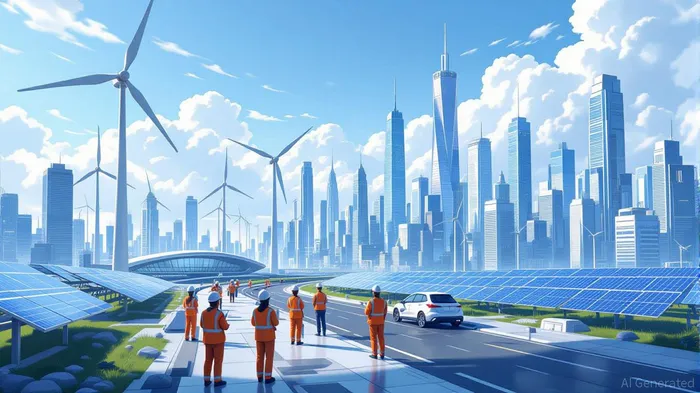
A key driver of this growth is the alignment of education and workforce development with sector-specific needs. In the RCEP region, a 1% increase in higher education enrollment correlates with a 0.29% rise in long-term sustainable energy progress. This synergy between education and economic development is amplified by green finance, where a 1% increase in green finance leads to a 0.38% boost in long-term sustainable energy outcomes. These metrics highlight how institutional investments in education are not just social initiatives but strategic tools for enhancing ROI.
Sector-Specific Education Programs: Case Studies in ROI
Morocco's 2030 Energy Transition Project exemplifies the power of targeted education programs. By 2025, the country had already achieved 38% of its electricity generation from renewables, with green hydrogen and electric vehicle manufacturing creating new supply chains according to research. The project's focus on training educators, trainers, and local communities has directly supported the growth of micro, small, and medium enterprises (MSMEs), which account for 50% of job creation in Morocco as reported. Women and youth, in particular, have benefited from these programs, with renewable energy integration fostering entrepreneurship in rural areas.
Portugal's Green Skills & Jobs program, launched under its 2030 Energy and Climate Plan, offers another compelling example. This initiative provides training in energy efficiency, solar manufacturing, and sustainable mobility, requalifying workers displaced by the energy transition. Institutions like the Instituto Superior Técnico have strengthened Portugal's skilled labor infrastructure, enabling the country to capitalize on wind energy projects that temporarily reduce local unemployment during construction phases according to analysis. While overall employment growth in Portugal has lagged behind the EU average, the renewable sector's localized job creation demonstrates the value of sector-specific training.
The Synergy of Education and Green Finance
The interplay between education and green finance is particularly evident in the RCEP region, where higher education and green finance together drive sustainable energy progress. For example, a 1% increase in green finance leads to a 0.43% rise in short-term sustainable energy development, while higher education contributes a 0.19% short-term boost. This dual approach-combining financial incentives with skill-building-ensures that renewable energy projects are not only technically viable but also economically inclusive.
In the U.S., a $265 billion in clean energy investments in 2024 were bolstered by public-private partnerships and government incentives, accelerating infrastructure modernization and job creation. These partnerships reduce investment risks and enhance returns, illustrating how institutional capital can be leveraged to scale education programs that align with market demands.
Conclusion: A Strategic Imperative for Investors
The evidence is clear: institutional investments in renewable energy education and workforce development yield substantial long-term economic returns. From Morocco's MSME-driven job growth to Portugal's targeted training programs, sector-specific initiatives are proving essential in addressing the labor challenges of the energy transition. As global investment in renewables continues to rise, investors who prioritize education and workforce development will not only advance sustainability goals but also secure robust financial returns.
By aligning capital with strategic education programs, institutional investors can catalyze a future where clean energy is both a driver of economic prosperity and a tool for inclusive growth.

Combina la sabiduría tradicional en el comercio con los conocimientos más avanzados sobre criptomonedas.
Latest Articles
Stay ahead of the market.
Get curated U.S. market news, insights and key dates delivered to your inbox.






Comments
No comments yet