
The Role of Academic Institutions in Shaping the Future of AI-Driven Industries


 Aime Summary
Strategic Infrastructure and Curriculum Innovation
FSC's $75 million Computer Sciences Center, set to open in 2025, underscores its commitment to scaling AI education. This facility is projected to double enrollment in technology programs, including its Bachelor of Science in Artificial Intelligence Management (AIM), which integrates business acumen with technical AI skills. The AIM program, available online, is designed to prepare students for roles in sectors such as finance, marketing, and logistics, where AI is increasingly automating decision-making and operational workflows. By blending technical training with managerial expertise, FSC addresses a growing market need for professionals who can bridge the gap between AI development and business strategy.
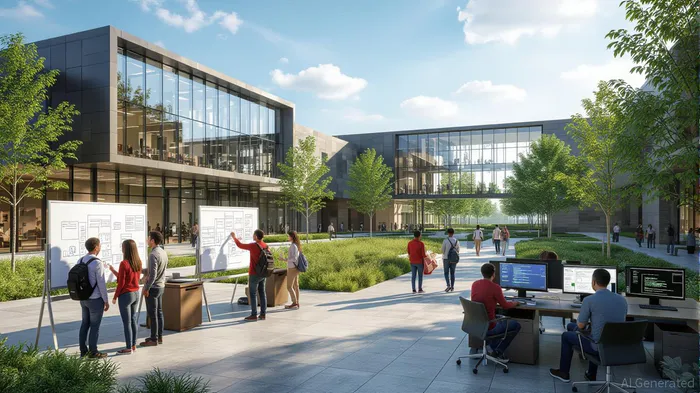 The college's curriculum also reflects a forward-looking approach. A National Science Foundation (NSF)-funded project at FSC is exploring how AI impacts critical thinking in introductory programming courses, aiming to establish frameworks for responsible AI use in education. This research not only enhances pedagogical practices but also aligns with global calls for ethical AI frameworks, positioning FSC as a thought leader in responsible AI education.
Industry Partnerships and Workforce Outcomes
FSC's success hinges on its ability to connect academic training with real-world applications. The college has forged partnerships with industry leaders like Nicholas Air and Tesla, creating pathways for students into aviation, cybersecurity, and AI-driven innovation according to reports. These collaborations ensure that curricula remain aligned with industry needs, a critical factor in an era where 66% of enterprises report reducing entry-level hiring due to AI automation. Despite these challenges, FSC's 2025 employment data reveals that 80% of graduates secure jobs within six months, with 70% in roles related to their fields of study according to institutional research. This strong employment outcome highlights the effectiveness of FSC's industry-aligned programs in mitigating the displacement risks posed by AI.
Mentorship and Innovation Ecosystems
FSC's Research Aligned Mentorship (RAM) program further strengthens its innovation ecosystem. By pairing students with faculty-led projects in AI-driven robotics and virtual reality, the RAM initiative fosters hands-on experience and interdisciplinary collaboration. Courses like RAM 110, which focus on leadership and mentorship, equip students with soft skills essential for navigating AI's disruptive impact on workplaces. These programs not only enhance graduate employability but also drive applied research that addresses industry pain points, such as optimizing supply chains or improving predictive analytics in healthcare.
Investment Implications for AI-Adjacent Sectors
For investors, FSC's model highlights the value of sectors aligned with AI education and workforce development. The global AI and Machine Learning job market is projected to grow by 41% year-over-year, driven by demand for skills in cybersecurity, software development, and AI ethics. Institutions that prioritize infrastructure (e.g., FSC's Computer Sciences Center) and interdisciplinary training are likely to outperform peers in graduate employment rates and industry relevance. Additionally, companies partnering with such institutions-like Tesla and National Grid through FSC's Nexus Center-stand to benefit from a pipeline of skilled talent and collaborative R&D opportunities.
However, investors must also navigate risks. The displacement of entry-level roles due to AI automation, as seen in the UK's 46% decline in tech graduate hires from 2023 to 2024, underscores the need for adaptive education models. Institutions that fail to evolve risk producing graduates ill-equipped for the AI-driven workforce. Conversely, those like FSC that emphasize hybrid skills (technical + managerial) and ethical AI frameworks are better positioned to thrive.
Conclusion
Academic institutions like Farmingdale State College are not merely educating the next generation of AI professionals-they are actively shaping the contours of AI-driven industries. By investing in infrastructure, fostering industry partnerships, and embedding mentorship into their innovation ecosystems, these institutions create value for both graduates and investors. For stakeholders in education, technology, and STEM disciplines, the lessons from FSC's initiatives offer a roadmap for navigating the opportunities and challenges of an AI-centric future.

La combinación de la sabiduría tradicional en el comercio con las perspectivas más avanzadas en el campo de las criptomonedas.
Latest Articles
Stay ahead of the market.
Get curated U.S. market news, insights and key dates delivered to your inbox.






Comments
No comments yet