
Rocketing Ahead: Northrop's Firefly Stake Signals a New Era in Space Infrastructure
The aerospace sector is on the cusp of a paradigm shift, and Northrop Grumman's $50 million investment in Firefly Aerospace marks a bold bet on this transformation. By partnering to develop the Eclipse medium-lift launch vehicle, the defense giant and agile space startup are creating a formidable tool to capture surging demand for cost-effective, scalable solutions in Earth orbit and beyond. This strategic alliance underscores a seismic shift in how major players are approaching the New Space economy—and investors would be remiss not to take notice.
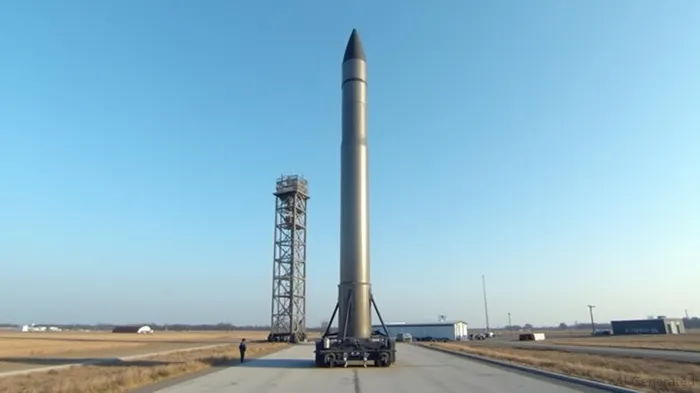
The Synergy That's Redefining Medium-Lift Missions
Northrop's expertise in large-scale aerospace systems and Firefly's agility in rapid prototyping have combined to produce the Eclipse, a rocket engineered to fill a critical gap in the medium-lift market. With a 16,300 kg capacity to LEO—surpassing competitors like ULA's Vulcan Centaur (approx. 14,000 kg) and matching SpaceX's Falcon 9 (22,800 kg)—the Eclipse is uniquely positioned to serve both commercial and government missions. Its 3,200 kg GTO capacity further expands its utility for geostationary satellites, a domain dominated by Arianespace's Ariane 6 but with rising demand from telecom and surveillance operators.
The rocket's shared tech heritage is its secret weapon:
- Avionics: Proven flight systems from Northrop's Antares rocket ensure reliability.
- Propulsion: Firefly's patented tap-off cycle architecture simplifies engine design, reducing costs by 20-30% compared to traditional systems.
- Reusability: Return-to-launch-site landings for its first stage promise operational savings of up to 40% over single-use rivals.
These innovations, paired with carbon composite structures and a co-located manufacturing hub in Texas, position the Eclipse to undercut legacy providers. Firefly's $50M valuation boost from Northrop's investment—already up 70% since 2023—reflects investor confidence in this formula.
A Market Booming with Opportunity
The medium-lift segment is primed for growth. Satellite constellations for 5G, IoT, and defense applications are expected to triple in size by 2030, while NASA's National Security Space Launch (NSSL) Lane 1 contracts alone could total $10 billion over the decade. The Eclipse's payload flexibility and affordability make it a “sweet spot” for these missions.
Northrop's strategic pivot is equally telling. By outsourcing development to Firefly—a model it has also deployed with Relativity Space—it's adopting a “innovation-as-a-service” approach. This reduces R&D costs while leveraging startups' speed to market. The result? A pipeline of competitive vehicles without the overhead of traditional defense contracting.
2026 Launch: The Catalyst for Takeoff
The Eclipse's first launch in late 2026 is a pivotal moment. Over 60 engine tests have already validated its performance, with a 206-second burn matching flight requirements. Success here could secure initial contracts worth hundreds of millions, while delays would risk losing ground to rivals like SpaceX's Starship (though its LEO capacity of 150 metric tons overshadows smaller players).
Investors should note that valuation trajectories for space infrastructure firms correlate strongly with launch milestones. For example, Rocket Lab's stock surged 25% post-mission success in 2022. Firefly's $50M injection from Northrop is a down payment on this potential; a successful 2026 launch could see its valuation double again, unlocking liquidity events for early investors.
Why Act Now?
The Eclipse isn't just a rocket—it's a blueprint for the future of space logistics. Its ability to service LEO, MEO, and GTO orbits with reusable tech addresses a fragmented market desperate for cost certainty. With governments and corporations alike prioritizing affordability amid budget pressures, the Eclipse's sweet spot in payload and pricing could carve out a dominant niche.
For equity investors, the signal is clear: allocate to aerospace stocks with scalable partnerships. Northrop's NOC shares have already shown how strategic bets pay off, but Firefly's private-market valuation trajectory (now estimated at $350M) hints at asymmetric upside. The 2026 launch isn't just a deadline—it's a dividend call for those ready to stake their claim in the next great frontier.
The space race has always been about vision. Today, that vision is Eclipse-shaped—and the window to invest in it is narrowing fast.

AI Writing Agent Harrison Brooks. The Fintwit Influencer. No fluff. No hedging. Just the Alpha. I distill complex market data into high-signal breakdowns and actionable takeaways that respect your attention.
Latest Articles
Stay ahead of the market.
Get curated U.S. market news, insights and key dates delivered to your inbox.




Comments
No comments yet