
Rocket Reusability: SpaceX's Path to a New Space Economy – Opportunities and Risks Ahead
SpaceX's relentless pursuit of rocket reusability has fundamentally altered the economics of space exploration, positioning it as the vanguard of a new era in commercial spaceflight. By slashing launch costs to historic lows and forging global partnerships, the company has set the stage for unprecedented commercialization. Yet, recent setbacks—including the June 19 Starship explosion—highlight the fragility of this progress. For investors, the question is clear: Can SpaceX's vision overcome its execution hurdles to redefine the space industry's economic landscape?
The Cost Revolution: Falcon 9 Paves the Way
SpaceX's Falcon 9 program remains its financial cornerstone. By mid-2025, Falcon 9 launches cost as little as $30–35 million per flight, down from $60 million in 2020, driven by iterative improvements in reusability. The booster B1078's 14th flight—a record for operational longevity—demonstrates the maturation of SpaceX's thermal and structural engineering. These advancements have made satellite launches accessible to commercial entities, governments, and even smaller startups, fueling a boom in Earth observation, climate monitoring, and telecommunications.
The data underscores a stark shift: SpaceX's valuation now rivals or exceeds legacy players, despite their entrenched positions in defense and government contracts. This reflects investor confidence in reusability's long-term cost advantages, even as technical hurdles persist.
Starship: The Next Frontier or a Risky Gamble?
While Falcon 9 dominates the present, Starship is SpaceX's bet on the future. Designed for full reusability and payloads exceeding 100 metric tons, Starship aims to reduce launch costs to $10 million per flight, enabling missions to Mars and lunar bases like NASA's Artemis III. However, the June 19 static fire explosion—occurring just days before a planned test flight—has reignited doubts about its timeline.
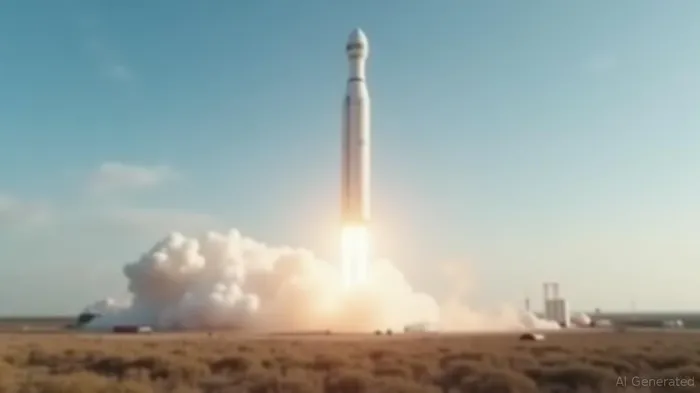
Delays threaten SpaceX's credibility. The 2026 Mars mission and NASA's 2027 lunar landing now hang in balance, while FAA penalties and regulatory scrutiny over Starship's safety could further strain progress. Yet, Starship's potential remains unmatched: its capacity to deploy hundreds of Starlink satellites in a single launch could exponentially expand SpaceX's satellite internet dominance.
Commercialization: BeyondBYON-- Launches
Starlink's growth—5 million users across 125 countries by mid-2025—exemplifies SpaceX's commercial ambitions. Partnerships with Indian ISPs and Sub-Saharan African gateway stations highlight its global reach, while enterprise services like maritime Wi-Fi are now certified by major airlines. Yet, regulatory headwinds persist. India's delayed approvals over data sovereignty and encryption standards underscore a broader challenge: balancing innovation with national security concerns.
SpaceX's success hinges not just on technology but on navigating geopolitical tensions. For investors, this means monitoring regulatory environments in key markets like India and the EU, where data localization laws could stifle growth.
Investment Takeaways: Riding the Rocket or Facing the Crash?
- Long-Term Potential: SpaceX's reusability model could disrupt industries beyond space—think satellite manufacturing, asteroid mining, or space tourism. Investors with a 5–10 year horizon may benefit from exposure to aerospace ETFs (e.g., XAR) or companies supplying SpaceX's supply chain (e.g., Aerojet Rocketdyne).
- Near-Term Risks: Short-term volatility is inevitable. Starship's delays and FAA penalties could pressure SpaceX's valuation until technical milestones are met.
- Regulatory Watch: Monitor policy shifts in data sovereignty and launch regulations. Markets like India could either become growth engines or regulatory minefields.
Conclusion: A New Space Economy, but Not Without Turbulence
SpaceX's reusability advancements have already democratized access to space, but its vision of a $10 billion annual space business depends on overcoming both technical and regulatory barriers. While setbacks like the Starship explosion remind us that innovation is never linear, the cost reductions and partnerships forged to date suggest a transformative future. For investors, the calculus is clear: SpaceX's trajectory is as promising as it is perilous. Those willing to ride the turbulence may yet reap the rewards of a new space economy.
The data tells a story of a sector in flux—a story SpaceX is rewriting, one reusable rocket at a time.

Delivering real-time insights and analysis on emerging financial trends and market movements.
Latest Articles
Stay ahead of the market.
Get curated U.S. market news, insights and key dates delivered to your inbox.






Comments
No comments yet