
Rocket Lab Surges 10% on $397M Space Force Deal
 Aime Summary
Forward-Looking Analysis
Analysts covering Rocket LabRKLB-- have established a consensus price target median of $120.00 based on 13 recent ratings. Specific targets range from $96.00 set by Andres Sheppard of Cantor Fitzgerald to $135.00 by Michael Leshock of Keybanc. Other notable targets include $130.00 from Suji Desilva (Roth Capital) and Trevor Walsh (Citizens), $120.00 from Ryan Koontz (Needham) and Jeff Van Rhee (Craig-Hallum), and $115.00 from Ronald Epstein (BofA Securities). While specific consensus EPS and revenue estimates for Q2 2026 are not explicitly detailed in the provided data, the median target implies significant upside potential from current levels around $82.83. Institutional sentiment reflects this optimism, with Capital International Investors and DeFiance ETFs adding substantial positions in Q1 2026, whereas Capital World Investors and Baillie Gifford reduced holdings. The market anticipates continued growth driven by the company's expanding role in national security and commercial space sectors.
Historical Performance Review
Rocket Lab reported Q1 2026 revenue of $200.35 million, marking a 63.46% year-over-year increase. Gross profit reached $76.49 million, reflecting a gross margin of 33.77%. However, the company posted a net loss of $45.02 million, resulting in an EPS of -$0.07. Despite the net loss, the significant revenue growth and solid gross margins demonstrate operational scaling and strong demand for launch services, setting a baseline for Q2 expectations amid continued investment in new rocket programs.
Additional News
Rocket Lab shares surged approximately 10% in early August 2026 following two major catalysts. First, the company successfully completed its 13th Electron rocket launch of 2026 and 92nd overall, deploying a satellite for the Institute for Q-shu Pioneers of Space (iQPS). This mission secured 10 additional booked launches for iQPS ahead of its 2030 deadline. Second, Rocket Lab announced a $397 million contract with the U.S. Space Force for the Space-Based Airborne Moving Target Indicator (SB-AMTI) program to develop, launch, and operate advanced "Flatellites" for real-time airborne threat detection. This follows a previous $266 million Space Force deal for suborbital missile-defense launches. The stock, currently trading at $82.83 with a $45 billion market cap, remains volatile, up 86% year-over-year but down 45% from its 2026 high of $151.00. Insider activity shows extensive selling by executives, including CEO Peter Beck’s $287 million in sales, while hedge funds like Capital World Investors significantly reduced positions. Despite rich valuation multiples, the company’s expanding government contract portfolio and operational milestones continue to drive investor interest.
Summary & Outlook
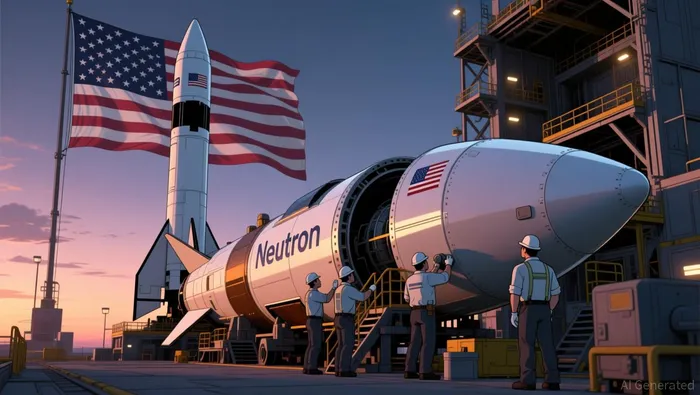
Rocket Lab demonstrates strong top-line growth with Q1 revenue up 63.46%, though profitability remains elusive with a net loss of $45.02 million. The primary growth catalyst is the robust pipeline of U.S. Space Force contracts, including the new $397 million SB-AMTI award, which diversifies revenue beyond commercial launches. Risks include high valuation multiples, insider selling, and the execution risk associated with the upcoming Neutron rocket program. Overall, the outlook is cautiously bullish. The combination of recurring government revenue streams, successful Electron launch cadence, and expanding satellite operations positions Rocket Lab favorably in the growing space economy, despite near-term earnings volatility. Investors should monitor Q2 progress on cost controls and Neutron development milestones.

Get noticed about the list of notable companies` earning reports after markets close today and before markets open tomorrow.
Latest Articles
Stay ahead of the market.
Get curated U.S. market news, insights and key dates delivered to your inbox.


AInvest
PRO
AInvest
PRO




Comments
No comments yet