
Rocket Lab's Stock Surge: Assessing the Sustainability of Growth in a Booming Space Economy
 Aime Summary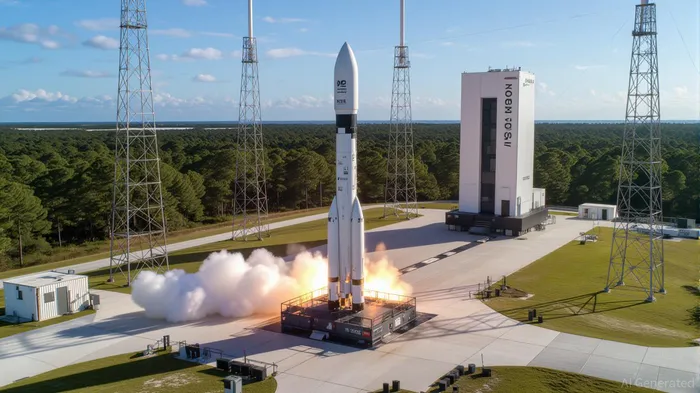
Rocket Lab (RKLB) has captured the imagination of investors and industry watchers alike with a staggering 164% stock price surge in Q1 2025, driven by a confluence of strategic milestones, operational excellence, and favorable industry tailwinds. But as the stock trades near all-time highs, the critical question remains: Is this growth sustainable?
A Perfect Storm of Catalysts
Rocket Lab's recent performance has been fueled by a mix of financial strength, strategic acquisitions, and technical progress. The company's Q1 2025 revenue of $122.6 million—up 32.1% year-over-year—reflects a diversification of its revenue streams. While its Launch Services segment remains a cornerstone, the $87 million generated by the Space Systems division—bolstered by the acquisition of GEOST LLC for $275 million—signals a pivot toward higher-margin satellite payload technologies. This acquisition not only expanded Rocket Lab's capabilities in electro-optical and infrared sensors but also added 115 employees and critical facilities in strategic locations, enhancing its vertical integration.
The reclassification of Rocket LabRKLB-- into the Russell 1000 Index in June 2025 further amplified investor enthusiasm. This move triggered over $200 billion in passive fund inflows, contributing to a 40% stock price jump in just two weeks. The surge in liquidity has reduced volatility, attracting both institutional and retail investors.
Technical and Market Advancements: Neutron and Beyond
Rocket Lab's long-term competitiveness hinges on the Neutron rocket, a medium-lift vehicle designed to carry 13,000 kg to low Earth orbit in a reusable configuration. With a projected launch window in late 2025, Neutron aims to challenge SpaceX's Falcon 9 in the mid-sized launch market. The company's progress—Stage 2 qualification completed in April 2025 and Stage 1 testing underway—has been met with cautious optimism. However, delays remain a risk, as the complexity of reusability and the capital-intensive nature of development could strain Rocket Lab's $17.9 billion market cap valuation.
The company's 100% mission success rate in 2025 and record-breaking launch turnaround times (under 48 hours) underscore its operational discipline. With two orbital launch sites—New Zealand and Virginia—Rocket Lab can support over 130 annual launches, a critical differentiator in an industry where rapid deployment is paramount.
Defense Contracts and Geopolitical Tailwinds
Rocket Lab's recent $5 million task order from the U.S. Space Force and its inclusion in the UK Ministry of Defence's $1.3 billion hypersonic technologies framework highlight its growing influence in national security markets. The $46 billion EWAAC contract with the U.S. Air Force further cements its role in defense innovation. These contracts not only provide revenue visibility but also position Rocket Lab as a diversified counterweight to SpaceX in a sector where geopolitical tensions are reshaping procurement strategies.
The public tensions between Elon Musk and former President Trump, which led to calls for diversifying launch providers, have inadvertently benefited Rocket Lab. As NASA and the Pentagon seek alternatives to reduce dependency on a single provider, Rocket Lab's reliability and agility become key selling points.
Industry Dynamics: Opportunity and Overvaluation Risks
The global space economy, valued at $415 billion in 2024, is projected to grow to $944 billion by 2033. Rocket Lab is strategically positioned to capitalize on this expansion, particularly in satellite communications (CAGR of 12% through 2033) and Earth observation. However, the company's valuation remains a point of contention. At a price-to-sales ratio of 7.5x, Rocket Lab trades at a premium to peers like Astra and Blue Origin, despite not yet generating positive free cash flow. Analysts project 2025 revenue of $599.2 million, a 37% increase, but execution risks—such as Neutron delays or capital constraints—could pressure the stock if profitability is not achieved by 2026.
Investor Sentiment and Analyst Optimism
The bullish case for Rocket Lab is reinforced by analyst upgrades. KeyBanc, CantorCEPT-- Fitzgerald, and Roth Capital have all raised price targets in recent months, with the consensus average now at $29.33—well below the current price of $38.88. This suggests a potential re-rating if the company meets or exceeds expectations on Neutron and defense contracts. However, retail investor sentiment, amplified by social media and meme stock dynamics, could introduce volatility if near-term milestones fall short.
The Sustainability Thesis
Rocket Lab's growth trajectory is underpinned by three pillars:
1. Vertical Integration: By controlling launch, satellite manufacturing, and space systems, Rocket Lab captures value across the entire mission lifecycle.
2. Operational Excellence: Its rapid launch cadence and mission success rate are unmatched in the small satellite segment.
3. Strategic Diversification: Defense and Earth observation contracts reduce reliance on commercial launches, which are more cyclical.
Yet, sustainability requires navigating significant headwinds:
- Capital Constraints: Rocket Lab may need $300–600 million to complete Neutron, risking equity dilution.
- Competition: SpaceX's dominance in the launch market (86% of global upmass in 2024) and its cost advantages could erode Rocket Lab's margins.
- Technical Execution: Delays in Neutron could derail investor confidence and push back profitability.
Investment Implications
For long-term investors, Rocket Lab represents a high-conviction bet on the democratization of space. Its $1.067 billion backlog, with 56% expected to convert within 12 months, provides near-term revenue visibility. The company's strategic alignment with defense and government priorities also offers a moat in an increasingly nationalized space sector.
However, the stock's current valuation reflects aggressive expectations. A prudent approach would be to monitor key milestones:
- Neutron's first launch: Success would validate the company's long-term vision.
- Defense contract conversions: Execution on the EWAAC and UK hypersonic frameworks will determine revenue stability.
- Capital efficiency: Investors should watch for signs of financial prudence in Neutron development to avoid dilution.
Rocket Lab's journey from a niche launch provider to a diversified space infrastructure company is far from over. While the risks are material, the potential rewards for those who can stomach the volatility are equally compelling. As the space economy accelerates, Rocket Lab's ability to innovate and execute will determine whether its recent surge is a sustainable inflection point—or a flash in the pan.

Delivering real-time insights and analysis on emerging financial trends and market movements.
Latest Articles
Stay ahead of the market.
Get curated U.S. market news, insights and key dates delivered to your inbox.
AInvest
PRO
AInvest
PRO



Comments
No comments yet