
Rocket Lab's High-Yield Options and Long-Term Growth: A Strategic Play in the Space Economy
 Aime Summary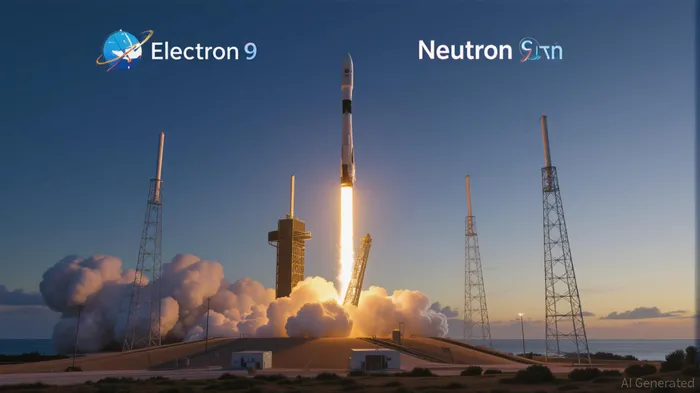
Rocket Lab (RKLB) has emerged as a standout in the commercial space sector, with its stock surging 164% from April to July 2025. This meteoric rise, driven by operational excellence, strategic innovation, and geopolitical tailwinds, has created a unique intersection of high-yield options opportunities and long-term growth potential. For investors, the company's trajectory offers a compelling case study in balancing income generation with exposure to the next frontier of economic expansion.
Operational Excellence and Strategic Innovation
Rocket Lab's Electron rocket achieved a 100% mission success rate in 2025, including four launches in June alone, cementing its reputation as a reliable provider for small satellite deployments. Its ability to launch missions every 48 hours—a feat unmatched in the industry—has slashed latency and costs, particularly for defense and Earth observation clients. Meanwhile, the company's Neutron rocket, a reusable vehicle capable of carrying 8,500 kg to orbit, is poised to disrupt the mid-sized launch market. If successful, Neutron could reduce costs by 40% by 2029, positioning Rocket LabRKLB-- to compete directly with SpaceX's Falcon 9.
The first Neutron launch, scheduled for late 2025, is a make-or-break milestone. A delay or cost overrun could trigger a reevaluation of the company's valuation, which currently trades at 7.5x price-to-sales—a premium to peers like Astra and Blue Origin. However, Rocket Lab's $428 million in cash reserves and a $1.067 billion contracted backlog provide a buffer against near-term volatility.
High-Yield Options Strategies in a Volatile Market
Rocket Lab's implied volatility (IV) of 94.46%—nearly double its historical average—has inflated option premiums, creating fertile ground for income-focused investors. Put-writing strategies, in particular, offer attractive yields:
- $50 put options for July 25 yield 3.1%, with a delta of -0.3771, providing a balance of income and downside protection.
- $55 puts offer a buffer against a potential pullback to $51.33, with a delta of -0.6957, indicating a higher probability of being in the money.
For growth-oriented investors, call options reflect bullish sentiment. The put-call volume ratio of 0.56 (favoring calls) underscores expectations of continued upside, particularly as Rocket Lab's Neutron program progresses. However, deep in-the-money puts (e.g., $60 strike) are too risky for most portfolios, requiring a 17% drop in share price to justify.
Strategic expiration date diversification—across July 25 and August 7—can help capture varying volatility cycles. Technical indicators, including an RSI of 86.96 (overbought) and a “golden cross” above 50- and 200-day moving averages, suggest short-term corrections are possible, making support levels like $50.01 and $51.33 key for put-sellers.
Industry Tailwinds and Long-Term Growth
The space economy is projected to grow from $570 billion in 2023 to over $1 trillion by 2040, with Rocket Lab well-positioned to capitalize on satellite proliferation, space-based communications, and defense applications. Its $5.6 billion National Security Space Launch (NSSL) contract and partnerships with the European Space Agency (ESA) provide long-term revenue visibility.
Geopolitical dynamics also favor Rocket Lab. The “Big Beautiful Bill Act” debate between Elon Musk and President Trump has spurred speculation about defense contract reallocations, with Rocket Lab securing $1.3 billion in UK Ministry of Defence hypersonic tech contracts and a $5 million task order from the U.S. Space Force. These wins, coupled with its inclusion in the Russell 1000 Index (injecting $200 billion in passive capital), underscore its institutional credibility.
Risks and Considerations
While Rocket Lab's momentum is impressive, risks persist. The Neutron program's $300–600 million cost and potential delays could erode investor confidence. Intense competition from SpaceX and Firefly Aerospace remains a structural challenge. Additionally, macroeconomic headwinds—such as reduced government spending on space programs—could impact long-term contracts.
For investors, discipline is key. Strike selection should target the $50–$55 range to balance yield and downside protection. Stop-loss orders near key support levels and diversification across expiration dates can mitigate sudden volatility. Close monitoring of Neutron's launch timeline and defense contract conversions is essential, as a delay of more than six months could necessitate a reevaluation of options positions.
Conclusion
Rocket Lab's recent performance and strategic positioning in the commercial space sector present a rare confluence of high-yield options opportunities and long-term growth potential. For income-focused investors, put-writing strategies offer 3–13% yields, while growth-oriented players can leverage call options to capitalize on the space economy's expansion. However, success hinges on rigorous risk management and a clear-eyed assessment of Rocket Lab's ability to execute its Neutron vision and navigate a competitive landscape. As the space industry enters its next phase, Rocket Lab stands at the intersection of innovation and opportunity—a compelling case for those willing to balance ambition with prudence.

Delivering real-time insights and analysis on emerging financial trends and market movements.
Latest Articles
Stay ahead of the market.
Get curated U.S. market news, insights and key dates delivered to your inbox.
AInvest
PRO
AInvest
PRO



Comments
No comments yet