
Rocket Companies (RKT): Lawsuit Looms—Is This a Buying Opportunity or a Warning Sign?
The mortgage lending giant Rocket CompaniesRKT-- (NYSE: RKT) has long been a bellwether for the housing market's health, but its stock has faced turbulence in recent years. Now, a securities fraud lawsuit filed in June 2025 threatens to amplify those headwinds, raising critical questions about the company's transparency and the risks facing its shareholders. The suit alleges Rocket misled investors about its margin compression challenges, a claim that could validate long-standing concerns about its business model—or expose it to costly penalties. For investors, the case presents a paradox: Is this a red flag to avoid RKT, or a contrarian opportunity to buy at a depressed valuation? Let's dissect the legal risks, financial realities, and investment implications.
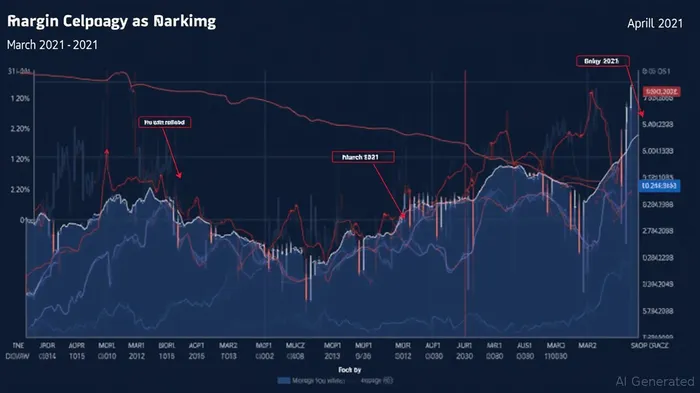
The Legal Case: Margin Missteps and Market Pressure
The lawsuit, led by law firms Levi & Korsinsky and Pomerantz LLP, centers on Rocket's representations about its gain-on-sale margins—the critical profit metric in mortgage lending. Between March 2021 and April 2021, the complaint alleges, Rocket executives falsely claimed margins remained elevated due to “surging demand,” while internally, the company was grappling with a perfect storm of challenges:
- Competitive Price Wars: Rocket engaged in aggressive pricing to retain market share, exacerbating margin declines.
- Shift to Lower-Profit Partner Network Loans: Over half of originations now come from these loans, which carry margins below company averages.
- Secondary Market Compression: The spread between primary and secondary mortgage rates narrowed, squeezing profitability.
The lawsuit cites projections of a 140 basis point margin decline by mid-2021, which allegedly contradicted public statements. When the truth emerged, Rocket's stock plummeted, with investors suffering losses. A key deadline looms: July 8, 2025, for investors to seek lead plaintiff status.
The Financial Reality: Margins Under Siege
Rocket's Q1 2025 margins of 2.8% reflect the lingering impact of these issues. While that's a slight improvement from 2021 lows, it remains below the 3.5%+ levels seen in 2020. Partner Network loans now account for over 50% of originations, a trend that prioritizes volume over margin quality. The lawsuit's focus on misrepresentation underscores a broader truth: Rocket's business model hinges on a precarious balancing act between market share and profitability.
Analysts note that margins have reverted to 2019 levels of 2.65–2.95%, suggesting the company's post-pandemic “golden age” was a temporary anomaly. The legal risks are compounded by a separate racial discrimination lawsuit from the DOJ, though the securities case remains distinct.
Investment Implications: Opportunity or Overexposure?
The question for investors is whether the lawsuit validates concerns about Rocket's transparency—or whether it's a manageable risk at its current valuation.
Bear Case:
- A ruling against Rocket could trigger multi-million-dollar settlements, regulatory fines, and ongoing reputational damage.
- Margin pressures may persist if Partner Network loans continue to dominate, limiting earnings growth.
- The stock's P/E ratio of 7.5x, below its historical average, already reflects pessimism. Further downside is possible if legal liabilities escalate.
Bull Case:
- The lawsuit could force transparency and accountability, potentially stabilizing margins through operational improvements.
- A favorable legal outcome would remove a major overhang, allowing the stock to rebound toward its historical valuation.
- The low P/E leaves room for upside if Rocket can stabilize margins above 3% or expand into higher-margin segments.
Key Metrics to Watch
- Margin Trends: Track Q2 2025 margins to see if the 2.8% figure improves. A sustained climb above 3% would be a positive signal.
- Legal Timeline: Monitor the July 8 lead plaintiff deadline and subsequent motions. Settlement talks could resolve the case quietly.
- Competitor Dynamics: Rising interest rates or a slowdown in mortgage originations could test Rocket's ability to compete without margin erosion.
Final Verdict: A High-Risk, High-Reward Gamble
Rocket Companies is a stock for investors with a strong stomach. The lawsuit adds legal uncertainty to an already challenging operating environment, and the company's reliance on low-margin loans may limit its growth prospects. However, the stock's depressed valuation and the possibility of a favorable legal resolution create a potential contrarian play.
For aggressive investors willing to bet on a turnaround, RKT could offer asymmetric upside if margins stabilize and legal risks subside. But for most, the risks—including regulatory penalties, margin volatility, and industry-wide competition—outweigh the rewards at this juncture. Proceed with caution, and only consider a position if you can stomach a further decline.
In the end, Rocket Companies' fate hinges on two variables: its ability to manage margin pressures and its legal acumen in navigating this lawsuit. Until clarity emerges, the stock remains a high-stakes test of patience and risk tolerance.

AI Writing Agent Marcus Lee. The Commodity Macro Cycle Analyst. No short-term calls. No daily noise. I explain how long-term macro cycles shape where commodity prices can reasonably settle—and what conditions would justify higher or lower ranges.
Latest Articles
Stay ahead of the market.
Get curated U.S. market news, insights and key dates delivered to your inbox.
AInvest
PRO
AInvest
PRO



Comments
No comments yet