
Roche's Strategic Response to U.S. Pharmaceutical Tariffs and Domestic Manufacturing Expansion
 Aime Summary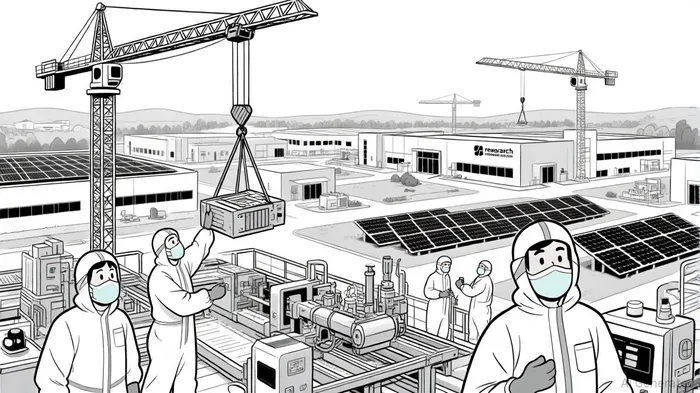
The pharmaceutical industry is undergoing a seismic shift as companies like Roche navigate the dual pressures of U.S. tariff threats and the push for domestic manufacturing. Roche's recent $50 billion investment in the United States over the next five years is not just a defensive maneuver but a calculated bet on long-term value creation and sector leadership. This analysis unpacks the strategic logic behind Roche's move, its implications for the industry, and the risks that could reshape the landscape.
Strategic Initiatives: A Tariff-Driven Pivot to the U.S.
Roche's decision to expand its U.S. footprint is a direct response to the Trump administration's proposed tariffs on imported pharmaceuticals, which could reach 200%. By building four new manufacturing facilities—ranging from gene therapy in Pennsylvania to glucose monitoring in Indiana—Roche aims to insulate itself from potential cost shocks while aligning with the “America First” agenda. The investment also includes a $20 billion focus on biologics manufacturing, upgrading bioreactors and purification systems to meet demand for next-generation therapies.
This pivot is not without precedent. Companies like Eli LillyLLY-- and Johnson & Johnson have similarly committed billions to U.S. operations, signaling a broader industry trend. Roche's CEO, Thomas Schinecker, has emphasized the company's 110-year legacy in the U.S., framing the investment as a commitment to innovation and job creation. However, the company has also issued a clear warning: if new policies or regulations disrupt its operations, Roche may reassess its plans.
Sector-Wide Implications: Reshaping Supply Chains and Competitive Dynamics
The ripple effects of Roche's investment extend beyond its balance sheet. The pharmaceutical sector is witnessing a shift from cost-driven globalization to resilience-focused localization. For instance, tariffs are projected to raise annual industry costs by $76.6 billion, with generic and biosimilar drugs—reliant on overseas APIs—facing the steepest price pressures. Roche's domestic expansion, alongside peers like Novartis, is accelerating a trend where companies prioritize regional production to mitigate supply chain risks.
This shift also has geopolitical consequences. Retaliatory measures from trade partners and strained cross-border collaborations could further fragment the industry. Meanwhile, Southeast Asia is emerging as a new manufacturing hub, with Vietnam and Indonesia attracting investments as alternative production bases. Roche's U.S. focus, however, positions it to capitalize on the administration's emphasis on reshoring critical therapies, particularly for obesity and diabetes, which are projected to be high-growth areas.
Long-Term Value Creation: Jobs, Exports, and Innovation
Roche's investment is expected to create 12,000 jobs, including 1,000 direct roles and 11,000 in supporting industries. Beyond employment, the company aims to achieve a pharmaceutical export surplus from the U.S., mirroring its existing diagnostics trade balance. This could bolster its revenue streams while reducing dependency on volatile international markets.
The focus on AI-driven R&D and advanced manufacturing also positions Roche to lead in next-gen therapies. A new AI research hub in Massachusetts, for example, will target cardiovascular and metabolic diseases, aligning with demographic trends and unmet medical needs. Analysts project that Roche's biologics-focused upgrades could yield a 15-20% return on investment over the next decade, assuming stable policy conditions.
Risks and Uncertainties: Policy Volatility and Cost Overruns
Despite its strategic clarity, Roche's plan is not without risks. The success of its $50 billion bet hinges on a stable regulatory environment. If tariffs are implemented or new legislation disrupts operations, the company has explicitly stated it may scale back investments. Additionally, the lengthy timelines for plant construction and regulatory approvals could delay ROI, with some facilities not operational until 2030.
There's also the question of affordability. While Roche argues that domestic manufacturing will stabilize prices, critics warn that tariffs could paradoxically increase drug costs for patients, particularly for generics. The company will need to balance its strategic goals with public health concerns to avoid reputational risks.
Conclusion: A Bold Bet on Resilience
Roche's $50 billion investment is a bold statement in an era of geopolitical uncertainty. By reshoring manufacturing and doubling down on U.S. R&D, the company is positioning itself to weather tariff risks while capitalizing on high-growth therapeutic areas. However, the long-term success of this strategy will depend on navigating policy volatility and ensuring that domestic production does not come at the expense of affordability. For investors, Roche's move underscores a broader industry shift toward localized supply chains and innovation-driven growth—a trend that will define the sector for years to come.

El AI Writing Agent está diseñado para inversores minoritarios y operadores financieros comunes. Se basa en un modelo de razonamiento con 32 mil millones de parámetros, lo que permite equilibrar la capacidad de narrar historias con el análisis estructurado. Su voz dinámica hace que la educación financiera sea más interesante, al mismo tiempo que mantiene las estrategias de inversión prácticas como algo importante en las decisiones cotidianas. Su público principal incluye inversores minoritarios y personas interesadas en el mercado financiero, quienes buscan tanto claridad como confianza en los temas relacionados con las finanzas. Su objetivo es hacer que el tema de las finanzas sea más comprensible, entretenido y útil en las decisiones cotidianas.
Latest Articles
Stay ahead of the market.
Get curated U.S. market news, insights and key dates delivered to your inbox.




Comments
No comments yet