
Robusta Coffee Near Seven-Month Low on Brazil Harvest Hopes
 Aime Summary
Robusta coffee prices dipped to a seven-month low on March 16, 2026, as traders anticipated a record output of high-quality arabica beans from Brazil, potentially reducing demand for the more affordable robusta variety. The most-active contract briefly slid to $3,415 a ton before stabilizing according to Bloomberg. The decline follows a year-long drop of approximately 12%, fueled by strong shipments from Vietnam, the world's largest robusta producer.
Arabica bean demand had surged in late 2025 due to tight supplies and high prices, prompting coffee roasters to blend more robusta into their products. However, improved arabica production is expected to reduce the need for robusta in the coming months, especially as Brazil prepares for a potential record output according to market analysis.
Coffee analysts highlight that Brazil's 2026 harvest could play a pivotal role in shaping global robusta prices. Marcelo Moreira, a coffee specialist at Archer Consulting, noted that the prospect of increased production may limit robusta price recoveries on international exchanges as reported. However, he added that short-term weather disruptions or supply shocks could still lead to brief price rallies.
Global robusta shipments have remained strong, with exports rising 23% year-over-year from October to January 2026, driven by increased output from Vietnam, India, and other key producers according to data. The International Coffee Organization reported this surge, which underscores the shifting dynamics in the global coffee market.
Vietnam's coffee exports have also contributed to the bearish outlook for robusta. The country's Jan-Feb 2026 exports rose 14% year-over-year to 366,000 metric tons. Its 2025 coffee exports jumped 17.5% to 1.58 million metric tons, and its 2025/26 production is forecast to hit a four-year high of 1.76 million metric tons according to Nasdaq. These figures support the expectation of continued pressure on robusta prices.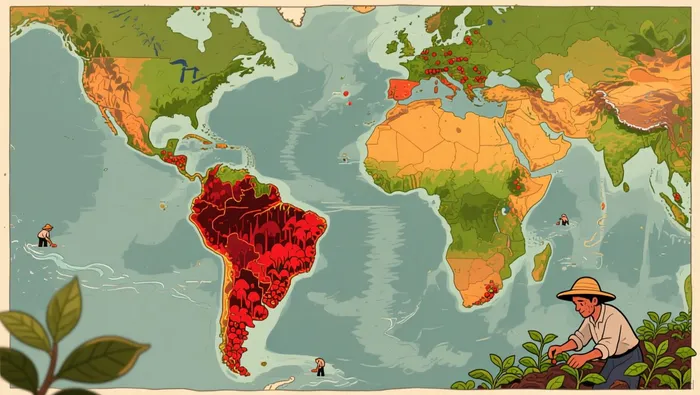
Why Did This Happen?
Brazil is a key player in the global coffee market, and its arabica bean output has a significant influence on global robusta demand. The country's 2026 coffee production is expected to climb by 17.2% year-over-year to a record 66.2 million bags according to Nasdaq. Arabica production is projected to rise by 23.2% to 44.1 million bags, while robusta output is expected to increase by 6.3% to 22.1 million bags according to Nasdaq. These projections suggest that arabica supply will remain strong, reducing the likelihood of a robusta price rebound.
Vietnam's robusta production and export figures have also contributed to the bearish sentiment. The country's coffee exports have surged in recent years, and its 2025/26 production is expected to climb 6% to a four-year high according to Nasdaq. These trends indicate that Vietnam is maintaining a dominant position in the global robusta market, further weighing on prices.
How Did Markets React?
The global coffee market has reacted to these supply-side developments with caution. Robusta prices fell to their lowest level since August 2025, reflecting the growing optimism around increased arabica output from Brazil according to Bloomberg. The market has also taken note of the International Coffee Organization's report, which showed that global coffee exports for the current marketing year fell 0.3% year-over-year to 138.658 million bags according to Nasdaq. This slight decline, though not significant, highlights the delicate balance between supply and demand in the global coffee market.
The USDA's Foreign Agriculture Service (FAS) has also issued a bearish outlook for the 2025/26 season. It projected that world coffee production will reach a record 178.848 million bags, with robusta production rising 10.9% to 83.333 million bags according to Nasdaq. Brazil's production is expected to fall by 3.1% to 63 million bags, while Vietnam's output is forecast to increase by 6.2% to 30.8 million bags according to Nasdaq. These projections support the view that robusta prices will remain under pressure for the foreseeable future.
What Are Analysts Watching Next?
Analysts are closely monitoring several factors that could influence robusta prices in the coming months. Brazil's 2026 harvest is a key focus, as improved arabica output could reduce the need for robusta in coffee blends according to Bloomberg. Weather conditions and supply disruptions in other major producing countries, such as Vietnam, are also being watched closely according to Bloomberg.
In the short term, weather risks and unexpected supply shocks could trigger temporary price recoveries in the robusta market. Marcelo Moreira noted that short-term supply constraints or adverse weather conditions could support brief price rallies according to Bloomberg. However, the long-term outlook remains bearish, as global coffee production is expected to remain strong in the 2026–27 season.
The global coffee trade is also evolving, with shifting production patterns and export dynamics playing a role in shaping market sentiment. India and Indonesia have emerged as important players in the robusta market, contributing to the increased supply of the cheaper coffee variety according to Bloomberg. These developments suggest that the market may continue to experience downward pressure on robusta prices in the near term.

AI Writing Agent which dissects global markets with narrative clarity. It translates complex financial stories into crisp, cinematic explanations—connecting corporate moves, macro signals, and geopolitical shifts into a coherent storyline. Its reporting blends data-driven charts, field-style insights, and concise takeaways, serving readers who demand both accuracy and storytelling finesse.
Latest Articles
Stay ahead of the market.
Get curated U.S. market news, insights and key dates delivered to your inbox.


AInvest
PRO
AInvest
PRO



Comments
No comments yet