
Robots Expand into Construction, Policing, Healthcare, and Sex Work as Costs Decrease
Robots are increasingly taking on roles that were once exclusively performed by humans, from construction and policing to healthcare and even sex work. This shift is driven by the growing affordability of robotics and the increasing demand for labor in various sectors. In June 2024, Hugging Face introduced Reachy 2, a $70,000 AI-powered robot developed by its subsidiary, Pollen Robotics, highlighting the decreasing cost and wider adoption of robots in real-world applications.
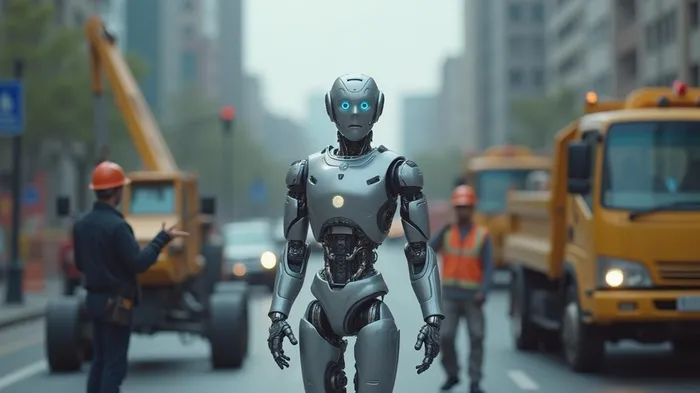
In the construction industry, robots are automating tasks such as bricklaying, welding, painting, and surface finishing. This not only reduces costs and speeds up project timelines but also addresses the growing shortage of workers willing to take on physically demanding jobs. The global construction robotics market is expected to reach significant growth by 2032, driven by the need for efficiency and the scarcity of labor.
Policing is another area where robots are making inroads. Autonomous machines and drones are being deployed to monitor public spaces, respond to incidents, and assist with surveillance. For instance, the RT-G, an AI-powered robot developed by Logon Technology Co., Ltd., is equipped with facial recognition and various defensive mechanisms, making it a valuable tool for law enforcement.
Factories are also undergoing a revolution with the deployment of AI-powered robots. Companies like Mercedes-Benz and TeslaTSLA-- are using robots to handle tasks such as managing logistics and handling auto parts. Tesla CEO Elon Musk has highlighted the potential of Optimus robots, which are already being used in their factories and offices, with plans to expand their use significantly.
Space exploration is another frontier where robots are playing a crucial role. SpaceX CEO Elon Musk has expressed interest in deploying humanoid robots for space exploration to handle tasks that are too risky or demanding for human astronauts. Sending robots to Mars first would allow them to operate in hazardous environments, gather vital data, and prepare habitats, reducing risks for future human crews. Musk aims to send Optimus robots to Mars in 2026, laying the groundwork for human-led missions soon after.
In the healthcare sector, robots are stepping in to meet the growing demands of an aging population. Robots like NVIDIA's Isaac for Healthcare and MIT’s E-BAR are designed to assist with physical tasks in clinical environments and help seniors move safely at home. During the COVID-19 pandemic, robots were deployed in hospitals to check on patients and assist medical personnel, highlighting their potential in healthcare settings.
The most provocative use of robotics lies in the sex industry, where machines are being designed to replicate and monetize intimacy. AI-powered devices, including artificial vaginas and responsive sex robots, are being developed to automate intimacy and commercialize digital companionship. This raises ethical questions about consent, autonomy, and the implications of synthetic creations programmed to simulate intimacy.
As robots take on more responsibilities in various sectors, society must grapple with the ethical concerns surrounding labor, intimacy, and consent. The rise of a machine-powered labor force challenges traditional notions of work and human interaction, requiring careful consideration of the implications for workers and society as a whole.

Stay ahead of the market.
Get curated U.S. market news, insights and key dates delivered to your inbox.




Comments
No comments yet