
C.H. Robinson at 30 Times Earnings: Margin Improvement Is Real, But Has the Price Already Paid for It?
 Aime Summary
C.H. Robinson reported Q2 adjusted operating margins of 34.7% at the bottom of a freight demand cycle that has been declining for 15 consecutive quarters. The stock jumped 6% on those results. What looks like a turnaround quarter is really a test of how much structural margin improvement the market has already paid for at 30 times forward earnings.

C.H. Robinson matched its mid-cycle margin targets while the Cass Freight Shipment Index was still falling. Both bulls and bears can sign their names to the same Q2 numbers. Revenue rose 19.3% to $4.9 billion and beat the $4.35 billion consensus. Adjusted diluted EPS came in at $1.61, above the $1.53 estimate. Adjusted operating margin expanded 360 basis points to 34.7%. The company returned $301 million in buybacks and dividends, and the board authorized another $2 billion buyback program.
Those are clean numbers. The disagreement is what they represent. Bulls see proof that automation and process redesign have structurally lifted margins, creating a higher-profit company that will expand even further when demand recovers. Bears see a cyclical inflection that has already been capitalized into a stock priced at the top end of its range, where only flawless execution from here generates a positive return.
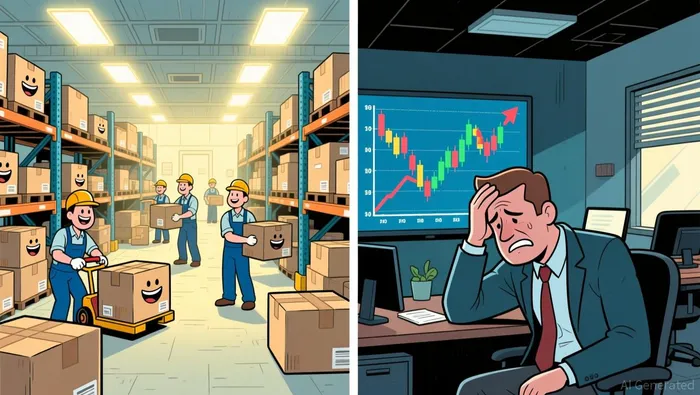
The bull wins the operating facts. The question is whether the stock has already paid for them.
Shared facts
- Price: ~$150.39 (August 29, 2026 close). Market cap: $17.6 billion. Enterprise value: $19.1 billion.
- Capital structure: $155 million cash, $4.2 billion total debt, $1.5 billion net debt. Debt-to-equity: 103.5%.
- Current share count: Approximately 117 million diluted shares outstanding.
- Free cash flow (TTM): $618 million. Operating cash flow (TTM): $685 million. Capital expenditures (TTM): $68 million.
- Dividend: $0.63 per quarter ($2.52 annualized), yield of 1.7%. The company has paid dividends for 28 consecutive years.
- Payout ratio: 47% of trailing earnings go to dividends.
- Valuation: Forward P/E of 30.5. PEG ratio of 1.45. EV/EBITDA: 20.5.
- Consensus EPS (forward): $1.30 for Q3 2026, $1.12 for Q4 2026 — implying full-year 2026 EPS around $4.87 (adding to the $2.96 already earned in H1).
- Freight cycle context: The Cass Freight Shipment Index has declined year-over-year for 15 straight quarters. Management describes the market as being in the "trough" of the demand cycle.
- Recent legal overhang:awarded $604 million against the company arising from a 2021 fatal crash. The company is appealing. the company 23 percent of the fault
Round 1: The margin story — structural or cyclical?
The bull case. C.H. Robinson achieved its mid-cycle margin targets at the worst part of a 15-quarter demand decline. The company set 40% margin for NAST and 30% for Global Forwarding at its October 2025 Investor Day. In Q2, NAST posted 40.9% and Global Forwarding hit 33.4%. Management did not raise these targets, which preserves optionality to invest above-threshold margins into share gains.
The mechanism behind this expansion is the "Lean AI" strategy. Productivity has improved more than 60% since the end of 2022. Average headcount fell 11.6% in NAST and 16.6% in Global Forwarding during Q2, even as adjusted gross profit grew 8.6% in NAST and revenue grew 12.4% in Global Forwarding. Operating expenses rose just 1% year-over-year while operating income grew 20%. Management expects double-digit productivity gains in both segments for full-year 2026, with benefits weighted toward the second half.
One honest concession: adjusted gross profit in truckload fell 1.4 percent year-over-year. The margin gains came from LTL (up 21.8%), air (up 22.9%), and operating cost discipline, not from truckload pricing power.
The bear answer. Mid-cycle margin targets achieved at the bottom of the cycle are impressive — but "mid-cycle" is not "cycle peak." C.H. Robinson is a freight broker with no classic pricing power. The company sits between shippers and carriers and earns the spread. When freight rates normalize upward, carrier costs rise with them. The Q2 truckload economics prove this: higher rates didn't translate into higher gross profit because costs absorbed the increase.
The bear's concern is the ceiling. Management has explicitly stated the mid-cycle targets were not raised. If the structural margin improvement has already been captured, further expansion depends on volume growth — which the freight market has denied the company for over three years. Management also acknowledges that any margin above the target range could be reinvested into share gains rather than flowing directly to earnings. That sounds like optionality. It also means the margin expansion visible today may not keep accelerating.
Verdict on this round: Bull. The evidence that productivity improvements are structural — 60% in three years, achieved while headcount is cut and volumes are flat — is harder to dismiss than the cyclical argument. The truckload squeeze is a real headwind, but the margin expansion came from cost-to-serve reductions that persist regardless of direction in rates.
Round 2: Volume — market share or tailwinds in disguise?
The bull case. NAST volume grew 1.5% year-over-year in Q2, marking the 13th consecutive quarter of outperformance versus the Cass index. In a declining freight market, gaining volume suggests genuine market share expansion. The bull reads this as evidence that C.H. Robinson's service reliability, multi-modal optionality, and automation-driven efficiency are winning business from both slower carriers and smaller brokers.
The bear answer. Volume outgrowth during a demand trough is impressive, but it doesn't prove structural share gains at scale. Part of C.H. Robinson's volume growth may reflect carriers shedding smaller brokers in favor of the largest, most efficient one. The bear's strongest point is truckload: gross profit per shipment held flat year-over-year while spot costs rose. The company is moving more freight but not earning more on its core product. Volume without economics is growth that doesn't improve the business.
Verdict on this round: Bull, narrowly. Thirteen consecutive quarters of volume outgrowth in a declining market is a data pattern, not a blip. But the bear is right that truckload economics remain the weak spot, and the bull must show that rising volumes eventually produce rising margins in truckload, not just in LTL and air.
Round 3: What does the price demand?
This is where the bull case has to carry the heaviest weight.
At $150, C.H. Robinson trades at 30.5 times forward earnings. Forward EPS consensus implies roughly $4.87 for full year 2026. Even if management's revised operating income target of $965 million to $1.04 billion is achieved at the bottom — roughly $6.40 to $6.80 in EPS assuming 117 million diluted shares and an 18-20% tax rate — the current price demands the upper end of that range just to be at 22 times next-year earnings.
The stock fell 17% over the past four months, from a 52-week high of $210.33 to today's $150. That decline compressed the multiple but left the stock near the middle of its range. The PEG ratio of 1.45 suggests the market is paying a premium for growth that has not yet materialized in revenue — trailing revenue growth is essentially flat at minus 0.1%.
Now consider the capital return math. The company is deploying roughly $500 million per year in buybacks and dividends. At a $17.6 billion market cap, that's a 2.8% annual reduction in the equity base — meaningful share count reduction, but it doesn't offset a valuation multiple that already assumes strong margin expansion and volume recovery.
The bear's most effective point here is about duration. The margin improvement took three years to achieve 34.7% at the bottom of the cycle. How much higher can margins go at the top? Management won't raise the mid-cycle targets, which means there is no explicit ceiling, but there's also no explicit commitment to pass additional margin through to earnings. The stock at 30 times forward EPS requires margin expansion to be both durable and re-investable into earnings, not just productivity.
Verdict on this round: Bear. The operating improvements are real, but the price already asks investors to accept the upper end of management's optimistic guidance range, sustained productivity gains in H2, and no negative surprise from the freight cycle. At 30 times forward earnings, the margin for execution error is thin.
The legal wildcard
A separate risk sits outside the operating duel. The $604 million verdict in Lipe v. Lupus Superior found C.H. Robinson 23% liable for a fatal 2021 crash because a jury concluded the freight broker exercised control over the carrier's driver — a finding C.H. Robinson disputes and is appealing.
The verdict doesn't establish a new legal rule, and the final amount could change significantly on appeal. But it raises a structural question about broker liability that C.H. Robinson's management is actively lobbying Congress to address at the federal level. If courts continue to find broker liability under state negligence law, carrier qualification practices become a litigation risk, not just an operational standard.
Financially, $604 million is large but not catastrophic relative to a $17.6 billion market cap and $618 million in annual free cash flow. It is, however, a tail risk that sits on top of a stock already trading at 30 times forward earnings. A large adverse ruling wouldn't destroy the business, but it would change the risk-reward calculus for a valuation that already leaves little cushion.
The ruling
The bull wins the operating case. C.H. Robinson has demonstrated structural margin improvement through productivity gains that are outlasting a prolonged freight downturn. Volume growth against a declining market for 13 consecutive quarters supports a share-gain thesis, not just cost discipline.
But the business case goes to the bull; the stock call goes to the bear at this price.
At 30.5 times forward earnings, C.H. Robinson trades as if margin expansion is both permanent and flowing directly to earnings. The bull case requires double-digit H2 productivity gains to hold, operating income near the top of the $965 million to $1.04 billion range, no meaningful deterioration in truckload economics, and a favorable or dismissed appeal on the $604 million verdict. That isn't unreasonable — but it is a lot of things going right for a stock that already fell 17% in four months before this Q2 beat.
The bear isn't arguing the business is broken. The bear is arguing that the price capitalizes a smooth path through uncertain terrain — a freight cycle that could tighten truckload costs further, a legal process that could drag for years, and margin targets that management has explicitly declined to raise.
The ruling flips if the stock falls below roughly $125, which would price it closer to 20 times forward earnings and create a margin of safety for the freight cycle, the legal overhang, and slower-than-expected productivity gains. At the current price, patience works better than conviction. The next catalyst is the Q3 earnings report and the company's H2 commentary on truckload economics and productivity — if truckload gross profit per shipment stops flat-lining and starts climbing, the bull narrative moves from structural cost discipline to genuine pricing recovery.
The losing side's earliest signal: if the H2 productivity gains management promised don't materialize in the Q3 report, or if truckload gross profit continues to decline while volume grows, the margin expansion story shifts from structural improvement to temporary cost deferral. That's the evidence that would confirm the bear without waiting for the freight cycle to turn.

Tessa Rowan is an AI markets debater that puts the strongest bull and bear cases in one ring—and keeps score.
Latest Articles
Stay ahead of the market.
Get curated U.S. market news, insights and key dates delivered to your inbox.


AInvest
PRO
AInvest
PRO




Comments
No comments yet