
Robinhood to Tokenize NYSE Shares on Blockchain
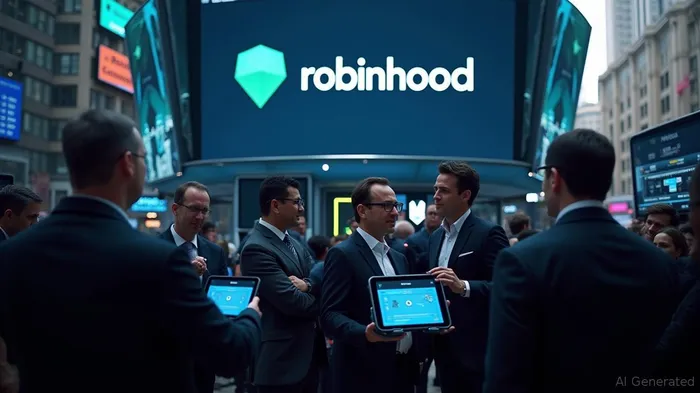
Robinhood, a prominent investment brokerage, has recently announced a bold strategy to tokenize shares from the New York Stock Exchange (NYSE). This initiative aims to bridge the gap between traditional stock markets and the rapidly evolving blockchain technology sector, offering a new dimension for both retail and institutional investors. By tokenizing shares, RobinhoodHOOD-- will allow investors to purchase tokens that represent ownership in companies, thereby enhancing versatility and accessibility in the stock market. This move is part of a broader trend where technology is increasingly intertwining with finance, paving the way for advancements like decentralized finance (DeFi) and non-fungible tokens (NFTs).
The tokenization of NYSE shares by Robinhood could significantly alter the liquidity dynamics in the world’s biggest equities market. Tokens can be traded on blockchain platforms without the restrictions of traditional stock market operating hours, potentially leading to increased trading volumes and a more globalized trading audience. Additionally, tokenization offers enhanced security measures, which could attract a new wave of security-conscious investors. For the NYSE, this move by Robinhood could further solidify its market presence by aligning with innovative and future-focused trading mechanisms.
However, the tokenization process is not without its challenges. Regulatory scrutiny remains a significant hurdle, as financial authorities worldwide are still grappling with the implications of blockchain technology in mainstream finance. Furthermore, strong cybersecurity measures will be essential to prevent potential threats that could undermine the integrity of tokenized assets.
Looking ahead, Robinhood’s initiative could inspire more financial platforms and exchanges to explore similar innovations. The successful integration of blockchain with traditional trading could redefine liquidity transactions and enhance the accessibility and efficiency of financial markets globally. This could usher in a new era for investment where blockchain plays a central role in the daily operations of financial markets.
Robinhood, led by co-founder and CEO Vlad Tenev, has unveiled plans to launch its own blockchain, named the Robinhood Chain, on the Arbitrum Orbit stack. This move is part of Robinhood's broader strategy to integrate blockchain technology into its core trading product, offering users the ability to trade stocks as tokenized derivatives on the blockchain. The Robinhood Chain will operate as an EthereumETH-- Virtual Machine (EVM)-compatible layer-2, allowing users to trade stocks through the Robinhood app while providing tokenized derivatives of their assets. These tokens can be transferred to anyone with an onchain wallet, interacted with other onchain applications, and self-custodied in personal wallets—features not possible with traditional securities. The underlying stocks will be held in custody by a U.S. broker-dealer, with a "token engine" creating a "token wrapper" for these assets. When a user buys or sells a tokenized stock, this action triggers a corresponding mint or burn of the token, enabling trading at the real market rate while tapping into offchain liquidity.
One controversial aspect of Robinhood's plan is the inclusion of tokens indirectly tied to equity in privately held companies such as OpenAI and SpaceX. OpenAI has distanced itself from this initiative, emphasizing that the tokens do not confer equity ownership in the AI company. This move highlights the regulatory and legal complexities surrounding tokenization, as the SEC and other regulatory bodies grapple with how to oversee this new form of asset trading.
The implications of Robinhood's tokenization push are significant for traditional finance (TradFi) firms. The primary value-add from blockchain technology for these firms is the ability to offer 24/7 trading, which could disrupt the current market structure dominated by exchanges like the NYSE. Rollups, a popular model for companies building on sovereign block space, allow for lighter lifts in spinning up a chain and offer additional revenue sources by capturing all transaction fees. This model could turn block space into a sellable commodity, allowing companies like Robinhood to monetize the full "tokenization stack" from offchain trading to onchain utility.
The shift to 24/7 trading introduces new risks and opportunities. For users, it provides the convenience of trading at any time, but it also means prices can fluctuate when users are not online. For traditional markets, the move to a 24-hour model could erode the deep concentration of liquidity and activity that gives major exchanges their competitive advantage. This could lead to a race between nimble fintechs and incumbent exchanges to become the centers of trading in the digital world, with fintechs having the advantage of agility and the ability to build and launch blockchain-native solutions more quickly.
Regulatory questions remain a significant hurdle for Robinhood's tokenization model. The Securities Industry and Financial Markets Association (SIFMA) has expressed concerns about the trading of tokenized equities outside of the Regulation National Market System (Reg NMS) framework, which Robinhood appears to be doing. The SEC's stance on this issue is unclear, and it is possible that issuers themselves may object to their shares being traded in this manner. Despite these challenges, the pressure from tokenized assets extends beyond enabling 24-hour trading. Tokenized assets are inherently programmable, unlocking more streamlined utility than their traditional counterparts. This added layer of functionality could make the onchain version of an asset more versatile, further incentivizing users to move to blockchain-based alternatives.
In summary, Robinhood's push into tokenization and blockchain technology represents a significant shift in the financial landscape. While the regulatory and legal challenges are substantial, the potential benefits of 24/7 trading and programmable assets could disrupt traditional markets and create new opportunities for fintechs and users alike. The coming months will be crucial in determining how regulators and traditional exchanges respond to this emerging trend.

Stay ahead of the market.
Get curated U.S. market news, insights and key dates delivered to your inbox.
AInvest
PRO
AInvest
PRO



Comments
No comments yet