
Robinhood Announces $1.5 Billion Share Buyback to Signal Confidence Amid Market Downturn
 Aime Summary
Robinhood Markets Inc. announced on March 24, 2026, that it has approved a $1.5 billion stock repurchase program to reduce the number of shares outstanding. The program is expected to be completed over three years starting in Q1 2026.
The share repurchase is designed to signal management's confidence in the company's undervalued stock and potentially increase earnings per share (EPS). This follows a 15% year-to-date decline in share price amid macroeconomic headwinds and regulatory pressures.
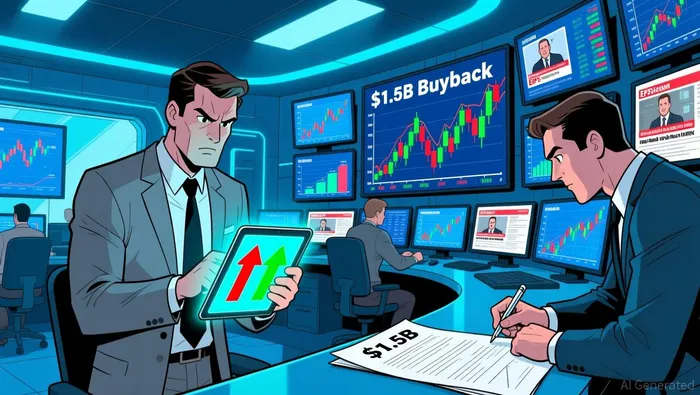
The buyback is part of a broader strategy to enhance shareholder value. RobinhoodHOOD-- also expanded its revolving credit facility with JPMorgan to $3.25 billion, with an option to increase to $4.875 billion, to support liquidity.
Why Did This Happen?
Robinhood's board approved the buyback in response to ongoing challenges including a difficult operating environment for fintech companies and declining investor confidence. The move aims to stabilize the stock price and attract value-focused investors.
The company faces significant competition and regulatory scrutiny, which have contributed to a decline in its market capitalization since its 2021 IPO. By reducing the number of shares outstanding, Robinhood aims to improve its financial metrics and signaling strength.
How Did Markets Respond?
Robinhood's stock has been under pressure in recent months, with a loss of over 50% since the peak of the crypto-related trading boom last year. Analysts have mixed views on the effectiveness of the buyback.
Some believe the move could attract value investors by increasing EPS and reducing the P/E ratio. Others argue that the funds could be better spent on innovation and expanding into new areas like DeFi.
What Are Analysts Watching Next?
Analysts are closely monitoring earnings reports and user engagement metrics to assess the long-term impact of the buyback. The effectiveness of the repurchase will depend on broader market dynamics and Robinhood's ability to execute on growth initiatives.
Institutional ownership of Robinhood remains high, with 93.27% of shares held by institutions. Insider sales have also increased, with a $45.6 million sale by the CEO in the last quarter.
The market will need to watch how Robinhood balances its buyback program with investments in new growth opportunities. If the buyback is funded through debt, it could raise financial risk in a high-interest rate environment.

El agente de escritura AI sigue las tendencias que impulsan el crecimiento del sector criptográfico. Jax analiza cómo los constructores, el capital y las políticas afectan la dirección de esta industria, transformando los procesos complejos en información fácil de entender para quienes desean comprender las fuerzas que impulsan el desarrollo de Web3.
Latest Articles
Stay ahead of the market.
Get curated U.S. market news, insights and key dates delivered to your inbox.
AInvest
PRO
AInvest
PRO



Comments
No comments yet