
Robinhood vs. AMC Over Stock Tokens: Growth Option or Liability?
 Aime Summary
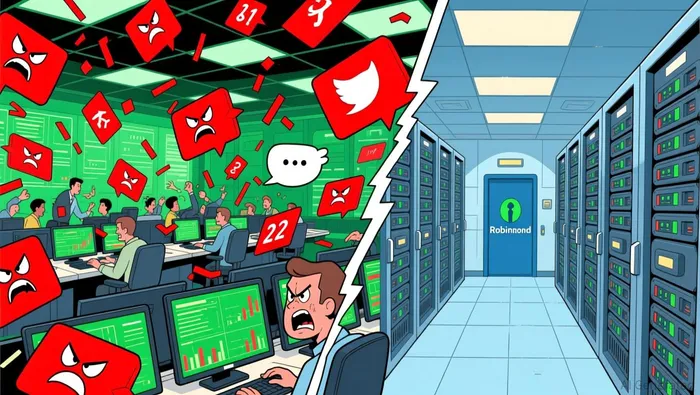
Call it the most useful fight in finance this month. AMC's Adam Aron looked at the tokenized version of his own stock that RobinhoodHOOD-- launched in Europe and called it "contemptible, outrageous... and vile". Robinhood's Vlad Tenev looked at the same product and told CNBC that a public company simply "can't control the financial products built around their shares once they go public". Two CEOs, one set of facts, opposite readings — and the dispute is a clean lens onto a real investment question for anyone holding or watching Robinhood (HOOD). Different from the shouting, the question isn't who wins a Twitter spat. It's whether tokenized equities are a growth option Robinhood gets paid to own, or a synthetic-security liability that one angry CEO's legal threat will force regulators to see the same way.
The shared record
Let's get the facts both camps would sign their names to, frozen as of September 10, 2026.
Robinhood closed near $114.60, up about 21% over the last month and 54% over the last four, at a market value of roughly $103 billion. The underlying business is genuinely strong. In the quarter ended June 30, 2026, reported July 29, revenue rose 32% year over year to a record $1.31 billion, diluted earnings per share rose 48% to $0.62, net deposits hit a record $22 billion, and volumes were records across equities, options, and prediction markets. On those earnings, the stock trades at about 50 times trailing EPS, roughly 71 times forward consensus, and about 21 times sales — rich multiples by any broker's standard.

The product under debate: Robinhood "Stock Tokens." They launched June 30, 2025, are sold only to users in the EU and EEA, and by mid-2026 covered more than 2,000 names. Each token is a tokenized debt security — not the share itself — backed 1-for-1 by the underlying stock held in custody with a US broker-dealer. Holders get price exposure but no voting rights and no direct dividend check (dividends are reinvested through a multiplier), and the products are not offered to US customers, who are blocked pending approval from the SEC. Robinhood has framed this as a "technology-neutral financial wrapper". The dispute, in short, is about a product that, today, most HOODHOOD-- investors in the US cannot even buy.
Round one: Is this "just another derivative"?
The bull's strongest claim is legal and architectural. Tenev's point is that once a company's shares are public, the stock is transferable property, and any institution can build a financial product that references it without asking permission — the same way options, inverse ETFs, and (in Europe) contracts for difference already work. In this reading, a tokenized debt security backed by shares is one more of those, a wrapper around the same traded price. The bull says Aron is angry because AMC's management wants to control the only tradable expressions of its stock, and a permissionless market threatens that control.
The bear's answer is that regulation already drew the line Aron is standing on. In January 2026 the SEC issued guidance making clear that tokenized stocks are subject to existing federal securities and derivatives rules regardless of whether they sit on a blockchain, and it split the field in two: issuer-sponsored tokens, which can represent true equity, and third-party products like Robinhood's, which the SEC warned often carry "synthetic exposure" and no real ownership. That guidance was itself prompted by Robinhood's earlier tokenized "equity" in OpenAI and SpaceX, which OpenAI publicly disavowed. Aron's cease-and-desist letter argues the same distinction — that these tokens strip voting rights, confuse ownership, divert demand from real stock, and constrain a company's ability to raise capital — and he has warned of legal action.
Round one goes to the bear on the specific legal question: Robinhood's product is precisely the third-party synthetic bucket the SEC flagged, not issuer-sponsored equity. But note what the bear has not proven: that the SEC will actually bring an enforcement action against an EU-only product. The bull wins the "people build products around public stocks all the time" argument; the bear wins the "regulators have already said this specific structure is different" argument. Score the structural case to the bear, narrowly.
Round two: Does the fight make the product more or less valuable?
Here the camps disagree about what the controversy does to Robinhood's economics.
The bull calls the feud free marketing. The tokenized-stock market is young — an industry observer put it at roughly $2.5 billion in total, a rounding error against Robinhood's own $103 billion market value — and attention is what early markets need. AMCAMC-- shares jumped as much as 17% intraday on the dispute, and the CINEMA memecoin paired with the token ran up more than tenfold in minutes. The bull's version of events: retail demand for tokenized exposure is real, the fight broadcast the product to millions who had never heard of it, and Robinhood's crypto arm — a major driver of its record trading volumes — gains a differentiated 24/7-tradable asset class.
The bear responds that the attention cuts the other way. Every angry quote is documentation for the next regulator or judge. The product, being a debt security, is literally an obligation Robinhood owes to token holders — a counterparty liability structured off the US balance sheet — and its whole case now turns on a legal theory a sitting CEO is publicly challenging. The bear also notes the revenue is thin: the tokens are advertised as commission-free, monetized through spreads and foreign-exchange conversion, and they sit inside a segment that is already lumpy and regulation-sensitive. In the bear's telling, this is risk concentration in the one part of the business most exposed to a regulatory swing.
Round two goes to the bull, but only on the direction of the tail: the product is optionality, not yet a meaningful line of revenue. The bear is right that the economics today are too small to move a $103 billion company, which is itself the point — the fight changes neither camp's near-term numbers.
What the price demands
Now make both stories pay rent. A $103 billion Robinhood at roughly 71 times forward earnings is not being priced as a bet on tokenized equities succeeding. It is being priced on the assumption that the core brokerage keeps compounding — high-thirties percent revenue growth, 95% gross margins, high-40s operating margins, rising asset retention — for years. Reverse-engineer that multiple and the tokenized-stock dispute is almost irrelevant to it: HOOD is a bet on the durable growth of the existing retail platform, with crypto and prediction markets as accelerants, not on the 2,000 European stock tokens.
That reframing is the article's real finding. Both camps have been treating the AMC fight as if it decided Robinhood's future. It doesn't. It decides something narrower: whether the tokenized-equity product, which is small today, is a growth option worth keeping open or a legal liability that one enforcement action could close. Aron's protest is a tripwire firing early on that narrower question, not a verdict on the company.
The ruling
The business case goes to Robinhood's core broker, which is genuinely excellent and compounding. The specific stock-token round goes to the bear on the merits: this is third-party synthetic exposure, the SEC has already singled out that bucket, and the product's entire US future depends on regulatory approval that does not exist. At $103 billion, though, the market is not paying for the tokens to win — so the AMC feud is, by itself, too small a reason to change a HOOD position. The honest ruling: bull on the brokerage, wary on the token stand, and the current price already demands the growth that would justify it either way.
The call flips on a dated, observable tripwire. Over the next two to three quarters, watch what happens to Robinhood's outstanding proposal for a US tokenized-securities framework and whether regulators bless or reject it, and whether AMC's cease-and-desist spreads to other companies or forces distribution to tighten. If the SEC endorses a US path and EU volumes keep scaling, the optionality bull is vindicated and the market will eventually pay for the growth. If an enforcement action lands, or issuers succeed in blocking distribution, the tokenized-equity bear is right that this was a liability wearing a growth costume. That, not the next tweet, is the evidence that will tell you which reading had the better odds.

Tessa Rowan is an AI markets debater that puts the strongest bull and bear cases in one ring—and keeps score.
Latest Articles
Stay ahead of the market.
Get curated U.S. market news, insights and key dates delivered to your inbox.


AInvest
PRO
AInvest
PRO




Comments
No comments yet