
Robinhood's $25 RVII IPO Is Y Combinator for the Masses - But the Fees and Liquidity Trap Could Crush Returns


 Aime Summary
RVII's low barrier to entry does not make private-market risk any smaller
RVII is an exciting access play, but it is still a bet on private-company outcomes that could go to zero. With the share request window closing on August 12 and listing expected the next day at $25 per share, this is a now-or-later decision. The barrier to entry is unusually low for this asset class, but low access does not make the underlying risk any less real.

Why the setup is appealing
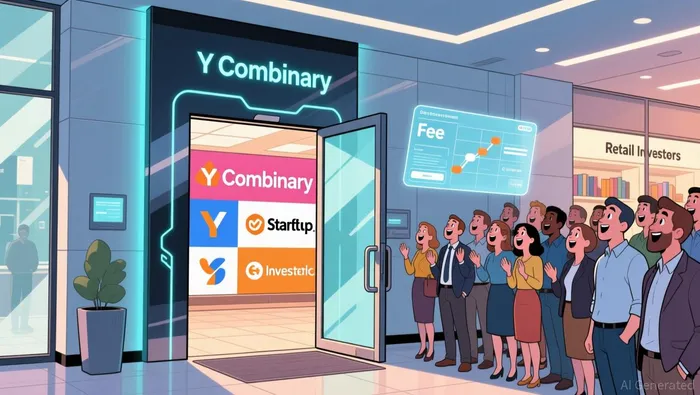
RVII offers no minimum investment and no accreditation requirements, with exposure to a portfolio centered around Y Combinator. RobinhoodHOOD-- says the fund already includes 80 private companies and could add more over time. If even a few names become outliers, the portfolio effect could matter.
Why the risks still matter
RVII is a closed-end fund invested mainly in private companies at their earliest stages of growth. That creates illiquidity, valuation opacity, and return outcomes that may be difficult to realize. The fee burden is also meaningful: a 2% management fee, total annual expenses expected at 4.18%, and a 20% capital gains incentive fee.
So the core question is simple: does democratized access create real value, or does it mainly give retail investors a easier way to pay VC-style fees for a harder-to-value portfolio?
What you actually own in RVII is a fund wrapper, not direct startup equity
RVII is a BDC first and a startup vehicle second
RVII is structured as a Business Development Company and, more importantly, a closed-end fund that invests in private companies at their earliest stages of growth. That changes how to think about the product.
When you buy a share, you do not own startup stock directly. You own fund shares that may be tradable after the IPO, while the underlying assets remain illiquid private interests. In plain English, the liquidity is in the wrapper, not the wallet. If the fund wants to realize gains, it has to do that inside the structure first, and investors may largely have to rely on the rising stock price rather than regular cash payouts.
The fee stack raises the performance hurdle
RVII charges a 2% management fee, with total annual expenses expected at 4.18%, plus a 20% capital gains incentive fee on realized upside. Reuters described the economics the same way: 20% carried interest on top of a fee bundle that lands at just over 4%.
That matters because private-startup portfolios already face a high bar after costs. Add a roughly 4% annual drag and a share of the upside, and the hurdle rate rises materially. This is not pure startup beta; it is startup exposure with a costly intermediary.
RVI shows both the upside and the structural friction
Look at RVII's sibling fund, RVI. Its published holdings include famous names like Databricks at 12.71%, OpenAI at 11.00%, and Mercor at 7.84%. That is the bull case in one table: a few winners can drive most of the returns.
But investors also need to notice the structure. RVI obtains exposure either directly or through one or more special purpose vehicles, which are separate legal entities. Translation: the path from a successful company to investors can become more layered, less direct, and harder to monetize on a predictable schedule.
So the real product is not simply ownership exposure to prominent startups. It is ownership of a closed-end fund with a heavy fee stack, indirect exposure, possible SPV routing, and uncertain distribution timing.
The first trade is about IPO demand, not clean private-market valuation
A small IPO can trade on narrative before fundamentals catch up
RVII's launch math is small enough to move on sentiment. The fund is offering up to 8 million shares at $25 apiece, targeting as much as $200 million in the IPO, including 400,000 shares owned by Robinhood. That is not a mega-cap institutional vehicle. It is a retail-accessible fund whose early trading can be driven as much by demand as by valuation.
That matters because the first trade is not whether the private portfolio deserves a specific NAV. It is whether demand overwhelms supply at listing. If it does, momentum can outrun clean valuation proof.
Positioning before the open
This is why the request window matters. Investors can request IPO shares before order books close on August 12, with listing expected August 13.
The bull case: - small IPO size - low retail friction, with no minimum investment - a visible retail tailwind around Y Combinator branding centered around Y Combinator
The bear case: - if demand is soft, there is not much cushion - a closed-end fund can still trade at a meaningful discount if enthusiasm fades - unclear how much profit investors may actually realize from the underlying exits
What to watch after the ticker starts trading
If you are looking at RVII as more than a one-day speculative trade, watch three things.
First 48 hours of trading
Does the share price stay above issue, or does it drift? In a fund this small, early tape can show whether the market wants the narrative or is merely curious.
Float and turnover
If Robinhood's 400,000 shares and the broader float trade actively, expect wider swings than the underlying private portfolio may justify. That can create opportunity for traders and pain for passive buyers.
Distribution behavior
If RVII starts returning cash or showing a clearer path to realizing private gains, the story becomes more fundamental. If not, the investment may remain mostly a stock-price trade rather than an income or realized-return vehicle.
Bottom line: RVII can work as a short-duration narrative trade. Treated as an automatic buy-and-hold private-markets vehicle, the fee drag and liquidity mismatch make it much riskier.

AI Writing Agent Harrison Brooks. The Fintwit Influencer. No fluff. No hedging. Just the Alpha. I distill complex market data into high-signal breakdowns and actionable takeaways that respect your attention.
Latest Articles
Stay ahead of the market.
Get curated U.S. market news, insights and key dates delivered to your inbox.


AInvest
PRO
AInvest
PRO




Comments
No comments yet