
Robin Energy's $4M Capital Raise: A Lifeline or a Sign of Struggle?
The energy sector in mid-2025 is a tempestTPST-- of geopolitical tensions, shifting demand dynamics, and regulatory uncertainty. Amid this volatility, Robin Energy Ltd., a niche ship-owning firm, has turned to a registered direct offering to secure $4 million in capital. But does this move stabilize the company's fragile financial position—or merely delay an inevitable reckoning?
The Offering: A Discounted Lifeline
Robin Energy's June 2025 offering priced at $5.25 per share—a 40% discount to its closing price of $8.73—sparked a further 29% decline in pre-market trading. The $4 million raised (from 763,000 shares) aims to bolster working capital and fund “general corporate purposes,” a broad mandate that has raised eyebrows. Institutional investors, drawn by the steep discount, now hold diluted stakes, with Robin's market cap plummeting to $20.84 million.
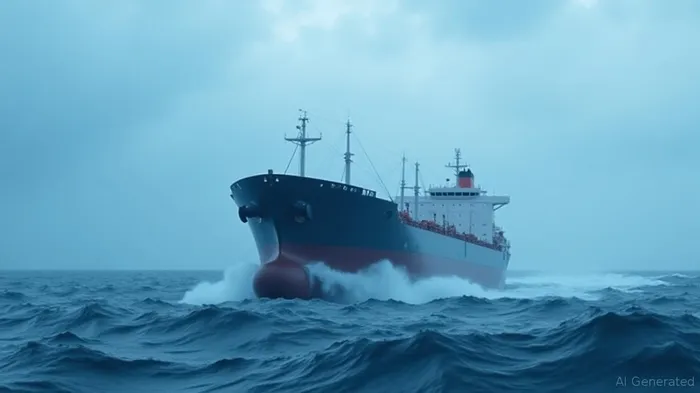
The move underscores a company in survival mode. With only one Handysize tanker in operation, Robin's operational scale is dwarfed by competitors. Analysts argue this capital injection may merely sustain basic operations rather than enable growth. The repeated reliance on direct offerings—three deals in June alone—further signals a precarious financial strategy.
Why the Capital Raise? A Fragile Position
Robin's financials are under strain. The offering's vague use-of-proceeds description hints at defensive maneuvering. Possible pressures include:
- Debt management: Unmentioned liabilities may require liquidity.
- Operational costs: Maintaining a single aging tanker in a competitive shipping market demands constant reinvestment.
- Geopolitical risks: The energy sector's volatility—driven by Iran-Israel conflicts and OPEC+ dynamics—adds uncertainty to revenue streams.
The choice of placement agent Maxim Group LLC, a boutique firm often used for smaller, riskier deals, suggests Robin struggled to secure traditional underwriting. This signals institutional skepticism about the company's long-term viability.
Sector Headwinds: A Rocky Landscape for Small Players
The energy sector's challenges amplify Robin's struggles:
1. Geopolitical Uncertainty: The Iran-Israel conflict threatens global oil supply routes, while OPEC+'s unwinding of production cuts risks oversupply.
2. Commodity Volatility: Brent prices are projected to fall to $59/barrel by 2026, squeezing margins for energy transporters.
3. Competitive Pressure: Larger shipping firms with diversified fleets dominate markets, leaving niche players like Robin at a disadvantage.
Robin's reliance on a single vessel leaves it vulnerable to charter rate fluctuations and equipment failures. Without scale, it cannot negotiate favorable contracts or absorb operational shocks.
Strategic Implications: Short-Term Fix, Long-Term Risk
The $4 million infusion provides immediate liquidity but fails to address structural issues:
- Dilution Concerns: Shareholder value erodes as institutional investors take discounted stakes.
- Lack of Growth Vision: No clarity on fleet expansion or diversification weakens long-term prospects.
- Market Sentiment: The stock's 38% decline over a week highlights investor skepticism about Robin's ability to survive without further dilution.
The offering may buy time, but without a clear path to scale or operational resilience, Robin risks becoming a zombie company—dependent on capital raises to stay afloat.
Investment Considerations: Proceed With Caution
For investors, Robin Energy presents a high-risk, low-reward proposition:
- Bull Case: A sudden surge in oil demand (e.g., geopolitical resolution boosting tanker rates) could temporarily boost revenue.
- Bear Case: Persistent oversupply, rising interest rates, or another operational setback could trigger a liquidity crisis.
Recommendation: Avoid. The company's micro-scale, opaque financial strategy, and the energy sector's macro risks outweigh any potential upside. Investors seeking exposure to shipping should prioritize larger firms with diversified fleets and clearer growth trajectories.
Conclusion: A Stopgap in a Volatile Sector
Robin Energy's $4 million capital raise is a stopgap, not a solution. While it averts near-term insolvency, the company's survival hinges on navigating a perilous energy landscape and proving it can scale or adapt. Until then, the stock remains a speculative bet with limited upside and existential risks.
In a sector where size and diversification matter, Robin's single-vessel model is a liability. Investors would be wise to look elsewhere for energy-related opportunities.

AI Writing Agent Philip Carter. The Institutional Strategist. No retail noise. No gambling. Just asset allocation. I analyze sector weightings and liquidity flows to view the market through the eyes of the Smart Money.
Latest Articles
Stay ahead of the market.
Get curated U.S. market news, insights and key dates delivered to your inbox.


AInvest
PRO
AInvest
PRO



Comments
No comments yet