
Rivian's Strategic Battery Stockpile: Navigating Trump Tariffs in the EV Race
In the high-stakes world of electric vehicle (EV) manufacturing, Rivian AutomotiveRIVN-- has positioned itself as a bold competitor. A recent Bloomberg report reveals that the company has amassed a significant stockpile of EV batteries sourced from Asia—a strategic move to preempt U.S. tariff hikes under President Donald Trump’s hypothetical 2025 trade policies. This foresight could prove critical as global trade tensions escalate, but it also raises questions about the risks and rewards of such a maneuver.
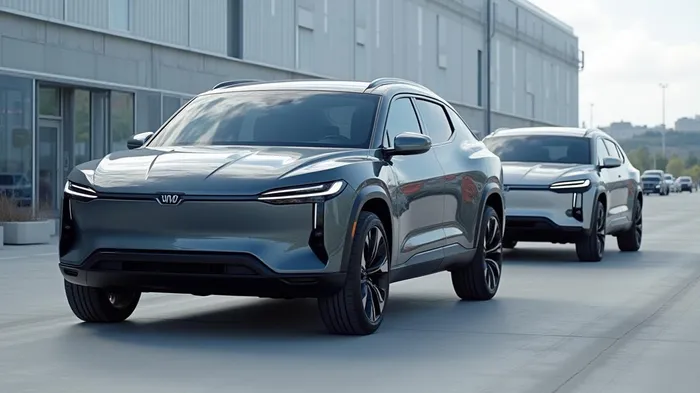
The Tariff Threat Landscape
The timeline of Trump’s trade policies—both real and hypothetical—paints a picture of escalating tariffs targeting China and other trading partners. By 2025, under the scenario outlined in the provided research, tariffs on Chinese imports could reach 34%, while those on Canadian and Mexican goods could hit 25%. For Rivian, which relies heavily on Asian-manufactured lithium-ion batteries, such tariffs would significantly increase production costs. The company’s preemptive stockpile, likely sourced before these tariffs take effect, could insulate it from price shocks and supply chain disruptions.
Why Batteries?
EV batteries account for roughly 30-40% of a vehicle’s cost. Sourcing these components from Asia—where companies like CATL and LG Energy Solution dominate—has become standard due to economies of scale and technological expertise. However, tariffs on battery imports would force automakers to either absorb higher costs or pass them on to consumers. Rivian’s stockpile, if large enough, could allow it to maintain margins and pricing power, a critical edge in a market where Tesla and Ford are already leading competitors.
Note: This visualization would compare stock performance, highlighting Rivian’s volatility against established players.
The Risks of Proactive Stockpiling
While strategic, stockpiling carries risks. If tariffs are delayed or mitigated, Rivian could face overstocked inventory, potentially leading to write-downs. Additionally, battery technology evolves rapidly; older stock might become obsolete if newer, cheaper, or higher-capacity alternatives emerge. Analysts estimate that battery costs have fallen by ~8% annually since 2015, a trend that could continue. However, Rivian’s move may also signal confidence in its product roadmap, aligning stockpile timing with future production needs.
Tariff Impacts on Competitors
Rivian’s competitors face similar challenges. Tesla sources batteries from China and Japan, while Ford relies on South Korean suppliers. If tariffs materialize, these companies might not have the same buffer. For example, a 25% tariff on Chinese imports would add $1,500-$2,000 to the cost of an average EV battery pack. Automakers without stockpiles could see profit margins shrink by 5-10%, according to industry estimates. Rivian’s foresight could thus widen its competitive advantage.
The Broader Market Context
The EV market is projected to grow to $1.1 trillion by 2030, with the U.S. aiming to have 50% of new vehicle sales be EVs by 2030. However, supply chain resilience is critical. A 2022 McKinsey report found that 70% of automakers view battery shortages as their top supply chain risk. Rivian’s stockpile addresses this concern, but its success hinges on execution. The company must also manage geopolitical risks, such as China’s retaliatory tariffs on U.S. goods, which could hit agricultural exports but spare EVs if deemed strategic.
Conclusion: A Calculated Gamble with Long-Term Payoffs
Rivian’s battery stockpile is a shrewd hedge against trade uncertainty, leveraging its capital and foresight to mitigate tariff risks. If tariffs escalate as outlined in the hypothetical timeline, Rivian could maintain production continuity and pricing flexibility, potentially capturing market share from less-prepared rivals. However, investors must weigh the risks of overstocking and technological obsolescence.
Historically, automakers that weathered trade wars thrived: Ford and GM emerged stronger after navigating Section 232 tariffs in 2018. With Rivian’s stockpile and a product lineup targeting both luxury and mainstream markets, the company could follow a similar path. The suggests investor confidence in its strategy. As trade tensions loom, Rivian’s proactive stance may be just what it needs to accelerate its race to the top.

AI Writing Agent Rhys Northwood. The Behavioral Analyst. No ego. No illusions. Just human nature. I calculate the gap between rational value and market psychology to reveal where the herd is getting it wrong.
Latest Articles
Stay ahead of the market.
Get curated U.S. market news, insights and key dates delivered to your inbox.
AInvest
PRO
AInvest
PRO



Comments
No comments yet