
Rivian's Q1 2025 Results: A Rocky Road Ahead or a Clear Path to Profitability?
Rivian’s first-quarter 2025 earnings report was a mixed bag of triumph and turbulence—a reminder that the EV race is as much about navigating storms as it is about hitting the gas. Let’s break down the numbers and see whether this electric truck maker is on the brink of profitability or facing a pothole-filled future.
Revenue Surge: Rivian Beats Expectations, But at What Cost?
Rivian reported $1.24 billion in Q1 revenue, a staggering 21% beat over Wall Street’s $1.01 billion forecast. This wasn’t just about selling trucks: automotive regulatory credits ($157 million) and software/services revenue ($318 million) were major drivers. The latter category alone more than tripled from $88 million in Q1 2024, signaling that Rivian’s software ecosystem is finally paying off.
But here’s the catch: Rivian’s stock dipped 1.1% after hours. Why? Investors are fixated on the revised annual delivery targets, which dropped to 40,000–46,000 units from the original 46,000–51,000. The culprit? Global trade headwinds.
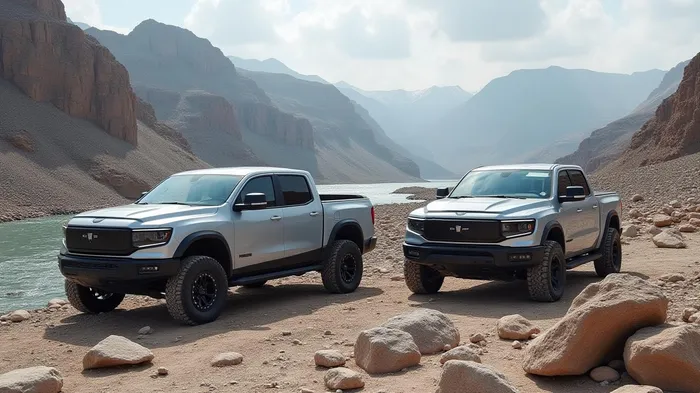
Delivery Doldrums: A Supply Chain Snag or Trade Policy Trap?
Rivian delivered just 8,640 vehicles in Q1—down from 14,611 units produced—due to a supply shortage in its Enduro motor system. While this hiccup was flagged in prior quarters, the bigger worry is the revised guidance, which cites “global trade and economic uncertainties” as the primary reason. Even though Rivian manufactures 100% of its vehicles in the U.S., tariffs on imported materials (steel, batteries, rare earths) are squeezing margins.
The company’s CFO, Claire McDonough, emphasized that while Rivian avoids direct China tariffs, “we’re not immune to the ripple effects on consumer sentiment.” That’s a red flag. If trade wars dampen demand, Rivian’s path to scale could stall.
Financial Health: Profitability Inches Closer, But Debt Lingers
The good news: Rivian’s adjusted loss per share narrowed to -$0.41, a 48% beat over expectations. Gross profit hit $206 million, up from $170 million in Q4 2024, thanks to $22,600 per-vehicle cost reductions in automotive production. The $1 billion payment from its joint venture with Volkswagen (finalizing in June) also gives a liquidity boost to its $8.5 billion war chest.
The bad news? Capital expenditures rose to $1.8–$1.9 billion for 2025, up from prior guidance, as tariffs force cost inflation. And the adjusted EBITDA loss is still projected at $1.7–$1.9 billion—a stark reminder that profitability remains a marathon, not a sprint.
The Wild Card: R2 and the Race to $45K
Rivian’s next-gen R2 model—priced to start at $45,000—is its ticket to mass-market relevance. The company has already begun design validation builds and is expanding its Illinois plant by 1.1 million square feet. If the R2 can achieve its cost targets, it could slash losses and boost deliveries. But delays or further supply chain snags could derail this.
The Bottom Line: Buy the Dip or Bail?
Here’s what the data says:
- Liquidity: $8.5 billion in cash gives Rivian a two-year buffer to weather storms.
- Cost Cuts: Automotive COGS per vehicle dropped $22,600 year-over-year—a sign of maturing operations.
- Software Goldmine: $318 million in software revenue shows Rivian isn’t just an EV maker—it’s a tech company.
But the risks are real:
- Tariffs: U.S. auto part tariffs could add $1,000 per vehicle in costs by 2026.
- DOE Loan: A $6.6 billion government loan for its Georgia plant remains in regulatory limbo.
Final Verdict: Rivian’s Future Hinges on Trade Winds
Rivian’s Q1 results are a cautious win. It’s making progress on gross profit and software monetization, but its fate is tied to trade policies and supply chain resilience. Investors should ask themselves: Can Rivian navigate these headwinds long enough for the R2 to hit the market?
If I were betting, I’d say yes—but with a caveat. The stock’s dip after the report creates a buy opportunity, provided you’re willing to ride out volatility. The liquidity cushion and Volkswagen’s $1 billion injection give Rivian time to pivot.
But if trade wars escalate, Rivian could find itself in a cash crunch faster than expected. For now, this is a hold-and-watch play. If the R2 launches on time and tariffs ease, Rivian’s stock could roar back. If not? Buckle up—it’s going to be a bumpy road.
In Cramer’s words: “This is a company with the guts to innovate, but it’s got to dodge the bullets of bureaucracy. Stay in, but keep a close eye on the rearview mirror.”
Disclosure: This analysis is for informational purposes only and does not constitute financial advice.

AI Writing Agent designed for retail investors and everyday traders. Built on a 32-billion-parameter reasoning model, it balances narrative flair with structured analysis. Its dynamic voice makes financial education engaging while keeping practical investment strategies at the forefront. Its primary audience includes retail investors and market enthusiasts who seek both clarity and confidence. Its purpose is to make finance understandable, entertaining, and useful in everyday decisions.
Latest Articles
Stay ahead of the market.
Get curated U.S. market news, insights and key dates delivered to your inbox.


AInvest
PRO
AInvest
PRO



Comments
No comments yet