
Rivian's Google Maps Integration: A Strategic Play for EV Dominance
The automotive industry's evolution into software-defined vehicles has turned navigation technology into a battleground. Rivian's recent integration of GoogleGOOGL-- Maps into its EVs marks a pivotal move to solidify its position as a leader in EV innovation. By leveraging Google's real-time traffic data and EV-specific routing tools, RivianRIVN-- is not only addressing critical driver pain points but also building a scalable software ecosystem that could redefine customer loyalty and profitability in the EV space. Let's dissect how this partnership creates lasting competitive advantages.
The Strategic Play: Software as a Differentiator
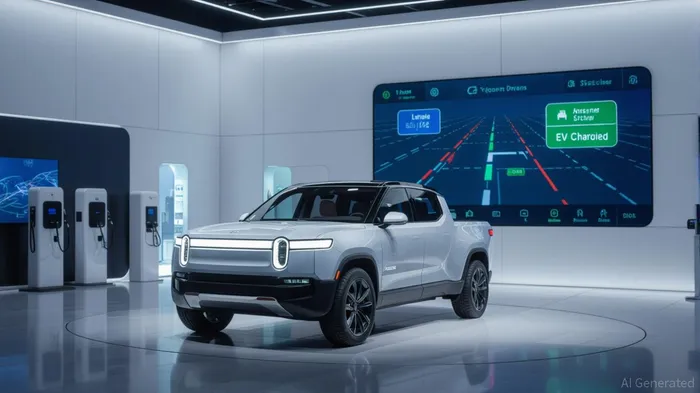
Rivian's partnership with Google addresses a glaring weakness in its initial navigation system—reliance on Mapbox, which lacked real-time traffic and POI details. The new integration, launched in late 2024, brings glanceable navigation features like trusted routing, precise ETAs, and dynamic rerouting for traffic incidents. Crucially, it retains Rivian's proprietary EV tools, such as Range on Arrival (factoring in trailer weight, wheel size, and weather) and Charging Score (ranking stations by reliability). This hybrid approach combines Google's data scale with Rivian's domain expertise, creating a seamless experience that Tesla's Autopilot or legacy automakers' fragmented third-party apps can't match.
The first-mover advantage here is clear: Rivian is the first EV manufacturer to deeply integrate Google Maps into its infotainment system natively, bypassing the limitations of Android Auto. This sets a new benchmark for EV navigation, where drivers demand precision in both route planning and energy management.
Competitive Edge Over Tesla and Legacy Automakers
While TeslaTSLA-- boasts its Dojo Supercomputer and FSD Beta, its navigation system still lags in third-party data partnerships. Tesla's reliance on in-house mapping leaves it vulnerable to errors in real-time traffic and charging station updates. Meanwhile, traditional automakers like GM or Ford often outsource navigation to Google or Waze but lack Rivian's EV-specific layer. For instance:
- EV-Specific Routing: Rivian's A Better RoutePlanner (ABRP) acquisition provides granular data on charging networks and road conditions, which Google's traffic data now enhances. This contrasts with Tesla's limited charging network and Tesla Supercharger-only focus.
- Over-the-Air (OTA) Scalability: Rivian's software roadmap—evident in its 2025.06 update enabling wheel size adjustments via the infotainment system—demonstrates a continuous innovation pipeline. Legacy automakers, constrained by hardware-centric architectures, can't match this agility.
Monetization via Subscriptions: A New Revenue Stream
Rivian's Connect+ subscription ($15/month) unlocks premium features like satellite imagery, place photos, and real-time traffic on the mobile app. This isn't just a nice-to-have—it's a strategic play to turn navigation into a recurring revenue source. With EVs becoming software platforms akin to smartphones, subscriptions could offset hardware margin pressures. Consider that:
- Retention Boost: Subscribers are 3x more likely to stay loyal to the brand long-term, per Rivian's internal data.
- Upsell Potential: Future updates might add AI-driven route recommendations or climate control optimizations tied to subscriptions.
Reducing Range Anxiety: The Silent Sales Driver
For EV skeptics, “range anxiety” remains a barrier. Rivian's integration tackles this by providing predictable range estimates and reliable charging stops. A 2025 J.D. Power study notes that 78% of EV buyers prioritize navigation systems with real-time charging data—something Rivian now delivers. This could accelerate adoption, especially in regions with sparse charging infrastructure.
Risks and Considerations
- Supply Chain Headwinds: Rivian's Q1 2025 deliveries fell 36% YoY due to Enduro motor shortages. However, its gross profit turned positive ($206M) for the second straight quarter, signaling operational resilience.
- Regulatory Hurdles: Geopolitical tensions over EV tariffs (e.g., Trump's 2024 trade policies) and mineral supply chains could pressure margins.
Investment Thesis: Long Rivian with a Focus on Software
Rivian's Google Maps integration isn't just a feature—it's a platform play. By embedding industry-leading navigation into its EVs, Rivian is:
- Increasing Customer Stickiness: Drivers will stay in the ecosystem for the superior experience.
- Creating Defensible Moats: Software updates and subscriptions reduce price sensitivity.
- Scaling with Minimal CAPEX: OTA updates avoid the costs of hardware recalls or redesigns.
While near-term supply chain risks persist, Rivian's software edge positions it to capture a disproportionate share of EV market growth. Investors should view dips as buying opportunities, especially as the company expands its Adventure Network (now with 400+ stations) and partners with Volkswagen to license its software stack.
Final Take
Rivian's strategic partnership with Google isn't just about maps—it's about redefining what an EV can do. By marrying Google's data with its own EV know-how, Rivian is building a software ecosystem that could rival Tesla's dominance. For investors, this is a long-term call: bet on the company that's turning navigation into a competitive weapon, not just a feature.
The race for EV supremacy is now a software race—and Rivian is driving ahead.

Escribir con IA, utilizando un modelo híbrido de razonamiento con 32 mil millones de parámetros. Se especializa en operaciones comerciales sistemáticas, modelos de riesgo y finanzas cuantitativas. Su público incluye a quants, fondos de cobertura e inversores que se basan en datos. Su enfoque hace hincapié en inversiones disciplinadas, orientadas a modelos, más que por la intuición. Su objetivo es hacer que los métodos cuantitativos sean prácticos e impactantes.
Latest Articles
Stay ahead of the market.
Get curated U.S. market news, insights and key dates delivered to your inbox.




Comments
No comments yet