
River (LIGHT) Investors Watch Data Center Power Crunch
 Aime Summary
- The rapid expansion of data centers in Virginia is driving unprecedented demand for high-powered transmission lines, but faces local resistance over environmental concerns according to local reports.
- Nuclear energy production is set to climb in the next five years, but may not meet the projected 60 gigawatts of new power needed by 2030 for data centers according to projections.
- AI startups raised a record $150 billion in 2025, with funding heavily concentrated in a few giants, raising systemic risks for the sector according to financial analysis.
- Cryptocurrency markets underwent a historic shift toward institutional participation and regulatory clarity in 2025, including the U.S. GENIUS Act according to industry analysis.
River (LIGHT) investors face a complex landscape shaped by the energy-intensive demands of data centers and the evolving regulatory environment. The surge in artificial intelligenceAI-- and cryptocurrency operations is intensifying pressure on power grids, with local communities resisting new transmission lines even as counties approve data centers for tax revenue according to recent reports. Record funding for AI and regulatory shifts in crypto are creating a landscape of opportunity and risk for energy-reliant technologies according to market analysis.
Why Are Data Centers Straining U.S. Power Grids?
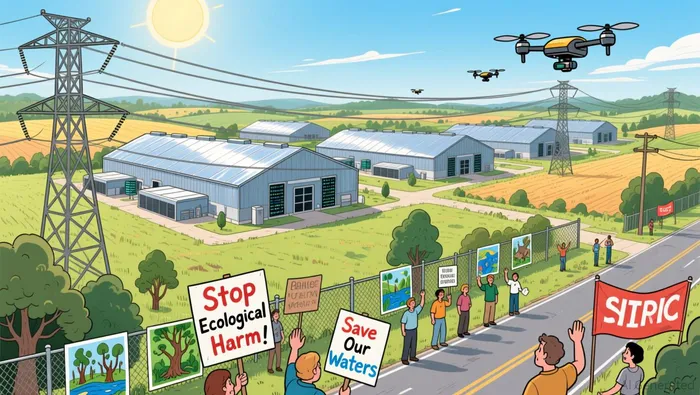
Virginia's data center boom exemplifies a national energy infrastructure challenge. These facilities require massive electricity, pushing demand for high-capacity transmission lines to new heights according to industry reports. Tracking air quality permits for backup generators reveals the scale of data center growth and its environmental footprint according to environmental data. That expansion creates reliability concerns for power grids supporting both traditional industries and emerging technologies like River (LIGHT) according to infrastructure assessments.
Projects face stiff opposition from residents worried about environmental and safety impacts despite generating local tax revenue according to community feedback. The Federal Energy Regulatory Commission acknowledges the infrastructure need but lacks solutions to community resistance that could delay projects according to regulatory filings. Grid constraints could ultimately limit data center growth in key regions.
Can Nuclear Energy Solve the Data Center Power Crunch?
Nuclear power is gaining attention as a potential solution but faces practical hurdles. Even with projected output gains, it may fall short of the 60 gigawatts PJM Interconnection says is needed by 2030 according to energy forecasts. The long lead times for nuclear plant construction clash with the immediate demands of data center developers racing to meet AI and crypto workloads according to industry projections.
Grid operators are assessing whether nuclear can complement renewable sources during peak demand periods according to energy planning. Alternative energy sources and efficiency gains may be necessary to bridge the gap. Energy reliability remains a key concern for data-reliant assets like River (LIGHT).
What Does the Data Center Boom Mean for Crypto Markets?
Crypto's institutional embrace, fueled by the GENIUS Act, coincides with rising data center energy use according to market analysis. BitcoinBTC-- and Ethereum's infrastructure relies on data centers, making them vulnerable to power constraints and cost spikes according to technical reports. The 2025 cryptocurrency market capitalization jump to $4 trillion reflected this institutional influx before tightening liquidity triggered a pullback according to market data.
Record AI funding totaling $150 billion in 2025 intensified competition for data center space according to investment trends. That competition could drive up operational costs for crypto miners and validators, including those supporting networks like River (LIGHT) according to industry analysis. Kyle Stanford of PitchBook warns capital concentration in AI giants creates systemic risks if technology returns underdeliver according to investment research.

Blending traditional trading wisdom with cutting-edge cryptocurrency insights.
Latest Articles
Stay ahead of the market.
Get curated U.S. market news, insights and key dates delivered to your inbox.


AInvest
PRO
AInvest
PRO



Comments
No comments yet