
RIVER Continues to Attract Attention Due to Sewage Spill and Environmental Concerns
 Aime Summary
An enormous sewage spill into the Potomac River has become an ecological and political issue, with hundreds of millions of gallons of raw sewage released into the water due to a collapsed sewer line. Initial testing found elevated levels of harmful bacteria such as E. coli and antibiotic-resistant MRSA, raising concerns about the safety of boating and fishing in the area. The spill has also drawn national political attention, with President Trump criticizing local officials for handling the cleanup.
The spill highlights aging infrastructure and the challenges of managing combined wastewater and stormwater systems in the United States. The collapse of a decades-old sewer line in Maryland dumped over 200 million gallons of raw sewage into the Potomac River, emphasizing the need for updated infrastructure. Scientists warn that the waste will eventually wash downstream to the Chesapeake Bay and out into the Atlantic Ocean, potentially causing long-term environmental damage.
Environmental advocates and scientists are deeply concerned about the lasting environmental and ecological impacts of the spill. The release of raw sewage into the river has raised questions about the future of waterfront communities and the safety of recreational activities. Climate change is also a contributing factor, as rising temperatures and increased storm intensity are placing additional strain on sewer and stormwater systems.
What is the cause of the River's recent issues?
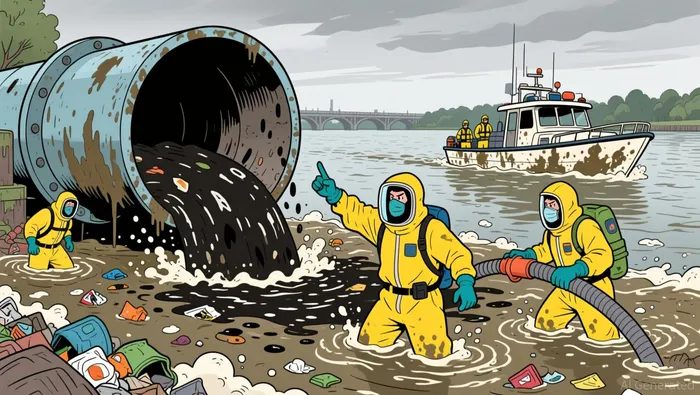
The recent sewage spill into the Potomac River was caused by a collapsed sewer line, leading to the release of raw sewage into the water. The spill began when a section of the Potomac Interceptor sewer line collapsed near the Clara Barton Parkway in Montgomery County, Maryland. The 72-inch-wide pipe, which normally carries up to 60 million gallons of waste a day, was unable to contain the overflow, which continued for about a week before being partially diverted.
The collapse of the sewer line has been attributed to aging infrastructure, with DC Water reporting signs of corrosion in the 1960s-era pipe during previous inspections. The utility has since been working to set up a system of pumps and a steel bulkhead to divert wastewater around the broken section of pipe while repairs are being made. Despite these efforts, intermittent sewage spills have continued as recently as February 10, with the utility estimating it will take four to six weeks to fully repair the line.
How is the pollution affecting the environment and communities?
The pollution from the sewage spill is affecting both the environment and communities that rely on the Potomac River. Elevated levels of harmful bacteria such as E. coli and antibiotic-resistant MRSA have been detected in the water, posing risks to human health and recreational activities. Scientists and environmental advocates warn that the waste contains a variety of harmful substances, including pharmaceuticals and other chemicals that can sink to the bottom of the river and have long-term effects on fish, birds, and insects.
The spill could also lead to algae blooms in the river as temperatures warm during the summer months, potentially killing fish and disrupting local ecosystems. Environmental advocates such as the Potomac riverkeeper have raised concerns about the long-term consequences for waterfront communities and the need to reassure the public that the river is safe again. The waste from the spill is expected to eventually wash downstream to the Chesapeake Bay and out into the Atlantic Ocean, further emphasizing the need for immediate action.
What are the political and legal implications of the sewage spill?
The sewage spill has become a political issue, with national figures such as President Trump criticizing local officials for their handling of the cleanup efforts. Trump claimed that local officials, including Governor Wes Moore of Maryland, had bungled the cleanup and that the Federal Emergency Management Agency would intervene. This has added a layer of political scrutiny to the situation, with the spill now being seen as a test of leadership and infrastructure management at both the local and national levels.
Legislatively, there are ongoing debates about assigning liability for environmental contamination, particularly in cases such as the PFAS (per- and polyfluoroalkyl substances) issue. In Wisconsin, for example, the battle over PFAS liability remains a contentious political issue with no clear bipartisan solution yet developed. While legislation has provided some clarity for farms and food processing facilities by exempting them from PFAS liability if wastewater management was conducted appropriately, similar debates may arise in the context of the Potomac River spill as officials consider who is responsible for the damage.
The spill also highlights the broader challenges of managing environmental contamination and assigning responsibility in cases where infrastructure failure has led to public health and ecological risks. As the situation continues to unfold, it will be important for both local and national officials to address the immediate cleanup efforts while also considering long-term solutions to prevent similar incidents in the future according to reports.

La combinación de la sabiduría tradicional en el comercio con las perspectivas más actuales relacionadas con las criptomonedas.
Latest Articles
Stay ahead of the market.
Get curated U.S. market news, insights and key dates delivered to your inbox.


AInvest
PRO
AInvest
PRO



Comments
No comments yet