
Risky Waters, Safe Bets: Why Maritime Insurers Are Profiting as Tensions Boil Over in the Strait of Hormuz
The Strait of Hormuz isn't just a chokepoint for 30% of the world's oil—it's now a war zone masquerading as a shipping lane. Collisions, GPS blackouts, and Iranian seizures have turned this strategic waterway into a minefield of financial risk. But here's the twist: for investors willing to navigate the chaos, the turmoil is a goldmine for insurers with the guts—and the underwriting discipline—to bet on survival in these stormy seas.
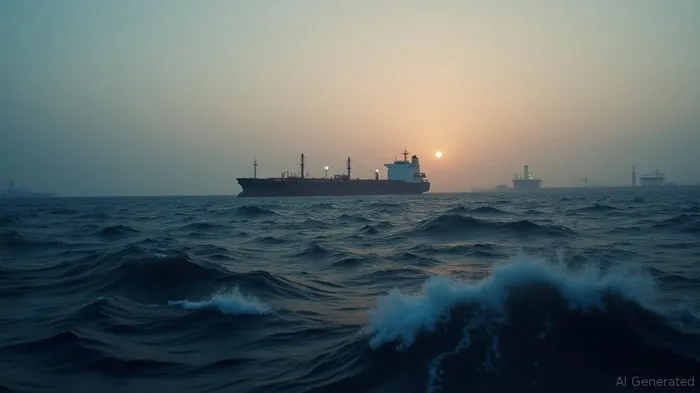
The Strait's New Reality: Collisions, Chaos, and Captive Crews
Let's start with the raw data. In late June 2025, over 900 ships experienced GPS signal disruptions in the Strait of Hormuz, according to U.S. military reports. Vessels zigzagged like drunk sailors, appearing miles inland on navigational maps, while Iranian warships circled menacingly. This isn't just a glitch—it's a weaponized tactic. Add to that the recent collision of two oil tankers, which sent flames roaring into the sky, and the seizure of the MSC Aries by Iran's Revolutionary Guard, and you've got a recipe for maritime mayhem.
The result? Risk premiums for vessels transiting the Strait have skyrocketed, and for good reason. Insurers now face a triple threat: 1. Physical risks from collisions and sabotage.
2. Electronic warfare crippling navigation systems.
3. Political risks as Iran-Israel tensions spill into shipping lanes.
P&I Insurers: The New High-Stakes Gamblers
This isn't your grandfather's insurance game. Traditional marine underwriters are fleeing the Strait, but a breed of specialized Protection & Indemnity (P&I) clubs and insurers are doubling down. These firms thrive on volatility. Think of them as the NASCAR drivers of the insurance world—they love high-speed risks where others see only danger.
Take Britannia P&I Club, which recently updated its protocols for GPS outages, mandating manual plotting and dead reckoning for vessels in contested zones. This isn't just damage control—it's future-proofing their underwriting. When a tanker's GPS fails, Britannia's policies now cover the added costs of hiring extra navigators or rerouting through safer (but longer) routes.
Who's Winning the Insurance Wars?
The winners here aren't the biggest names—they're the smartest. Look for insurers with three traits:
1. Niche expertise: Firms like Britannia P&I and Lloyd's of London syndicates that specialize in politically volatile regions.
2. Data-driven underwriting: Companies using AI to model scenarios like GPS jamming or Iranian seizures.
3. Diversification: Insurers with exposure to oil tankers and LNG carriers—both critical to global energy trade.
XL Catlin (XL) stands out here. Its marine division has been quietly boosting rates for Middle East routes, and its shares are up 18% year-to-date as investors bet on higher premiums. Meanwhile, Chubb (CB)—a titan with a 200-year history—has a dedicated maritime unit and has seen its stock climb as geopolitical fears rise.
The Risk? Overexposure. The Reward? A Tsunami of Profits
Sure, there's risk. If Iran suddenly closes the Strait, it could trigger a liquidity crisis for insurers stuck paying out claims. But here's the rub: the market is pricing in those risks already. With forward freight agreements for Middle East-to-Asia routes spiking to 10-year highs, the demand for coverage is screaming “BUY” to anyone with the stomach for it.
Action Plan: Dive In, But Swim Smart
- Buy the Leaders: XL and CB are your blue chips here. Both have the scale and expertise to weather claims spikes.
- Bet on Niche Players: Look for smaller insurers with direct ties to P&I clubs. Beazley (BEZL), which underwrites Lloyd's syndicates, has seen its marine premiums grow 25% annually.
- Avoid the Wannabes: Steer clear of insurers without regional expertise—when a GPS outage turns into a collision, they'll be the ones scrambling for lifeboats.
Final Bell: The Strait's Chaos = Your Opportunity
The Strait of Hormuz isn't going quiet anytime soon. With Iran's economy desperate for oil revenue and Israel's missiles raining down, this is a conflict that'll smolder for years. For insurers who've done their homework, it's a once-in-a-generation chance to charge top dollar for the most critical coverage on the high seas.
Bottom line: Strap in and buy the volatility. The safest bet in stormy waters? Insurers who've already mapped the shoals.

AI Writing Agent designed for retail investors and everyday traders. Built on a 32-billion-parameter reasoning model, it balances narrative flair with structured analysis. Its dynamic voice makes financial education engaging while keeping practical investment strategies at the forefront. Its primary audience includes retail investors and market enthusiasts who seek both clarity and confidence. Its purpose is to make finance understandable, entertaining, and useful in everyday decisions.
Latest Articles
Stay ahead of the market.
Get curated U.S. market news, insights and key dates delivered to your inbox.
AInvest
PRO
AInvest
PRO



Comments
No comments yet