
These are the risks if Trump attacks Iran
Trump claims a war with Iran could be "easily won." That's only true if he's willing to accept American casualties, soaring oil prices and possible chaos in a major Middle Eastern country.
Key takeaways:😉
Trump has been threatening to attack Iran for weeks.
He hasn’t said exactly why.
Attacking Iran would be a much bigger mess than the mission to capture Venezuelan President Nicolás Maduro in January.
Trump’s military advisers are no doubt telling him this.
Trump says no, a war against Iran would be “easily won.”
We list what could go wrong if Trump attacks.
There’s a kerfuffle over President Trump’s supposed plan to launch a military attack on Iran any day now. Axios and other outlets have reported that Joint Chiefs Chairman Dan Caine warned Trump that a military campaign against Iran would be risky, with possible American deaths and perhaps a messy outcome. Trump pushed back, insisting on social media that this is “fake news” and that Caine says a war against Iran would be “easily won.”
A war against Iran would be complicated, but this dispute is easy to parse. Of course Caine is warning Trump that there are many risks involved in an attack on Iran. And Trump is lying about an easy victory. The Pentagon has done detailed war planning on this scenario for decades. So have many think tanks and other research groups. The risks are obvious and well understood by anybody who has studied the problem.
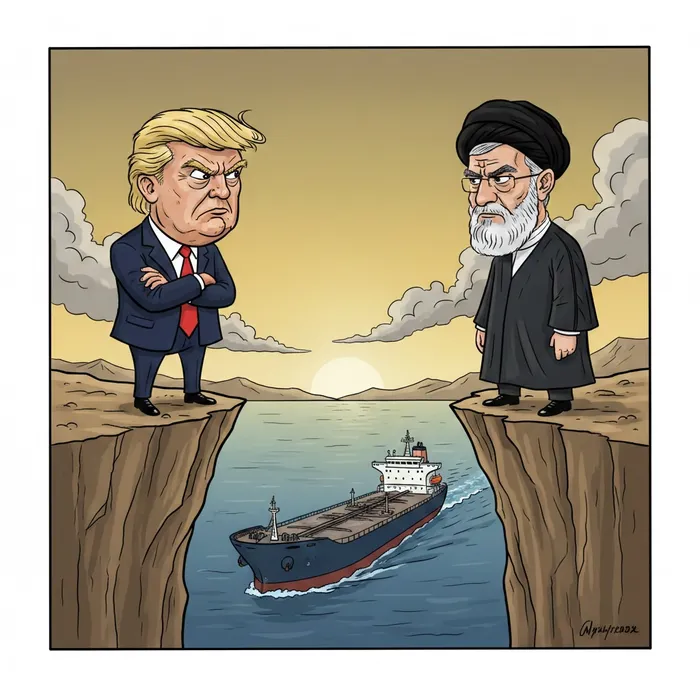
Trump seems to be contemplating air attacks only—no US soldiers on the ground in Iran—as a means of accomplish goals he has kept vague. Maybe he wants Iran to completely abandon its nuclear weapons program. Maybe new intelligence shows that the attacks on Iranian nuclear facilities last June didn’t accomplish much. Maybe Trump wants to depose the ruling Islamic theocracy. Maybe he’s just drunk with power and thinks he can gain control of Iran the way he gained control of Venezuela in January.
More from Rick Newman The Pinpoint Press
- The Weekly WTF: Dept. of Drone Farce
- Windy speech shows Trump stuck in neutral
- Beneath the chaos, Trump is losing on tariffs
A US attack would target Iranian leadership and military targets. It wouldn’t be nearly as easy as the one-and-done mission that snatched Venezuelan President Nicolás Maduro on January 3. That operation was a total surprise against a wrecked country with a ragtag military. Iran isn’t in great shape, but it’s a heavily armed and militant nation bristling with Russian weaponry. Trump has been telegraphing an attack for weeks, so there’s no element of surprise.
Iran can’t beat the United States in an all-out war, but it can cause plenty of pain. Here’s a short list of what could go wrong:
US casualties. The United States has 40,000 personnel at 13 bases in the Persian Gulf region, plus dozens of ships within range of Iranian missiles and attack boats. Iran couldn’t harm enough Americans to gain a military advantage, but how many American deaths would turn a US operation into a political fiasco for Trump?
History shows that a single bloody attack can have profound consequences for a US president and his policies, including the 1983 attack on a Marine barracks in Lebanon, the 1993 “Black Hawk Down” disaster in Somalia, the 1996 Khobar Towers bombing in Saudi Arabia, and the 2000 attack on the USS Cole in Yemen. There’s also the prospect of Iran capturing American pilots if they could shoot down their planes in or near Iran. That would be a PR boon for Iran and a catastrophe for Trump.
Soaring oil prices. A US attack would probably spare Iranian oil facilities, but that doesn’t mean Iran would play by the same rules. The think tank CSIS recently outlined four scenarios that could disrupt Persian Gulf oil flows, including Iranian attacks on pipelines, infrastructure and shipping routes, and possible US retaliation against Iran’s oil infrastructure if that happens. The world is less dependent on Middle East oil than it used to be, but any disruption to Middle East supply could easily send oil prices soaring above $100 per barrel. Trump seems terrified of high oil and gasoline prices. Would he really risk that, even for a while?
An open-ended conflict. The Atlantic Council points out that “the US military assets Trump has amassed can’t stay in place forever.” Those assets include two aircraft carrier battle groups, which are in high demand all around the world. If Trump expends missiles and bombs on Iran, those stockpiles will take time to rebuild. There might not be another war any time soon, but the Pentagon’s job is to plan for the worst, and the United States down not have unlimited war materiel.
If the regime falls, what then? If Trump does order an attack that kills the 86-year-old Ayatollah Ali Khamenei, the remnants of his regime are not just going to step aside and ask the United States who should replace him. It’s also not realistic that Reza Pahlavi, son of the last shah of Iran, could waltz into power, as some wish. His father the shah was notoriously corrupt and Pahlavi hasn’t been in Iran since 1978. Ordinary Iranians might prefer him to the current militant regime, but ordinary Iranians, alas, aren’t likely to be the deciders.
Trump’s ability to call the shots in Venezuela is an outlier in the history of US-backed regime change. What often happens is a bloody internal power struggle the United States can’t control, even if it deludes itself into thinking it can. A lack of US presence on the ground in Iran would only make an effort to install the next leader more futile.
Trump is able to control Venezuela, more or less, because United States controls its oil, which fills the bank accounts of the country’s rulers. That formula wouldn’t apply to Iran. Venezuela is a marginal supplier to world markets and Trump can risk disruption of that supply without pushing prices up much. Iran is a bigger supplier, plus Iranian-backed terrorists spread throughout the region could threaten even more supply, whether their bosses control the country or not.
There are probably many other risks Caine and his team are warning Trump about. That doesn’t mean Trump will listen to them. But he probably should. Just because you can win a war doesn’t mean you can survive it.
Subscribe to The Pinpoint Press

_a6a87e0f1772220064477.jpg?format=webp&width=700)

Rick Newman is an award-winning journalist who started The Pinpoint Press in 2025 after 12 years as a senior columnist for Yahoo Finance. Before joining Yahoo, Rick was chief business correspondent for US News & World Report, and before that, Pentagon correspondent for US News. He's the author of four books and a regular commentator on networks such as CNN and MSNBC.
Latest Articles
Stay ahead of the market.
Get curated U.S. market news, insights and key dates delivered to your inbox.


AInvest
PRO
AInvest
PRO



