
The Risks of Sector Concentration in the Schwab U.S. Dividend Equity ETF (SCHD)


 Aime Summary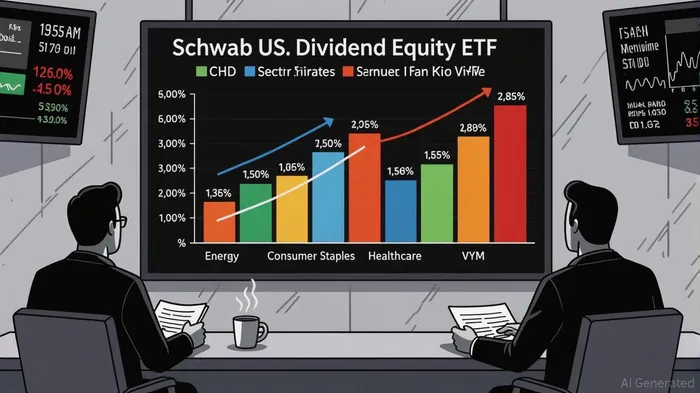
The Schwab U.S. Dividend Equity ETF (SCHD) has long been a favorite among passive income investors for its focus on high-quality, dividend-paying stocks. However, its portfolio structure—concentrated in just three sectors (Energy, Consumer Staples, . While this concentration has historically delivered resilience during market downturns, it also exposes investors to sector-specific vulnerabilities that could undermine long-term stability.
The Case for Concentration: Historical Resilience
, , . During the 2008–2010 , these sectors outperformed the S&P 500, with energy giants like ChevronCVX-- and industrials stalwarts like 3MMMM-- cushioning the fund's losses. Similarly, in 2020, healthcare and industrials provided defensive qualities amid . .
The Hidden Risks of Overconcentration
Despite its historical strengths, SCHD's sector concentration introduces significant risks. Energy stocks, for instance, are highly sensitive to and geopolitical events. A prolonged or regulatory shifts could erode the value of holdings like ConocoPhillipsCOP-- or EOG ResourcesEOG--. Consumer Staples, while traditionally defensive, faces margin pressures from inflation and shifting consumer preferences. Meanwhile, Healthcare's exposure to regulatory changes—such as —could impact companies like AbbVieABBV-- and MerckMRK--.
, further amplifying concentration risk. For example, a single sector downturn (e.g., a collapse in ) could disproportionately impact the fund's performance. This was evident in 2020, .
Alternatives for Diversification
To mitigate these risks, investors should consider alternatives with more balanced sector allocations. The Vanguard Dividend Appreciation ETF (VIG), for instance, . The WisdomTreeWT-- U.S. , technology, and consumer defensive stocks. Both funds reduce exposure to cyclical sectors like energy and healthcare.
For those seeking low-volatility income, the Franklin U.S. Low Volatility High Dividend ETF (LVHD) focuses on utilities and consumer defensive sectors, . Similarly, the Schwab International Dividend Equity ETF (SCHY) provides , .
Strategic Recommendations
- Blend SCHD with Diversified ETFs: Pair SCHD with funds like VIG or DLNDLN-- to balance sector exposure while maintaining a high yield.
- Monitor Sector-Specific Risks: Regularly assess the impact of regulatory changes (e.g., ) or commodity price swings on SCHD's top holdings.
- Consider Defensive Sectors: Allocate a portion of the portfolio to utilities or consumer staples ETFs (e.g., LVHD) to hedge against volatility in energy and industrials.
- Rebalance Periodically: Adjust sector allocations based on macroeconomic trends, such as increasing energy exposure during inflationary periods or reducing it during .
Conclusion
While SCHD's concentrated approach has historically delivered strong income and resilience, its sector-specific risks cannot be ignored. Passive income investors must weigh the benefits of high yields against the potential for uneven performance during downturns. By diversifying across sectors and incorporating low-volatility strategies, investors can build more resilient dividend portfolios that align with long-term stability goals. In an era of rising interest rates and shifting market dynamics, diversification remains the cornerstone of effective risk management.

Delivering real-time insights and analysis on emerging financial trends and market movements.
Latest Articles
Stay ahead of the market.
Get curated U.S. market news, insights and key dates delivered to your inbox.




Comments
No comments yet