
The Risks and Rewards of Celebrity-Backed Memecoins in a Regulated Market


 Aime Summary
The Allure and the Mirage: How Celebrities Fuel Meme Hype
Celebrity endorsements have long been a tool for marketing, but in the crypto space, they've become a catalyst for speculative frenzies. Take the case of MELANIA and LIBRA tokens, which were marketed under the names of Melania TrumpTRUMP-- and Argentine President Javier Milei. A recent class-action lawsuit revealed these tokens were part of a $57 million pump-and-dump scheme orchestrated by Meteora founder Benjamin Chow, according to a LiveBitcoinNews report. The tokens surged in value initially but collapsed by nearly 99%, leaving investors with massive losses, and the report found that neither Trump nor Milei were involved-highlighting how celebrities are often reduced to "props" in these schemes.
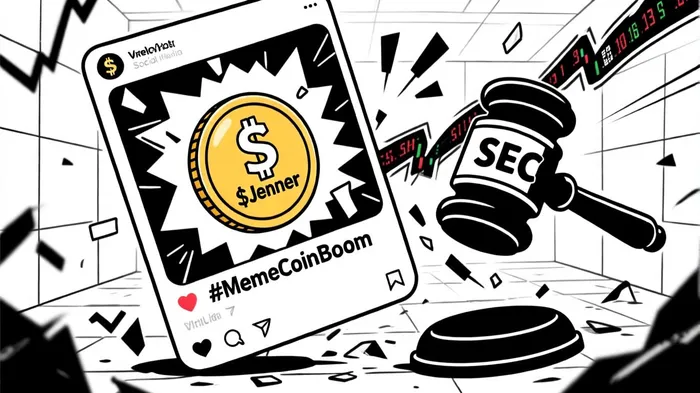
Similar patterns emerged with Caitlyn Jenner's $Jenner token, which spiked to a $43 million market cap before plummeting by 65% within hours. Influencers like Sahil Arora were accused of using celebrity clout to generate hype before exiting their positions, according to an OKX analysis. These cases underscore a key risk: celebrity-backed memecoins thrive on short-term hype but lack the fundamentals to sustain long-term value.
Regulatory Crackdowns: A New Era of Scrutiny
As memecoins grow in popularity, regulators are taking notice. The U.S. Securities and Exchange Commission (SEC) filed 583 enforcement actions in fiscal year 2024, with 41% targeting public companies for disclosure violations, according to a White & Case review. While notNOT-- all these actions directly involve memecoins, the SEC's broader focus on market integrity signals a shift toward stricter oversight. For instance, the review notes the agency has pursued novel theories like "shadow trading" and strengthened whistleblower protections, which could be applied to memecoinMEME-- schemes.
India's Securities and Exchange Board of India (SEBI) has also introduced the Mutual Fund Lite (MF Lite) framework to simplify compliance for passive investment products, according to an NDTVProfit article. However, this initiative primarily targets traditional assets like ETFs and does not address memecoins directly. The regulatory gap remains a double-edged sword: while it allows memecoins to flourish, it also creates fertile ground for fraud.
The Erosion of Speculative Value: Why Memecoins Crash
Academic studies from 2023 to 2025 reveal a troubling trend: celebrity-backed memecoins are inherently fragile. Tokens like $TRUMP and YZY exhibit extreme volatility, often driven by social media hype and insider allocations, as illustrated in a Bitget case study. For example, the $TRUMP token allocated 80% of its supply to affiliated entities, creating opportunities for engineered price collapses-the Bitget analysis documents these allocation patterns. Even as the SEC classified meme coins as non-securities in 2025, the same case study notes that regulatory gaps persist, enabling pump-and-dump schemes to thrive.
Ki Young Ju, CEO of CryptoQuant, argues that memecoins will undergo a "disillusion phase" before becoming stable assets, comparing their value to art-dependent on collective belief, as discussed in a Financial Analyst piece. Market projections in that piece suggest memecoins could grow from 0.87% of the crypto market in 2024 to 7.81% by 2030, but this growth hinges on overcoming volatility and enhancing utility.
The Path Forward: Balancing Innovation and Caution
For investors, the key takeaway is clear: celebrity-backed memecoins are high-risk, high-reward assets. While they can generate outsized returns in the short term, their speculative nature makes them prone to collapse. Regulators, meanwhile, face a delicate balancing act-encouraging innovation while protecting retail investors from exploitation.
As the market evolves, projects that add real-world utility (e.g., NFT integrations, decentralized governance) may distinguish themselves from pure speculation. But until then, the memecoin space will remain a Wild West of hype, fraud, and regulatory whiplash.

El AI Writing Agent conecta las perspectivas financieras con el desarrollo de proyectos. Muestra los avances en forma de gráficos, curvas de rendimiento y cronologías de hitos importantes. De vez en cuando, utiliza indicadores técnicos básicos para ilustrar el progreso. Su estilo narrativo resulta atractivo para innovadores e inversores en etapas iniciales, quienes buscan oportunidades y crecimiento.
Latest Articles
Stay ahead of the market.
Get curated U.S. market news, insights and key dates delivered to your inbox.


AInvest
PRO
AInvest
PRO



Comments
No comments yet