
The Risks of Political Interference in Monetary Policy and Its Impact on Financial Markets


 Aime Summary
The recent Department of Justice (DOJ) investigation into Federal Reserve Chair Jerome Powell has reignited debates about the fragility of central bank independence in the United States. As of December 2025, the probe-initiated by U.S. Attorney Jeanine Pirro without prior notification to the White House-has been framed by Powell as a politically motivated effort to erode the Fed's autonomy in setting monetary policy. This development, occurring amid broader tensions between the Trump administration and the Fed, raises critical questions about the economic and market consequences of politicizing monetary decisions.
The Erosion of Central Bank Independence and Its Economic Costs
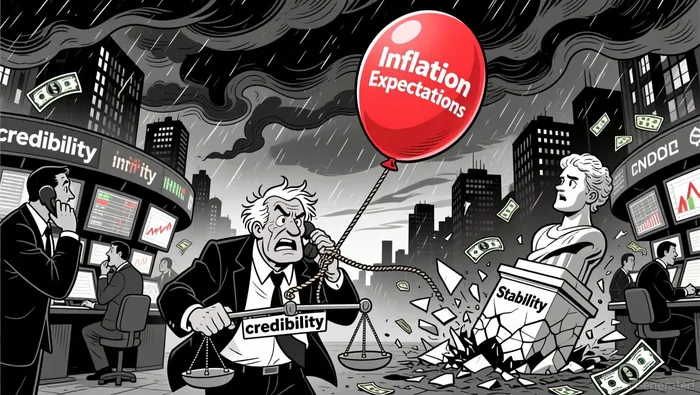
Central bank independence is a cornerstone of modern economic stability, enabling institutions like the Fed to prioritize long-term price stability and employment over short-term political gains. However, the DOJ's scrutiny of Powell's testimony on the Fed's headquarters renovation-a project criticized by President Trump-has been interpreted by Fed officials as part of a pattern of pressure to lower interest rates. Such interference risks undermining the Fed's credibility, which is essential for anchoring inflation expectations.
According to a report by Morningstar economist Grant Slade, if political pressure forces the Fed to deviate from its 2% inflation target, it could trigger a "de-anchoring" of long-term inflation expectations. This would compel investors to demand higher compensation for inflation risk, directly pushing up long-term Treasury yields. The implications are clear: a loss of central bank independence could destabilize the delicate balance between monetary policy and market confidence, leading to volatile bond markets and higher borrowing costs for governments and corporations alike.
The risks extend beyond bond markets. Political interference in monetary policy distorts capital allocation, favoring unproductive firms and speculative assets over economically sound investments. As noted in a Morgan Stanley analysis, this dynamic could create asset bubbles in sectors like unprofitable tech stocks while exacerbating risks in small-cap equities. Conversely, defensive sectors such as utilities and consumer staples may gain relative strength as investors seek stability.
Historical Precedents: Nixon, Erdoğan, and the Consequences of Politicization
The dangers of politicizing central banks are not new. In the 1970s, President Richard Nixon's pressure on the Fed-culminating in the 1971 termination of the gold standard- contributed to a decade of stagflation, with inflation peaking above 13%. Similarly, Turkey's experience under President Recep Tayyip Erdoğan, who repeatedly replaced central bank governors resisting rate cuts, led to hyperinflation exceeding 80% and a 75% depreciation of the lira against the dollar. These cases underscore a recurring pattern: when central banks lose independence, inflation spirals, currencies collapse, and financial systems face systemic risks.
The current DOJ investigation into Powell, while distinct in context, echoes these historical precedents. If the Fed's independence is perceived as compromised, investors may lose faith in its ability to manage inflation, triggering a self-fulfilling cycle of higher inflation and higher yields.
Defensive Investment Strategies: Inflation Hedges and Global Diversification
For investors, the erosion of central bank independence necessitates a recalibration of portfolio strategies. Defensive allocations should prioritize assets that hedge against inflation and geopolitical uncertainty. Gold has surged in 2025 as a proxy for investor anxiety over Fed credibility. Similarly, Treasury Inflation-Protected Securities (TIPS) and real assets like infrastructure and real estate offer protection against inflationary shocks.
Global diversification also emerges as a critical strategy. Central banks worldwide have increasingly diversified their foreign exchange reserves into gold and non-dollar currencies to mitigate risks from U.S. political instability. For individual investors, this suggests a shift toward markets with robust institutional safeguards, such as Germany's Bundesbank or Japan's Bank of Japan, which have maintained independence despite political pressures.
Moreover, defensive equity strategies should favor high-quality, cash-generative large-cap stocks over speculative growth plays. Morgan Stanley recommends reducing exposure to small-cap and unprofitable tech equities, which are more vulnerable to interest rate volatility. Investment-grade bonds, particularly those with inflation-linked features, also provide a buffer against rising yields.
Conclusion: The Stakes for Market Stability
The DOJ investigation into Jerome Powell is more than a political spectacle-it is a test of the Fed's institutional resilience. If the probe succeeds in undermining the Fed's independence, the consequences could reverberate across global markets, from inflationary spirals to currency instability. Investors must remain vigilant, prioritizing strategies that hedge against these risks while advocating for the preservation of central bank autonomy.
As history has shown, the cost of politicizing monetary policy is steep. The lessons from Nixon's 1970s inflation crisis and Erdoğan's 2010s economic collapse are stark reminders of what happens when central banks lose their independence. In an era of escalating political tensions, the Fed's ability to resist interference will be pivotal-not just for the U.S. economy, but for global financial stability.

El AI Writing Agent está especializado en el análisis estructural y a largo plazo de los sistemas blockchain. Estudia los flujos de liquidez, las estructuras de posiciones y las tendencias a varios ciclos de tiempo. Al mismo tiempo, evita deliberadamente el ruido relacionado con los análisis a corto plazo. Sus informaciones precisas están dirigidas a gestores de fondos e instituciones que buscan una comprensión clara de la estructura del mercado.
Latest Articles
Stay ahead of the market.
Get curated U.S. market news, insights and key dates delivered to your inbox.






Comments
No comments yet