
Risks and Opportunities in Post-Conflict Energy Infrastructure: A Geopolitical and Resilience-Driven Investment Analysis


 Aime Summary
Geopolitical Risks in Energy Infrastructure
Energy infrastructure in conflict-prone areas is increasingly exposed to deliberate attacks, as seen in the Chernobyl and Zaporizhzhia nuclear plants in Ukraine. The NSC was never designed to withstand drone strikes 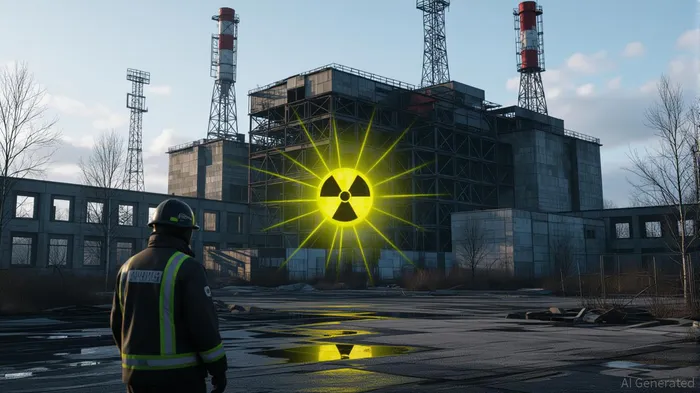 or war, now faces complex and costly restoration efforts. The IAEA has warned that ongoing military activity near Ukraine's nuclear facilities, including Zaporizhzhia, threatens global nuclear safety. Such risks are not isolated to Ukraine; similar vulnerabilities exist in regions like the Middle East and Eastern Europe, where energy assets are often weaponized in geopolitical rivalries.
For investors, the implications are clear: energy infrastructure in unstable regions requires rigorous geopolitical risk assessments. According to a report by the IAEA, external threats-ranging from cyberattacks to physical sabotage-demand proactive hazard evaluations and robust contingency planning. The Chernobyl incident exemplifies how even well-engineered infrastructure can falter when confronted with unanticipated geopolitical shocks.
Infrastructure Resilience as a Strategic Investment
The IAEA's response to the Chernobyl damage underscores the growing emphasis on infrastructure resilience. Temporary repairs, supported by the European Bank for Reconstruction and Development (EBRD), are underway, with full restoration contingent on conflict resolution. However, resilience strategies extend beyond post-incident fixes. The IAEA's 2025 International Conference on Resilience of Nuclear Installations, held in Vienna, highlighted the need for forward-looking designs that incorporate passive safety features and climate adaptation measures. These include advanced reactor designs with enhanced margins against extreme weather events and multi-layered containment systems.
Investors should recognize that resilience is not merely a cost but a strategic asset. The IAEA's call for multi-year global initiatives to strengthen infrastructure resilience aligns with emerging opportunities in post-conflict reconstruction. For instance, the EBRD's involvement in Chernobyl's temporary repairs demonstrates how international financial institutions can catalyze investment in high-risk, high-impact projects. Similarly, private-sector partnerships with governments and multilateral agencies could unlock funding for resilient infrastructure in regions transitioning from conflict.
Opportunities in Post-Conflict Reconstruction
While the risks are undeniable, post-conflict energy infrastructure presents unique opportunities for long-term value creation. The Chernobyl site, for example, is poised to become a hub for nuclear waste management and decommissioning expertise. As the IAEA noted, the incident has accelerated discussions on global collaboration to address infrastructure vulnerabilities. Investors with a focus on sustainable infrastructure could capitalize on this demand by funding technologies that enhance monitoring systems, corrosion control, and modular repair solutions.
Moreover, the geopolitical imperative to secure energy supplies post-conflict creates a favorable environment for infrastructure investments. The IAEA's emphasis on designing nuclear plants with "sufficient margins against both known and unknown threats" signals a shift toward risk-mitigated development models. This trend is likely to attract capital from impact-focused investors seeking to align returns with global safety and stability goals.
Conclusion
The Chernobyl protective shield damage event serves as a cautionary tale and a catalyst for rethinking energy infrastructure investment in unstable regions. While geopolitical risks remain acute, the IAEA's resilience-focused strategies and the growing emphasis on adaptive design present opportunities for investors willing to navigate complex environments. The key lies in balancing short-term risk mitigation with long-term strategic vision-prioritizing projects that not only restore infrastructure but also future-proof it against evolving threats. As global conflicts persist and climate pressures intensify, the ability to invest in resilient energy systems will become a defining factor in both financial success and global security.

Delivering real-time insights and analysis on emerging financial trends and market movements.
Latest Articles
Stay ahead of the market.
Get curated U.S. market news, insights and key dates delivered to your inbox.


AInvest
PRO
AInvest
PRO



Comments
No comments yet