
Risks and Opportunities in Aerospace and Aviation Stocks Amid Solar Radiation Threats


 Aime Summary
Technical Vulnerabilities and Immediate Risks
Airbus's urgent software and hardware updates for 6,000 A320-family aircraft-prompted by an uncommanded pitch-down incident on a JetBlueJBLU-- flight-underscore the growing threat of solar radiation to avionics systems. Intense solar activity can corrupt data in flight control computers like the Elevator Aileron Computer (ELAC), risking operational safety and passenger well-being. This vulnerability, identified during a peak travel season, has forced airlines to prioritize costly and time-sensitive fixes, with older models requiring hardware replacements that could ground aircraft for extended periods.
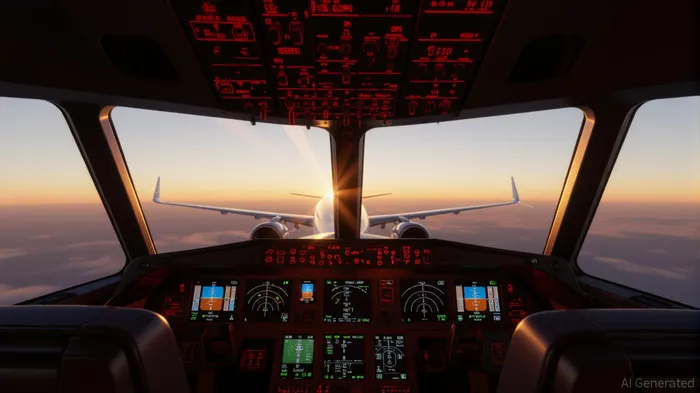
For investors, the incident highlights the fragility of legacy systems in an era of increasing solar activity. According to a report by Bloomberg, the crisis has already caused short-term disruptions, including flight cancellations and delays, as airlines like American AirlinesAAL-- and DeltaDAL-- scramble to comply with European Union Aviation Safety Agency (EASA) mandates. The financial burden of these updates-estimated to cost airlines over $11 billion in 2025 due to delayed fuel-efficiency gains and higher maintenance costs-further amplifies operational risks.
Regulatory Responses and Systemic Resilience
Regulators have responded swiftly to mitigate systemic risks. EASA's Emergency Airworthiness Directive, mandating software updates for all affected aircraft, reflects a proactive stance to prevent cascading failures. However, the crisis has also exposed gaps in global aviation safety protocols. For instance, the reliance on software-based fixes for hardware-level vulnerabilities raises questions about the adequacy of pre-market testing for space weather risks.
Investors should note that regulatory agility-such as EASA's rapid directive-can both mitigate short-term disruptions and create long-term opportunities. Airlines and manufacturers that demonstrate compliance with evolving standards may gain a competitive edge. For example, Airbus's collaboration with aviation authorities to develop solar radiation-resistant software updates positions it as a leader in addressing emerging threats.
Supply Chain Impacts and Resilience Strategies
The aerospace sector's existing supply chain crisis has been exacerbated by the Airbus crisis. A LinkedIn analysis notes that overlapping shocks-pandemic disruptions, semiconductor shortages, and geopolitical tensions-have already strained MRO ecosystems and OEMs. The urgent need for hardware replacements in 900 older A320 models could further strain suppliers, potentially delaying other critical maintenance projects.
However, this crisis also accelerates demand for resilience-focused strategies. Industry experts advocate for digital visibility tools (e.g., control towers), supplier diversification, and strategic inventory buffers to mitigate future shocks. For investors, companies specializing in supply chain optimization-such as those offering predictive maintenance software or regional MRO hubs-present attractive opportunities.
Financial Market Reactions and Investor Sentiment
Despite the crisis, Airbus's stock has shown remarkable resilience. As of November 2025, , . This performance aligns with broader industry optimism, driven by long-term demand for air travel and Airbus's projected free cash flow . Analysts argue that the company's undervaluation.
Yet, the crisis has also heightened investor caution. ESG-driven concerns about decarbonization and the risk of stranded assets remain salient, particularly for legacy aircraft. Leasing companies, with stronger credit ratings and access to lower-cost financing, may emerge as safer bets in this environment.
Emerging Technologies and Resilience Opportunities
Beyond Airbus, the crisis has spurred innovation in solar radiation mitigation. Emerging technologies such as solar photovoltaic systems for airports and radiation-hardened avionics are gaining traction. For instance, Istanbul Airport's 199 MW solar farm and Denver International Airport's on-site solar projects demonstrate how renewable energy integration can enhance energy resilience.
Additionally, research into solar radiation management (SRM)-including stratospheric aerosol injection and marine cloud brightening-is advancing rapidly. The and the UK's Advanced Research and Invention Agency (ARIA) are leading efforts to study SRM's feasibility and risks. While these technologies remain experimental, their potential to mitigate climate-driven aviation risks could reshape the sector's long-term landscape.
Conclusion: Balancing Risk and Resilience
The Airbus crisis serves as a wake-up call for the aerospace and aviation sectors. While solar radiation threats pose immediate operational and financial risks, they also catalyze innovation in resilience strategies. For investors, the key lies in balancing short-term volatility with long-term opportunities. Companies that prioritize technological adaptation, regulatory compliance, and supply chain resilience-whether through software updates, renewable energy integration, or geoengineering research-will likely outperform in the post-crisis era.
As the industry navigates this inflection point, strategic risk management and a focus on systemic resilience will be paramount. The path forward is fraught with challenges, but for those who recognize the interplay between vulnerability and innovation, the aerospace sector offers a compelling arena for value creation.

Delivering real-time insights and analysis on emerging financial trends and market movements.
Latest Articles
Stay ahead of the market.
Get curated U.S. market news, insights and key dates delivered to your inbox.
AInvest
PRO
AInvest
PRO



Comments
No comments yet